·5/12/2026
from
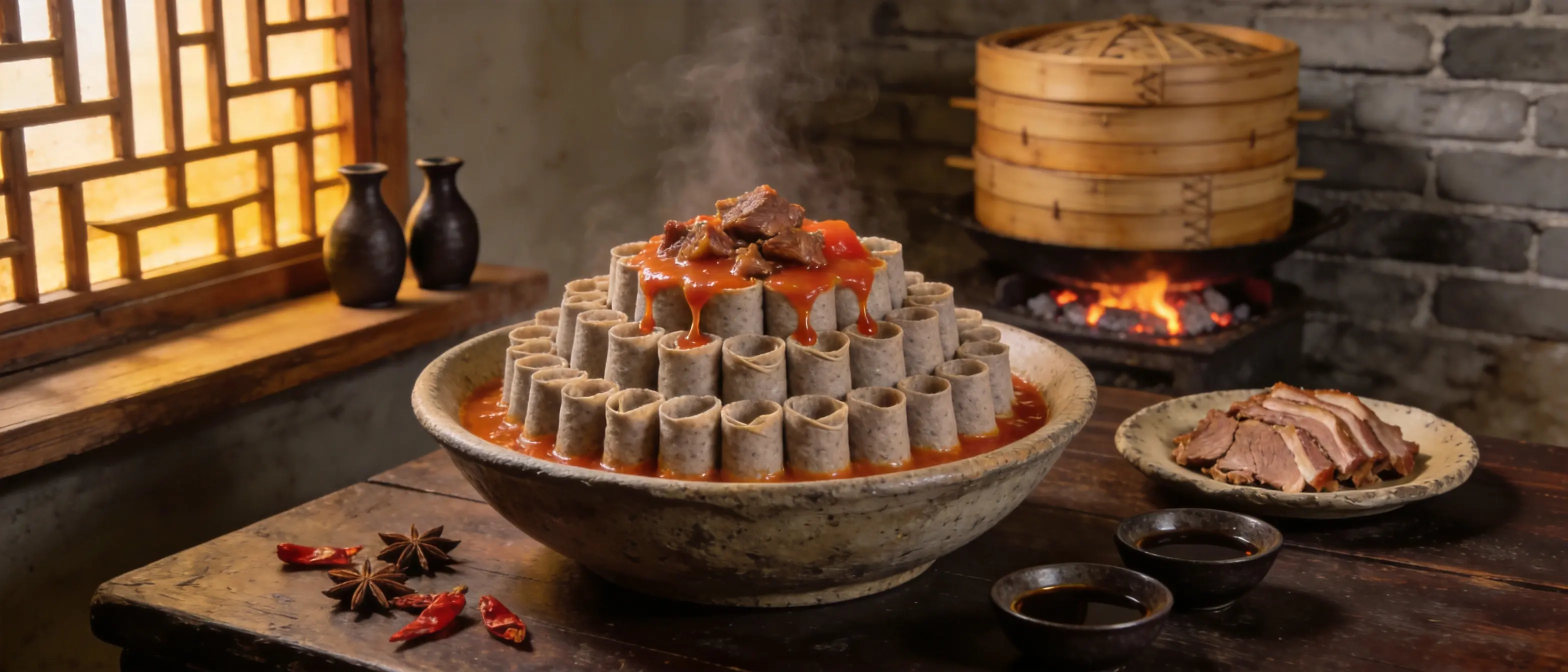
Oat Noodles from Xinzhou, Shanxi
# Oat Rolls with Lamb and Tomato
> Oat dough has to be cooked three times before it's ready to eat — the flour is roasted first, then scalded with boiling water, then steamed. Miss any one of those and it tells you. This is all three.
---
## 1 · The Grain
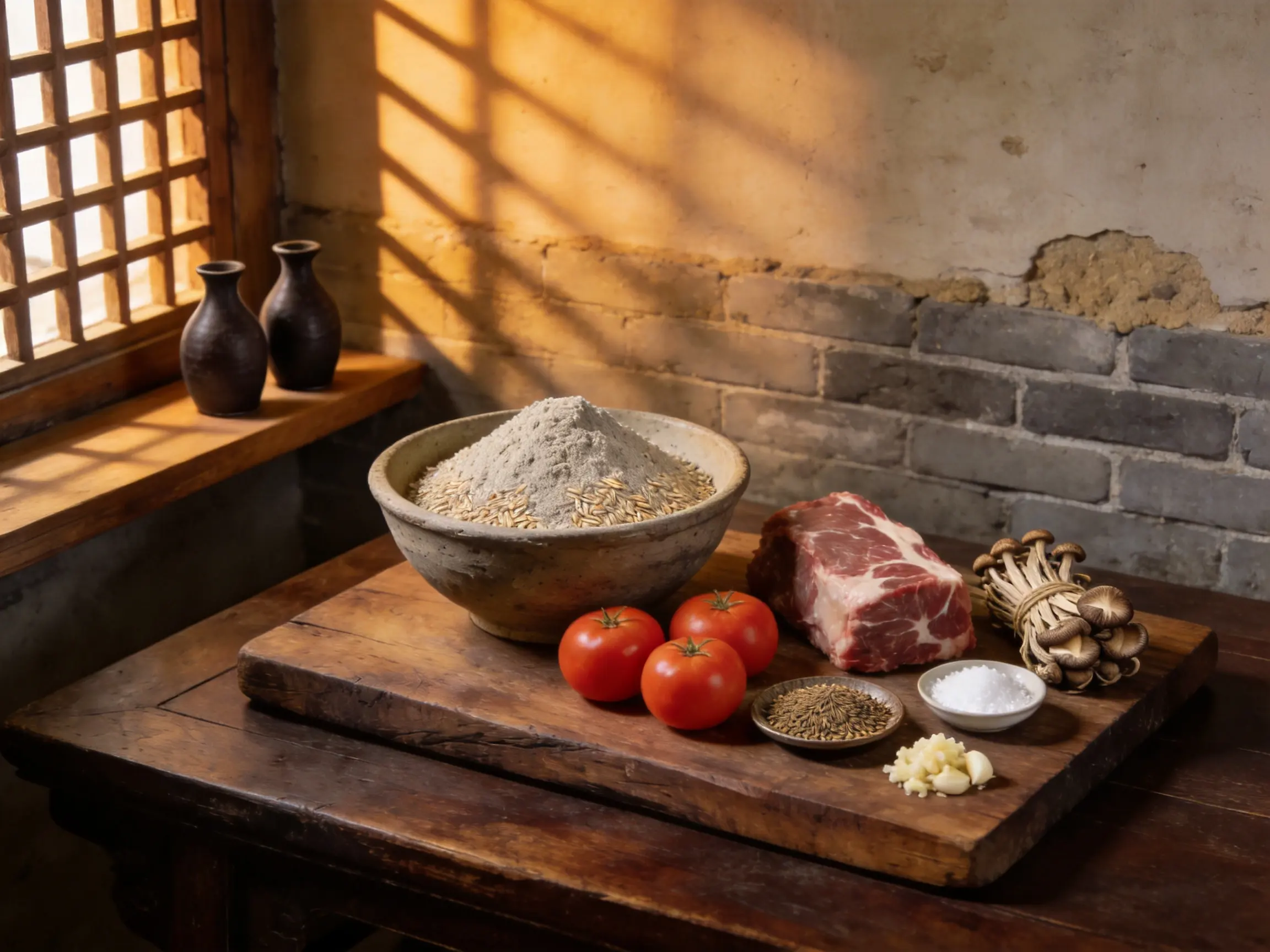
Grey-beige oat flour, lamb shoulder, tomatoes, cumin seeds, dried chilies, star anise. Two small clay jars on the shelf, same spot they've been for years. The flour doesn't look like much on its own — slightly grainy, smells faintly toasted before you do anything to it. That's because it's already been roasted once, at the mill. You're starting at the second stage.
## 2 · The Dough
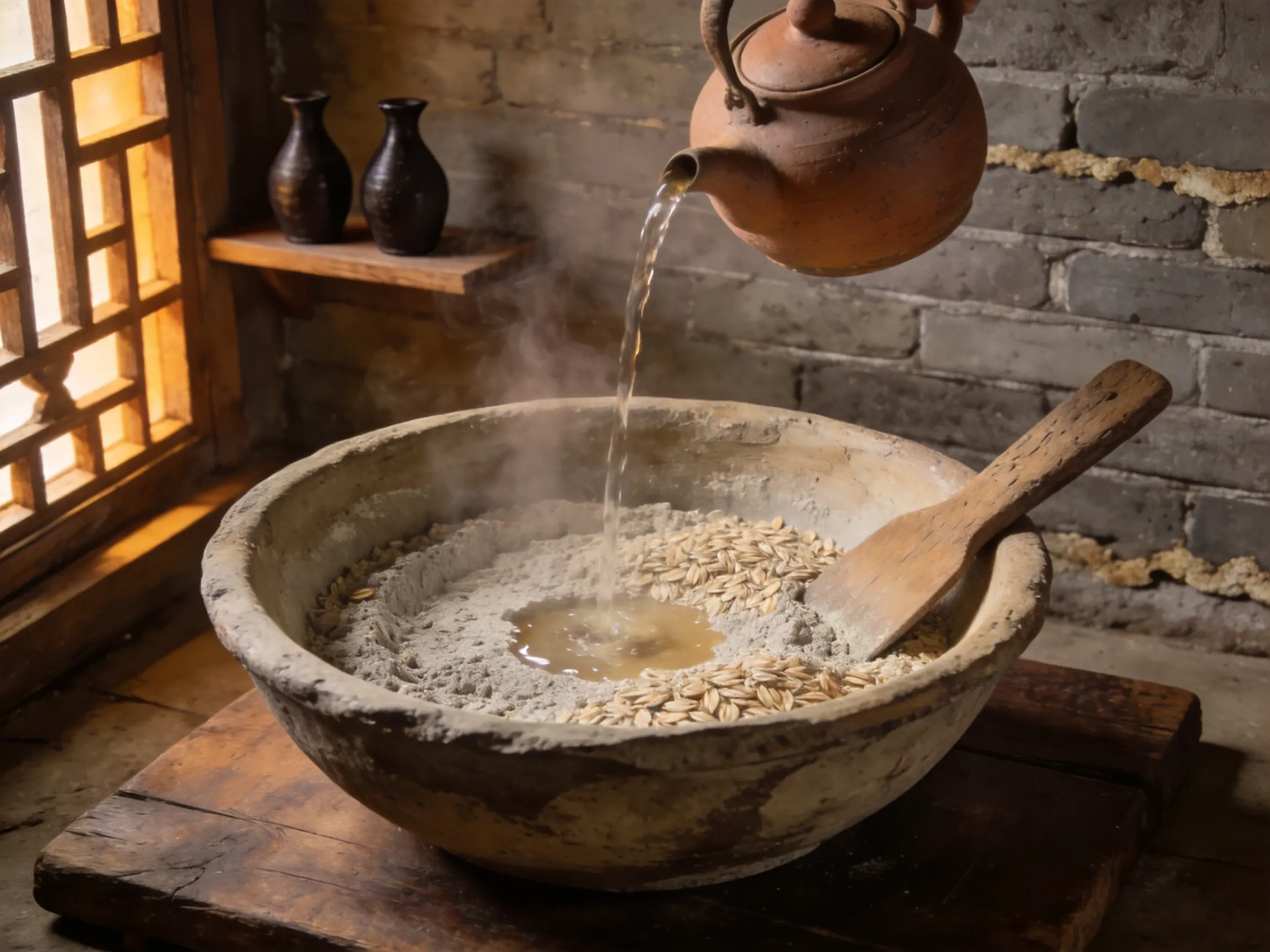
Water needs to be fully boiling — not just hot. Pour it all at once directly over the flour and start mixing immediately with a wooden paddle. **You have maybe thirty seconds before the temperature drops and the dough stops binding evenly.** Keep moving. The steam coming off the bowl is part of the process. The dough is ready when it lifts cleanly off the sides — warm to the touch, firm enough to hold a shape. Four minutes, start to finish.
## 3 · The Roll
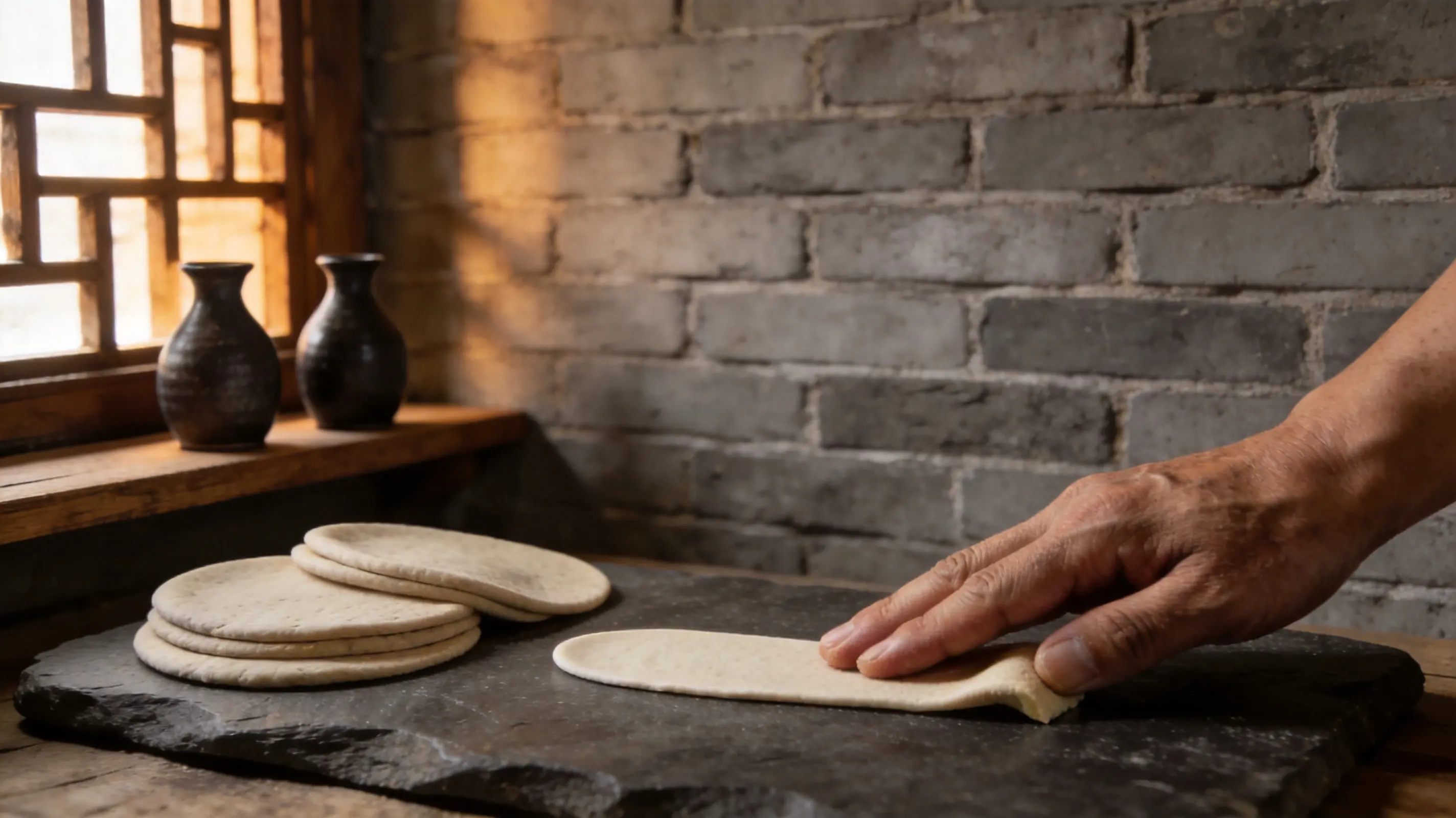
Stone slab, slightly cool. Take a small piece of dough, about the size of a large marble. Set it at the top of the slab. Press the heel of your palm down and push forward in one motion. It stretches into a thin oval, roughly 8cm long. **Too thick and the center stays gummy. Too thin and it tears when you curl it.** You'll find your pressure after the fifth or sixth one. After a few dozen, the slab is warm from your hand and the dough lifts off cleaner.
## 4 · The Curl
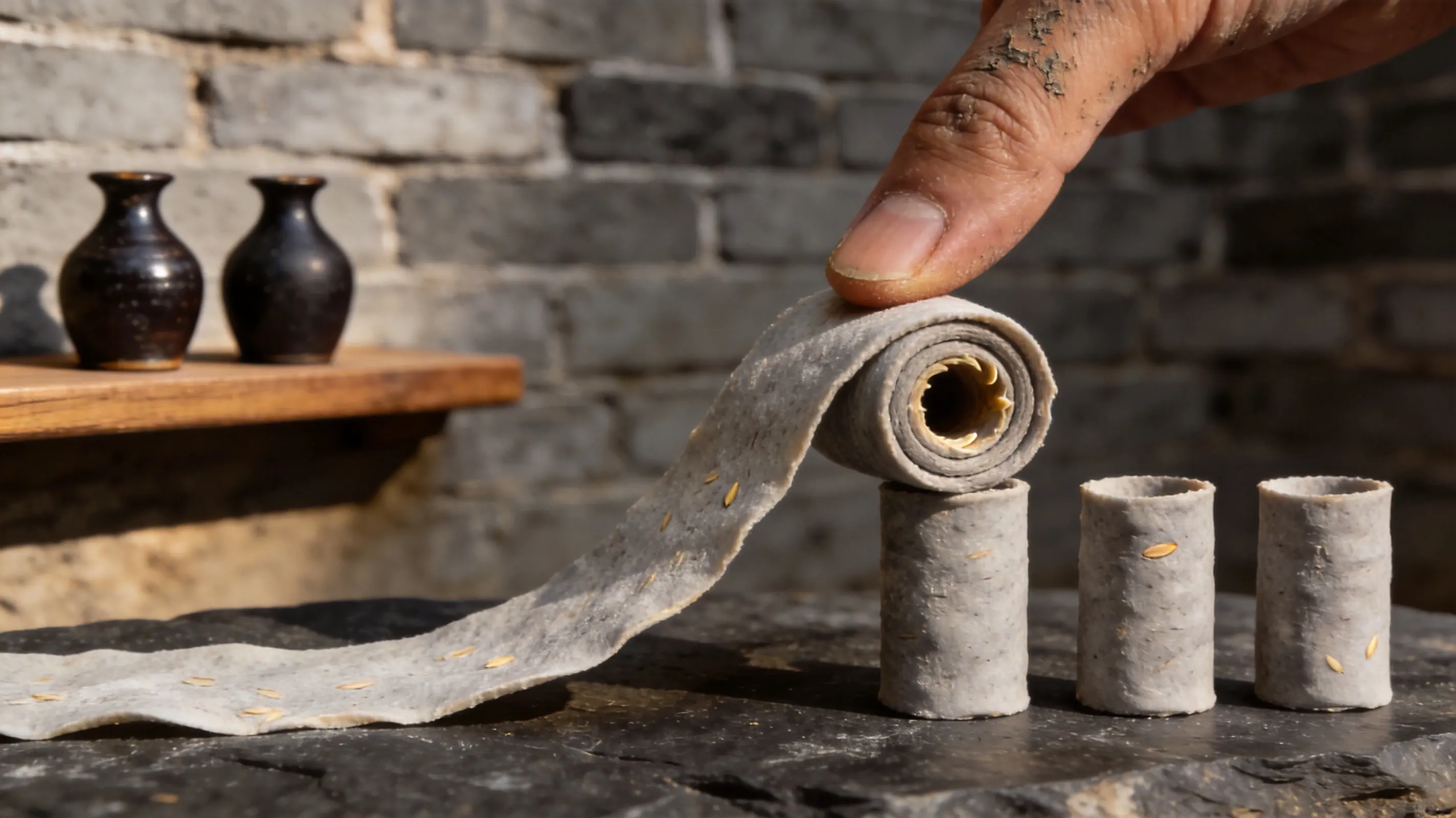
Lift the sheet from the far edge. Roll it toward you over your index finger, pressing the seam shut at the base. Stand it upright. The hollow center isn't decorative — steam enters from below through that gap, and sauce fills it later when you pour. A sealed tube won't cook through in the middle. You learn that the first time you make a batch and cut one open.
## 5 · The Array
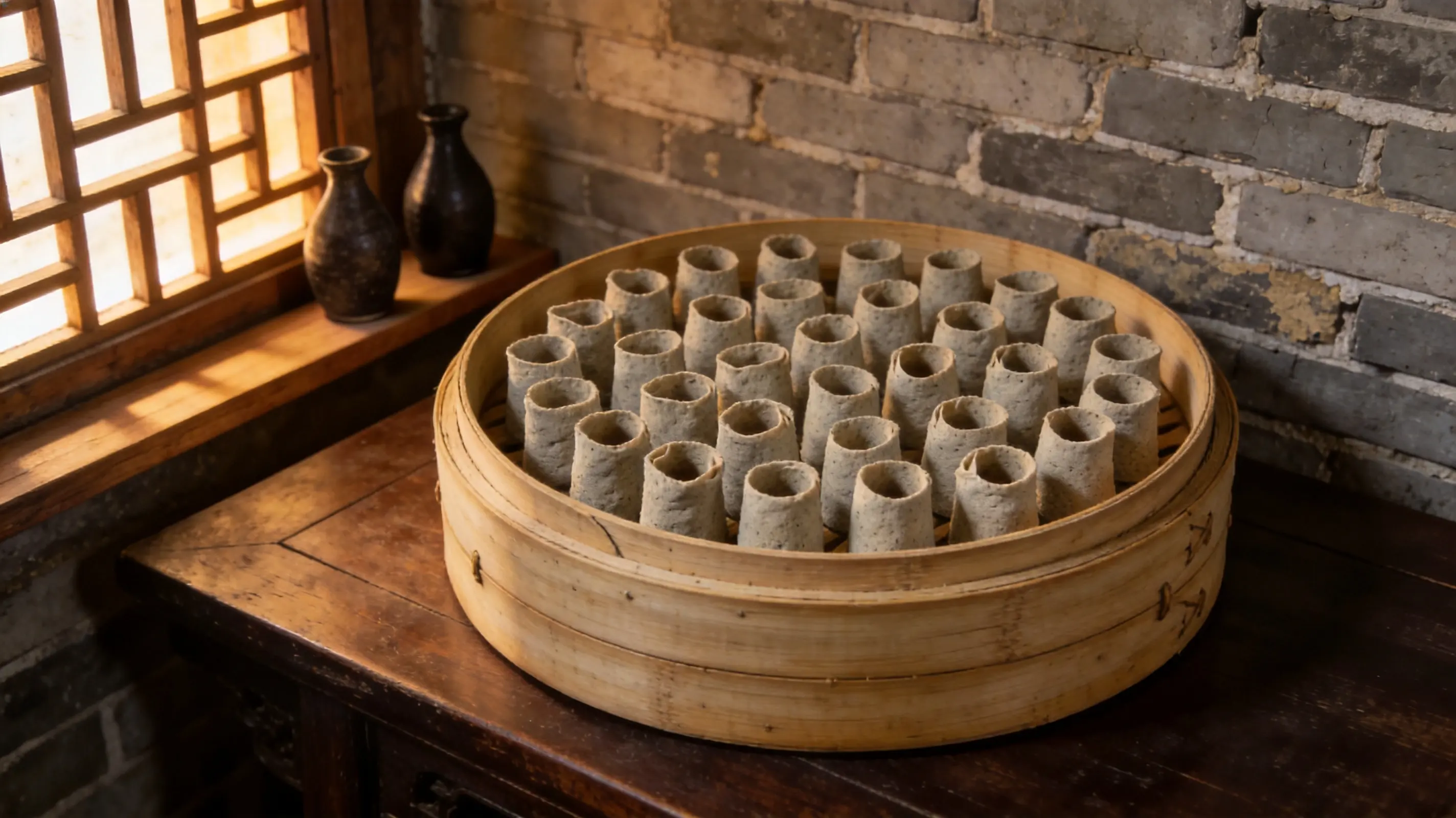
Pack them into the bamboo steamer standing upright, shoulder to shoulder. **Leave no gaps at the edges — loose arrangement means the outer ones overcook before the center ones are done.** They hold each other up. Two full baskets covers four people. From above they look slightly uneven, some leaning. That's fine.
## 6 · The Steam
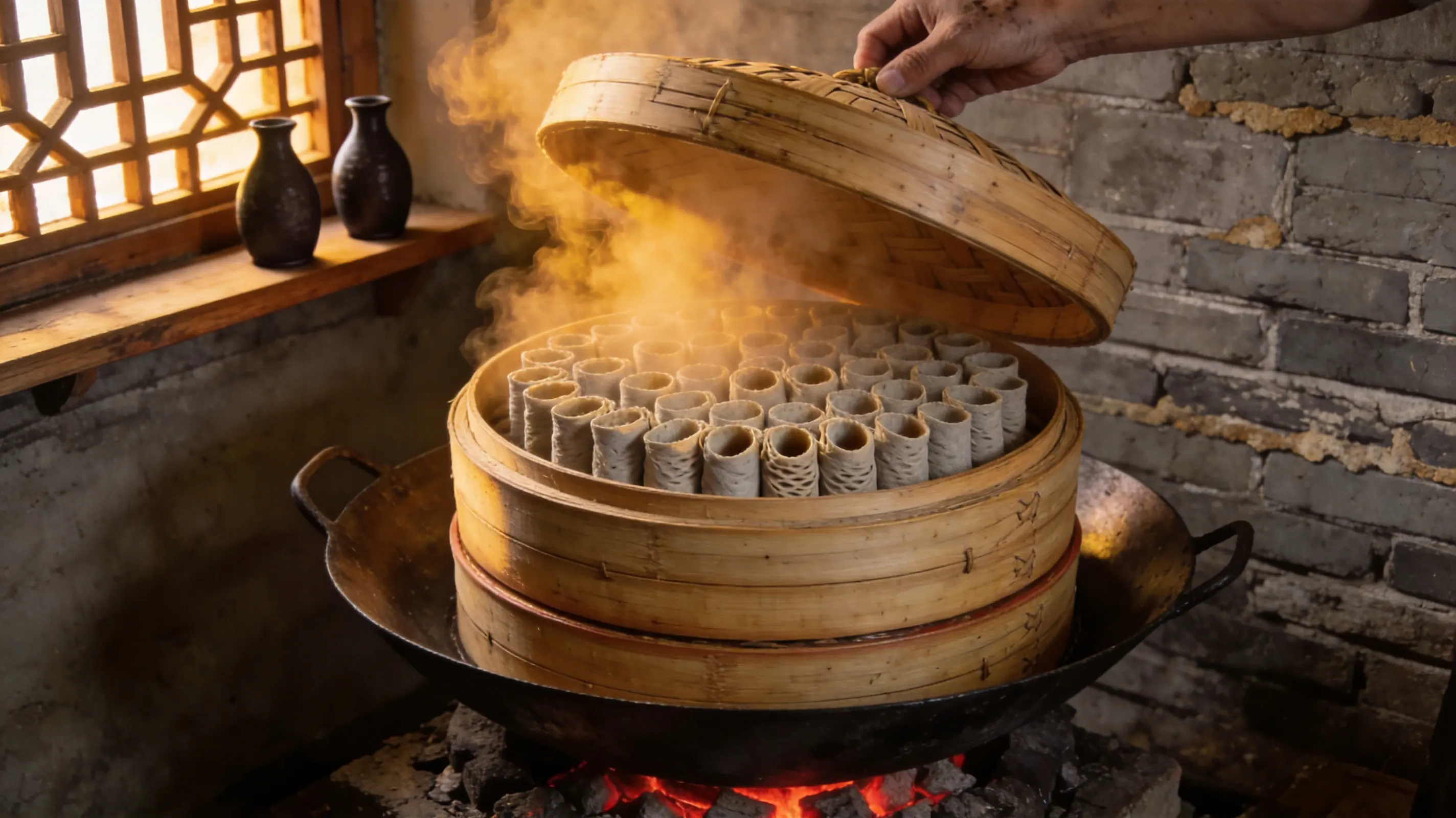
Three tiers of bamboo stacked on the iron wok, coal already burning hot underneath. Twelve minutes with the lid on. When you lift it, steam hits your face before you see anything. The smell shifts — the raw earthy note is gone, replaced by something slightly sweet and cooked through. **Press one gently. It should feel firm, not spongy.** If it gives too easily, lid back on for two more minutes.
## 7 · The Sauce
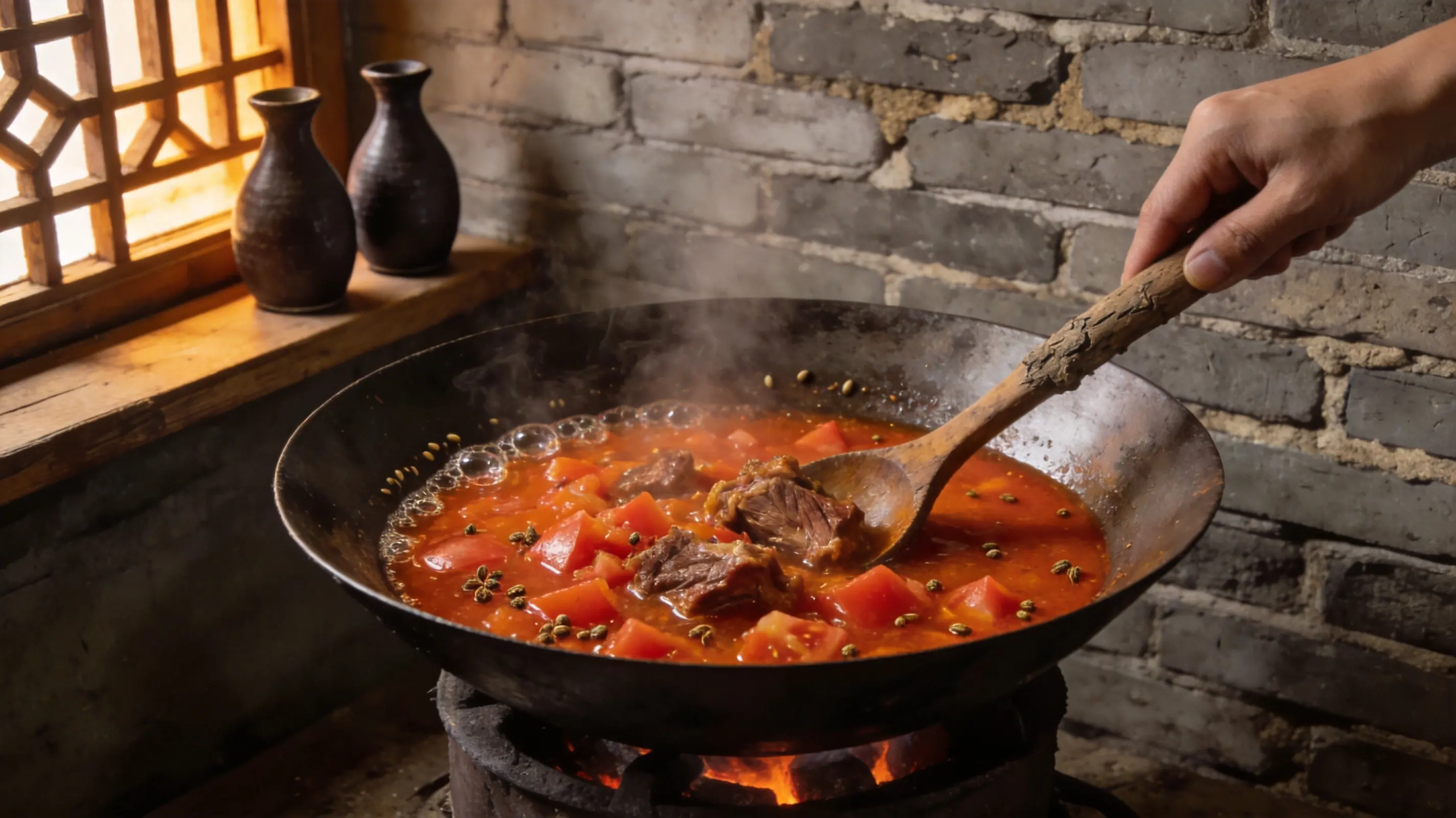
Score the tomatoes, scald in boiling water for forty seconds, peel. They break down faster this way and don't leave waxy skin in the sauce. Lamb shoulder cubed, browned first in a dry wok until the fat renders and the surface colors. Add tomatoes, cumin, dried chili, a small amount of water. **Simmer for around forty minutes — until the lamb pulls apart without effort.** The sauce darkens from bright red to a deeper brick tone. That's when it's ready.
## 8 · The Pour
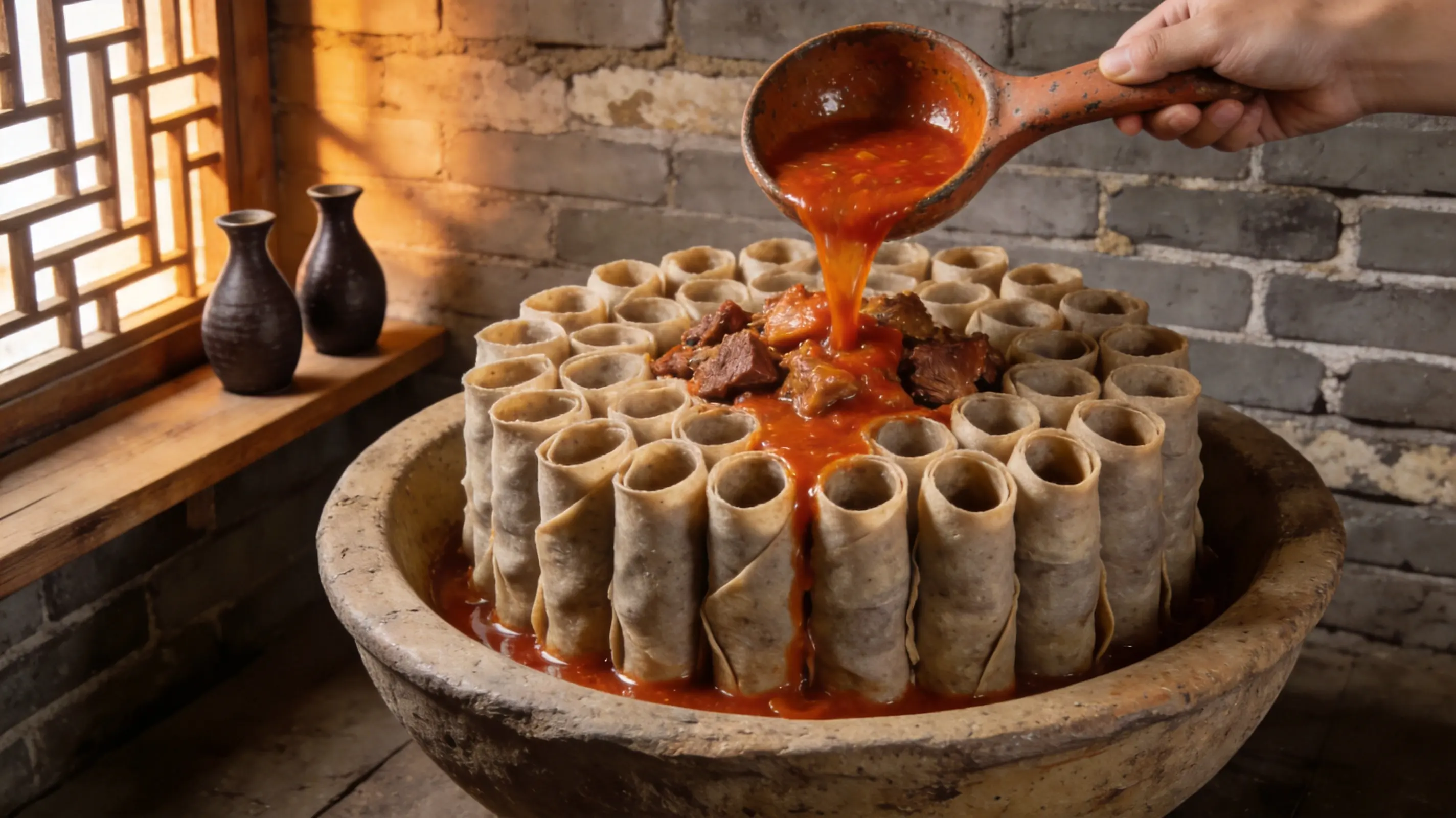
The oat cylinders standing upright in the rough pottery bowl. Ladle the sauce from above. It runs down through the gaps, fills the hollow centers, collects at the base. Don't stir. Let it sit for a moment so the surface absorbs before you serve. A few drops of vinegar from the small dark bowl alongside — enough to cut through the fat, not more.
## 9 · The Feast
The bowl in front, still steaming. Braised lamb on the plate beside it. The grey-beige of the dough going soft where it meets the brick-red sauce at the bottom. You eat with a spoon or pull whole cylinders out with chopsticks. The bottom layer is nearly dissolved into the sauce by the time you get there. The top ones still hold firm. Second time you make this, you pour the sauce right before eating instead of in the kitchen. That's the thing this dish teaches you — there's always one thing to adjust.
> Oat dough has to be cooked three times before it's ready to eat — the flour is roasted first, then scalded with boiling water, then steamed. Miss any one of those and it tells you. This is all three.
---
## 1 · The Grain
Grey-beige oat flour, lamb shoulder, tomatoes, cumin seeds, dried chilies, star anise. Two small clay jars on the shelf, same spot they've been for years. The flour doesn't look like much on its own — slightly grainy, smells faintly toasted before you do anything to it. That's because it's already been roasted once, at the mill. You're starting at the second stage.
## 2 · The Dough
Water needs to be fully boiling — not just hot. Pour it all at once directly over the flour and start mixing immediately with a wooden paddle. **You have maybe thirty seconds before the temperature drops and the dough stops binding evenly.** Keep moving. The steam coming off the bowl is part of the process. The dough is ready when it lifts cleanly off the sides — warm to the touch, firm enough to hold a shape. Four minutes, start to finish.
## 3 · The Roll
Stone slab, slightly cool. Take a small piece of dough, about the size of a large marble. Set it at the top of the slab. Press the heel of your palm down and push forward in one motion. It stretches into a thin oval, roughly 8cm long. **Too thick and the center stays gummy. Too thin and it tears when you curl it.** You'll find your pressure after the fifth or sixth one. After a few dozen, the slab is warm from your hand and the dough lifts off cleaner.
## 4 · The Curl
Lift the sheet from the far edge. Roll it toward you over your index finger, pressing the seam shut at the base. Stand it upright. The hollow center isn't decorative — steam enters from below through that gap, and sauce fills it later when you pour. A sealed tube won't cook through in the middle. You learn that the first time you make a batch and cut one open.
## 5 · The Array
Pack them into the bamboo steamer standing upright, shoulder to shoulder. **Leave no gaps at the edges — loose arrangement means the outer ones overcook before the center ones are done.** They hold each other up. Two full baskets covers four people. From above they look slightly uneven, some leaning. That's fine.
## 6 · The Steam
Three tiers of bamboo stacked on the iron wok, coal already burning hot underneath. Twelve minutes with the lid on. When you lift it, steam hits your face before you see anything. The smell shifts — the raw earthy note is gone, replaced by something slightly sweet and cooked through. **Press one gently. It should feel firm, not spongy.** If it gives too easily, lid back on for two more minutes.
## 7 · The Sauce
Score the tomatoes, scald in boiling water for forty seconds, peel. They break down faster this way and don't leave waxy skin in the sauce. Lamb shoulder cubed, browned first in a dry wok until the fat renders and the surface colors. Add tomatoes, cumin, dried chili, a small amount of water. **Simmer for around forty minutes — until the lamb pulls apart without effort.** The sauce darkens from bright red to a deeper brick tone. That's when it's ready.
## 8 · The Pour
The oat cylinders standing upright in the rough pottery bowl. Ladle the sauce from above. It runs down through the gaps, fills the hollow centers, collects at the base. Don't stir. Let it sit for a moment so the surface absorbs before you serve. A few drops of vinegar from the small dark bowl alongside — enough to cut through the fat, not more.
## 9 · The Feast
The bowl in front, still steaming. Braised lamb on the plate beside it. The grey-beige of the dough going soft where it meets the brick-red sauce at the bottom. You eat with a spoon or pull whole cylinders out with chopsticks. The bottom layer is nearly dissolved into the sauce by the time you get there. The top ones still hold firm. Second time you make this, you pour the sauce right before eating instead of in the kitchen. That's the thing this dish teaches you — there's always one thing to adjust.