·5/12/2026
from
Pingyao Beef
# Braised Beef Shank
> I've had this cut of beef three times in my life — twice at restaurants, once I made it myself.
> The restaurant versions were fine. Mine took a full day and smelled up the whole building.
> I'd do it again tomorrow.
---
## 1 · The Lineup
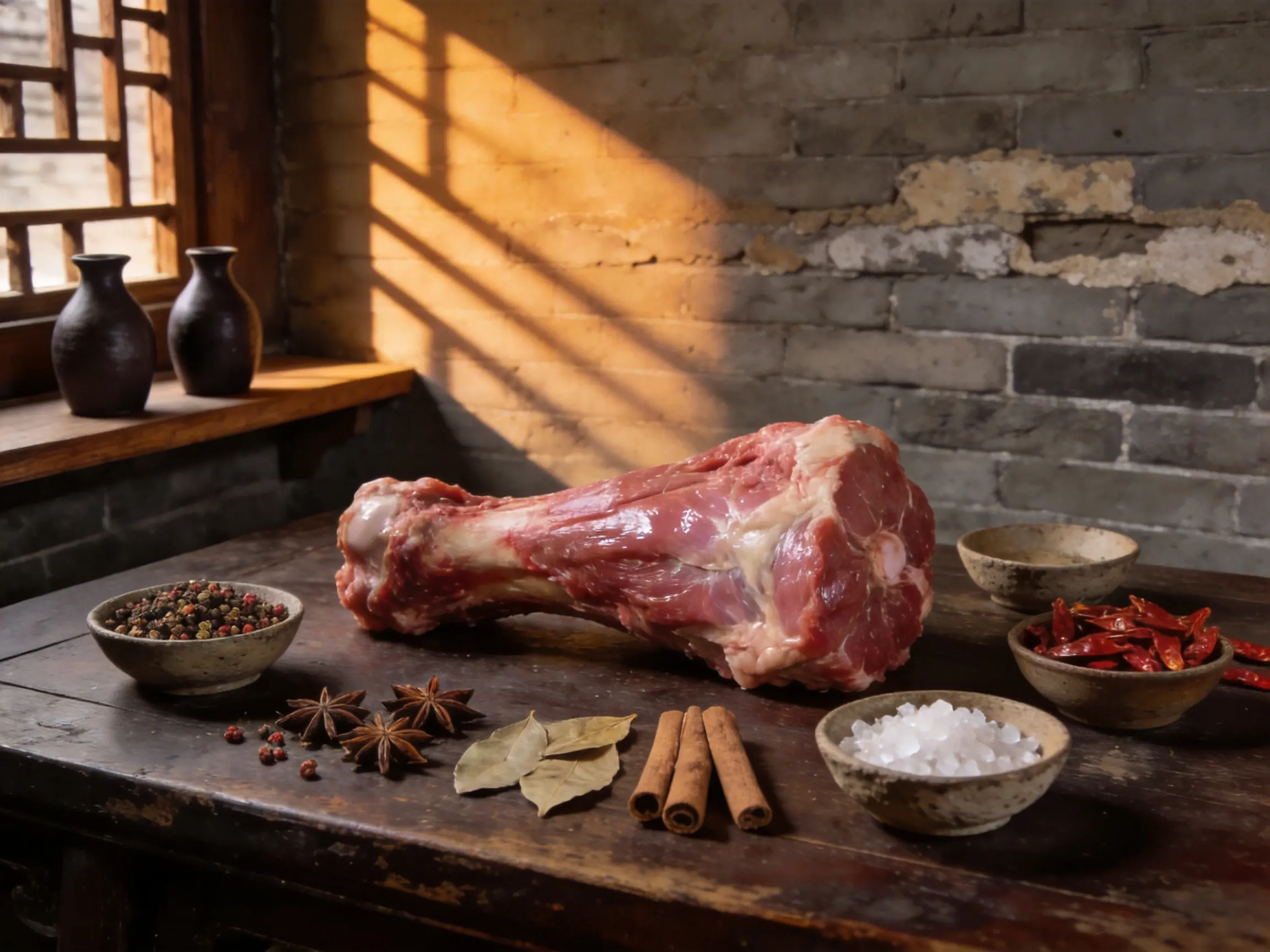
One whole beef shank, bone in. A pile of salt, dried chilies, star anise, cassia bark, Sichuan peppercorns.
That's it. No marinade. No pre-made sauce. You're building the flavor from scratch and it's going to take time.
**Don't trim the fat. You'll want it later.**
---
## 2 · The Rub
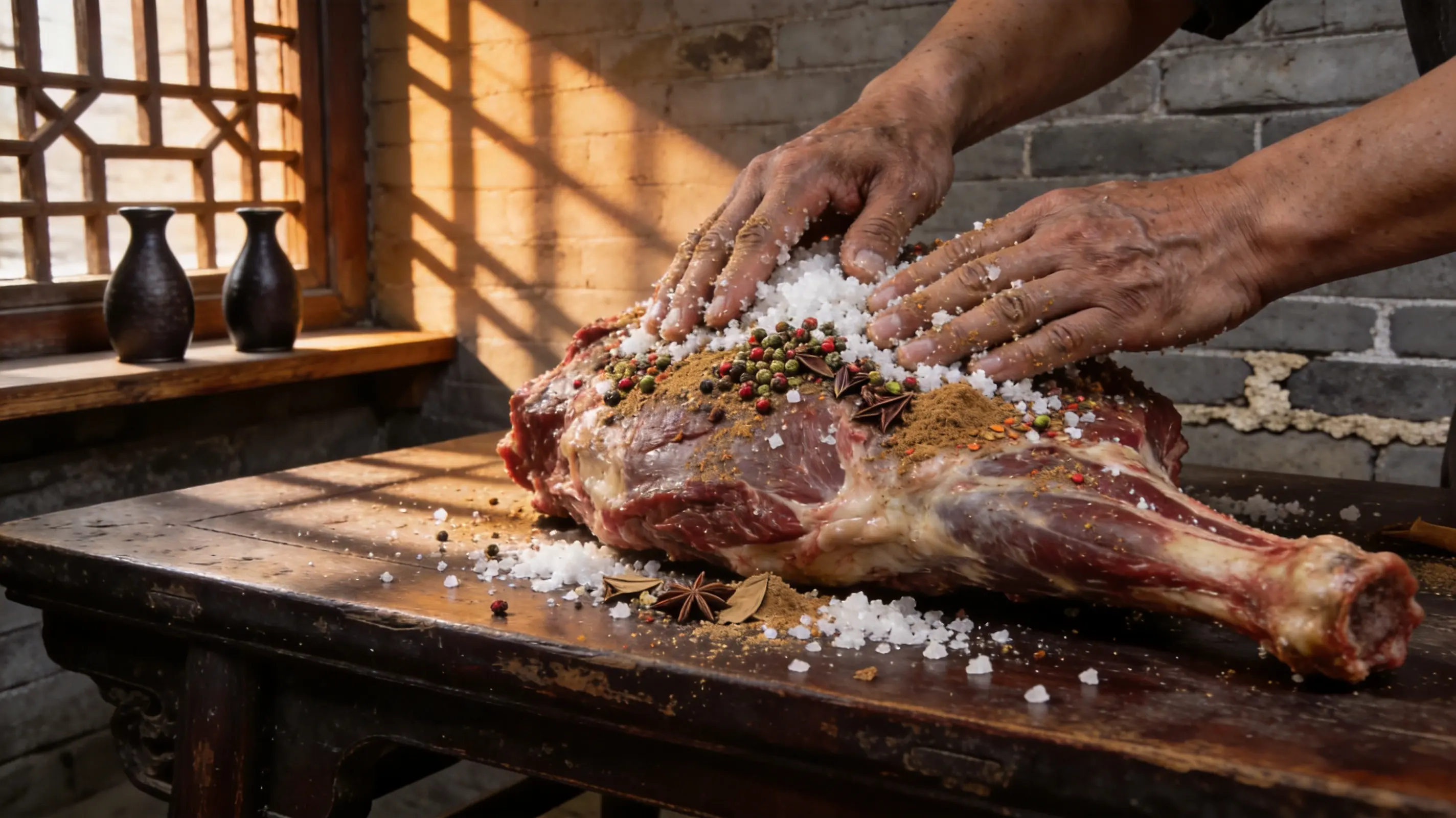
Push the salt into the meat with both hands. Work it into the grooves along the muscle. The shank is dense — you can feel the resistance.
This isn't a quick toss-and-done situation. Spend a few minutes on it. Get the spice into every side.
**Cover and leave it for at least an hour before it goes in the brine. Overnight if you can.**
---
## 3 · The Brine
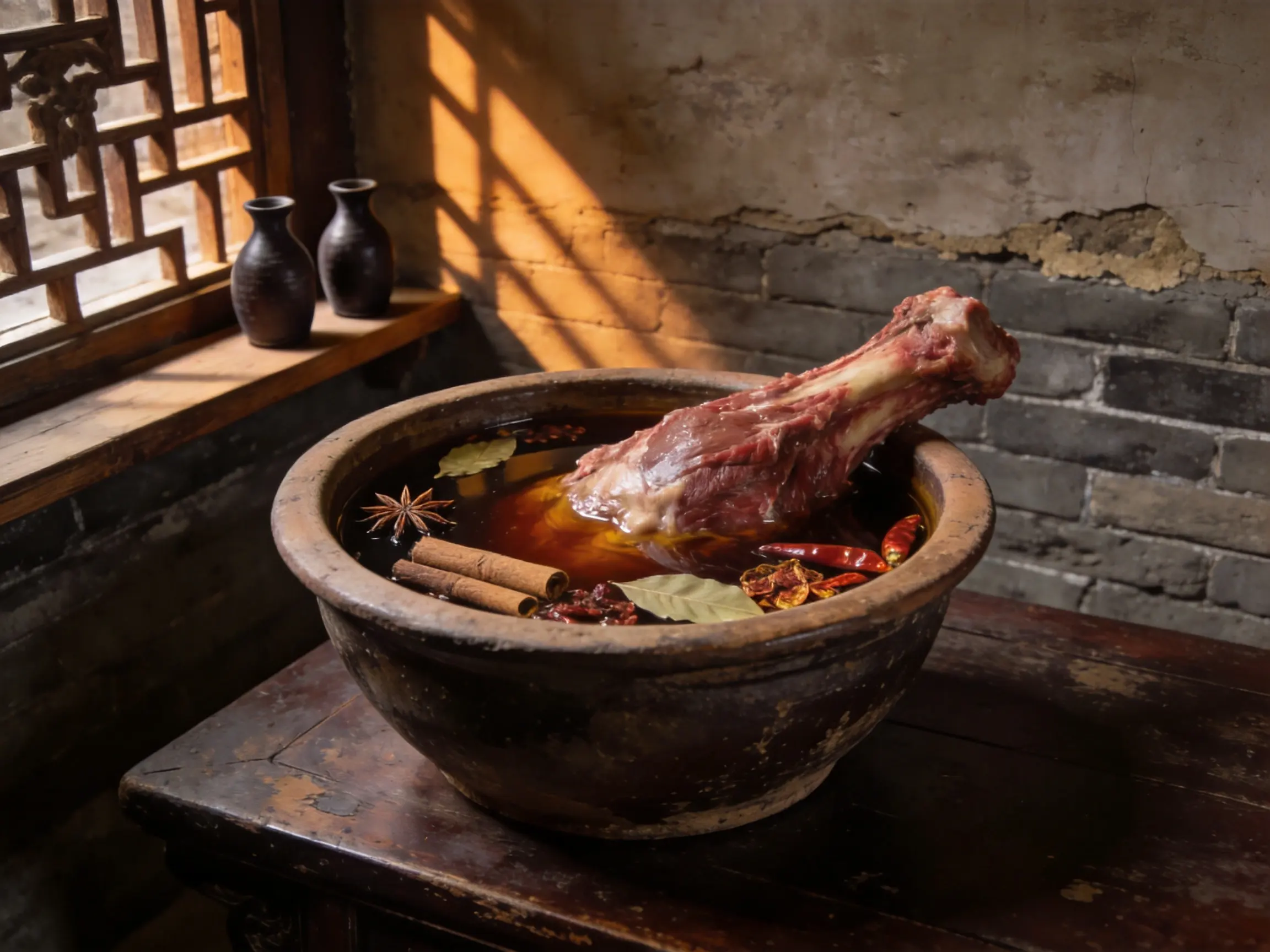
Dark soy sauce, aged black vinegar, a piece of rock sugar, water, and the same spices from the rub, doubled.
The shank goes in completely submerged. Use a plate to weigh it down if it floats.
**It needs to sit in this overnight. The color change alone is worth seeing in the morning — the surface goes from raw pink to a deep reddish-brown.**
---
## 4 · The Boil
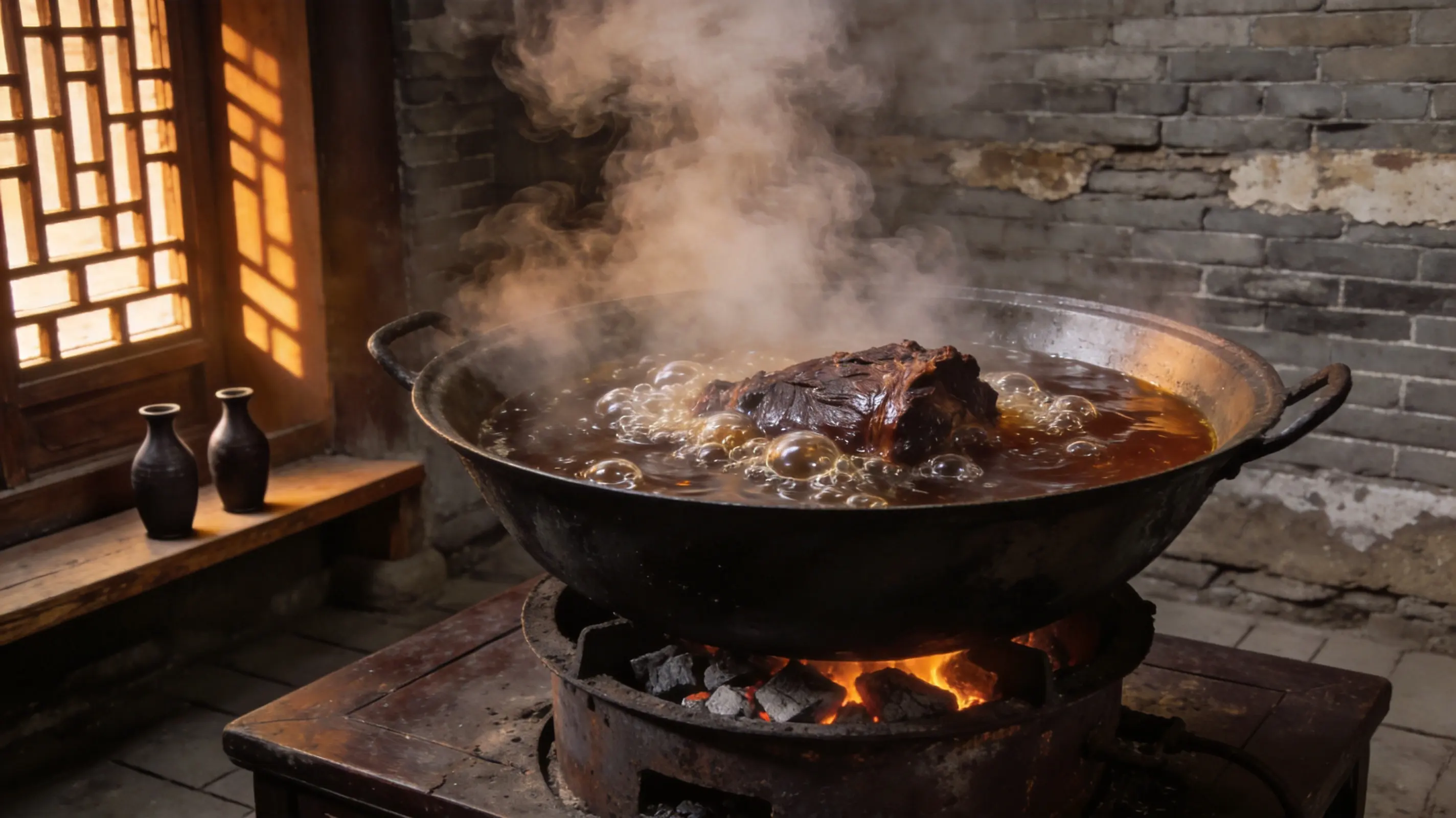
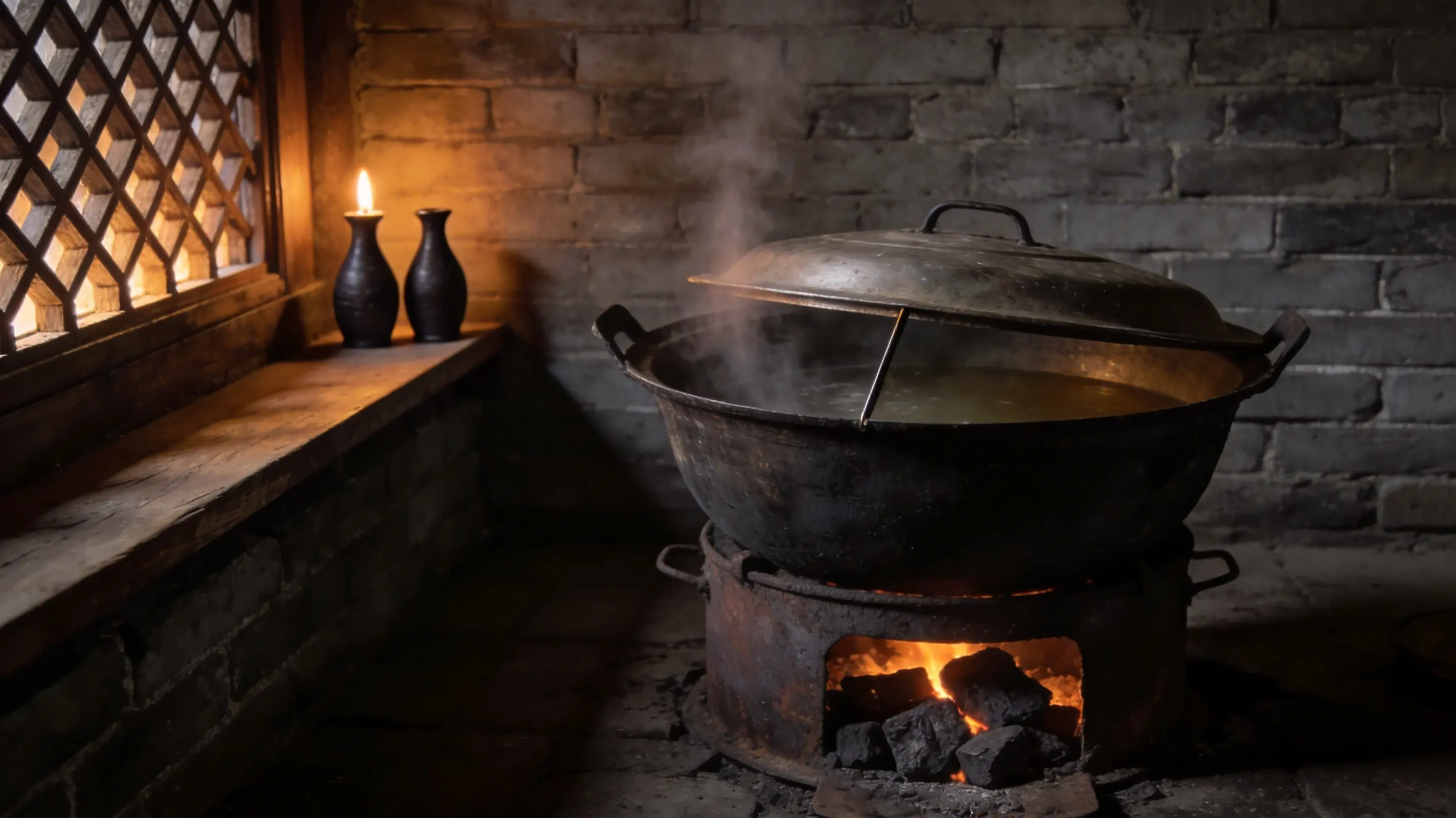
Coal stove, cast iron pot, high heat. Bring the whole thing up to a hard boil.
You'll see grey foam forming on the surface in the first few minutes. Skim it off. Keep going until the liquid runs clear on top.
**This step takes maybe 10 minutes. Once the foam is gone, turn it way down.**
---
## 5 · The Braise
Lid on, barely cracked. The coal is low — just enough to keep a gentle simmer going. You should hear a faint bubble every few seconds, not a rolling boil.
Walk away. Come back in three hours. The collagen needs time to break down or the meat stays tough in the center.
**If the liquid drops below the halfway point on the shank, add hot water. Cold water will tighten the meat.**
---
## 6 · The Rest
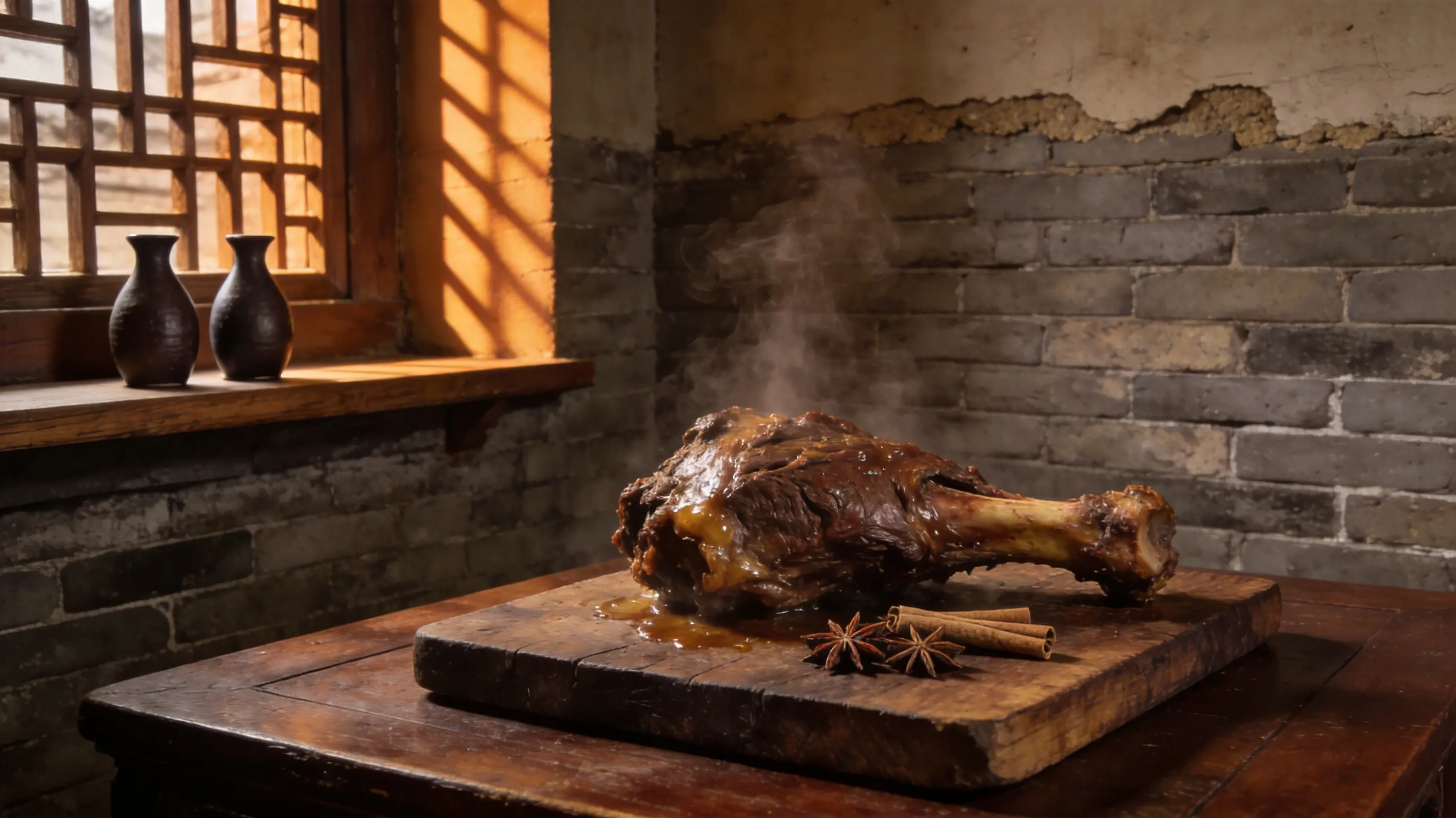
Pull it out and set it on the board. Don't touch it.
The surface looks almost black — that's the brine glaze concentrating. Steam lifts off for a few minutes before it settles. The bone is still fully intact inside.
**Give it 15 minutes minimum before you cut. The juices are still moving around inside.**
---
## 7 · The Slice
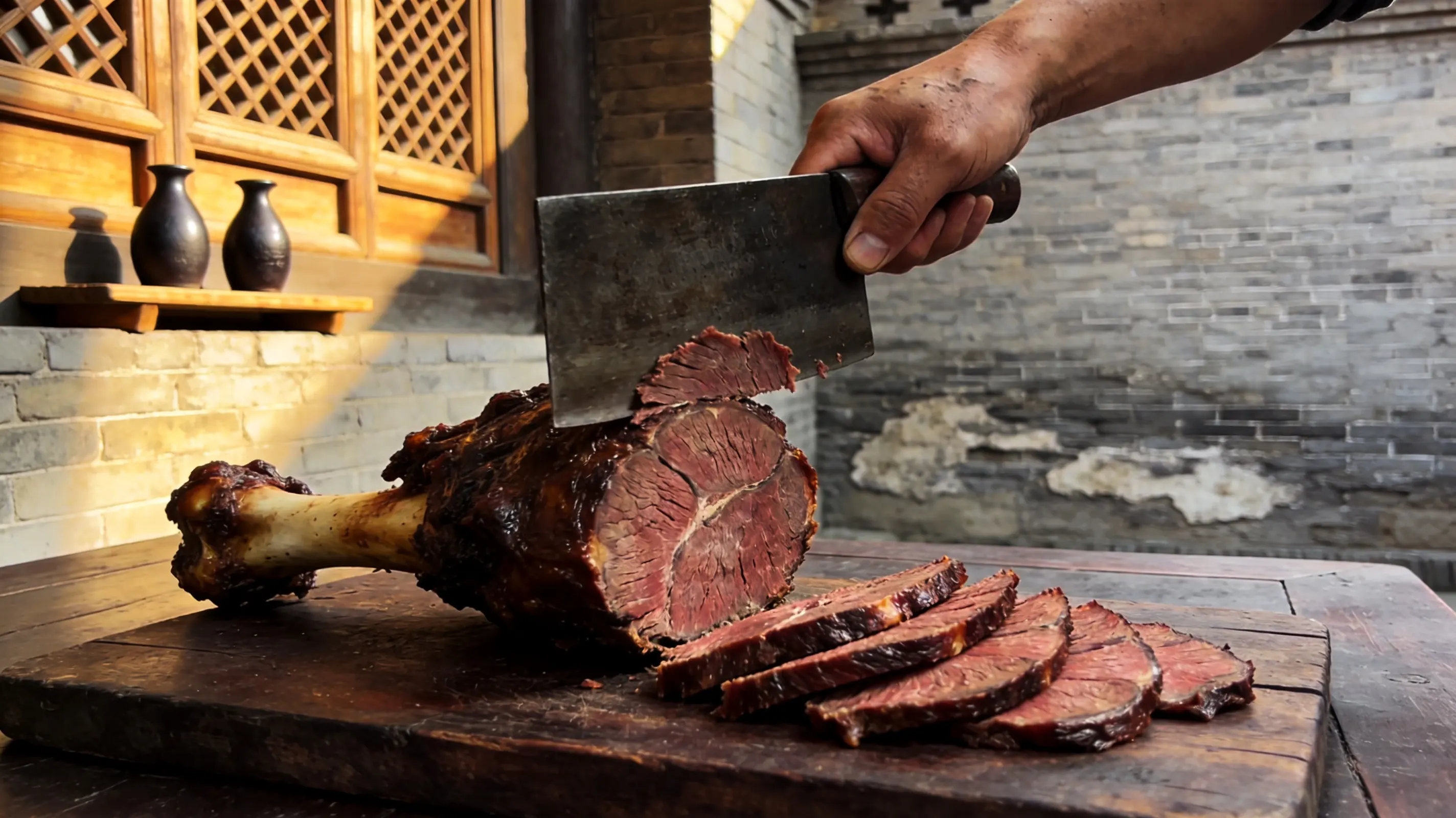
The cleaver goes alongside the bone, not through it. You're slicing the meat off in sections, working around the shank.
The cross-section when you open it: tight dark red muscle, fat threads running through the grain, the outer edge nearly black from the braise.
**Keep the slices thick enough to hold together — about half a centimeter. Too thin and they fall apart on the plate.**
---
## 8 · The Plate
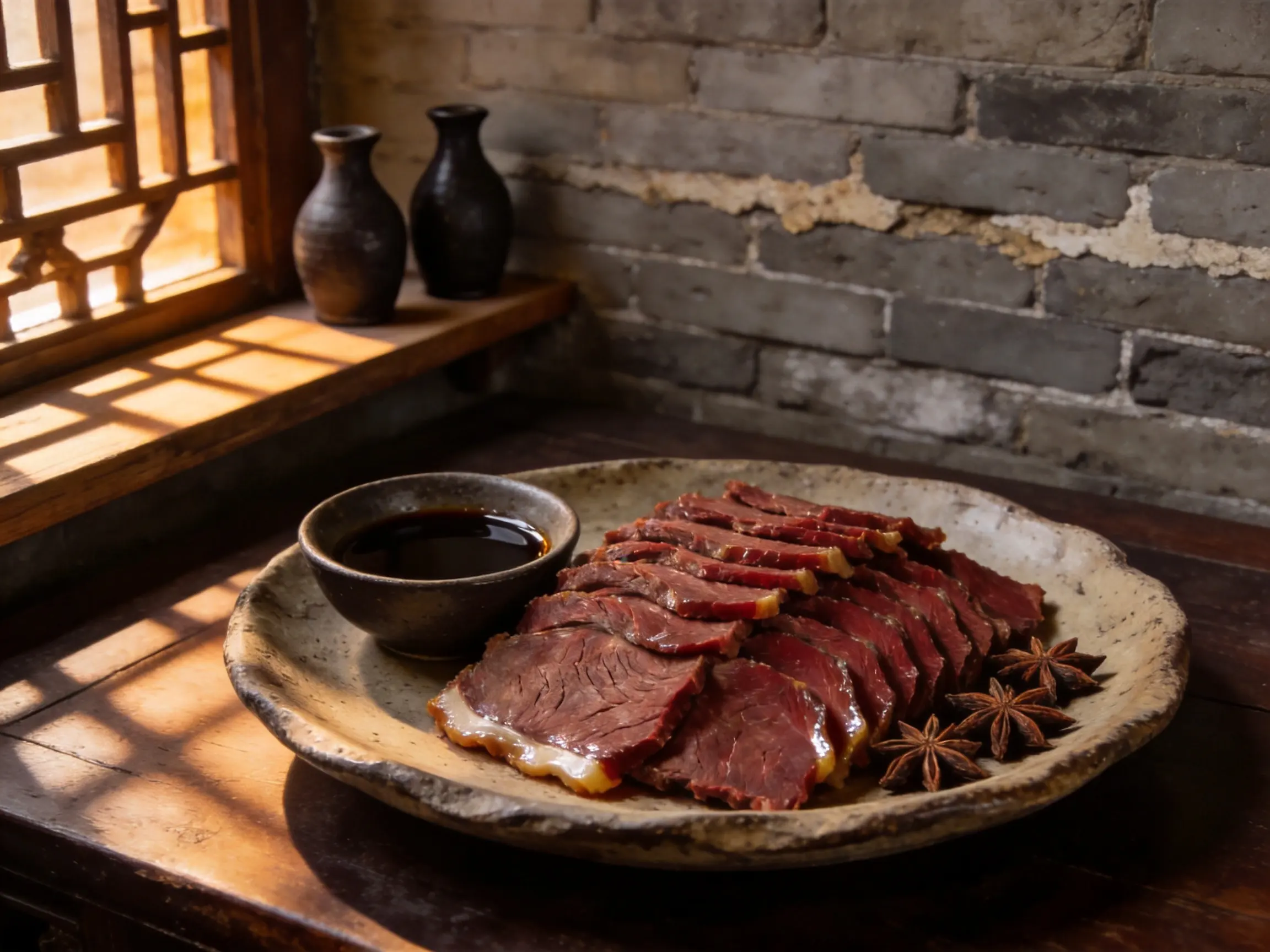
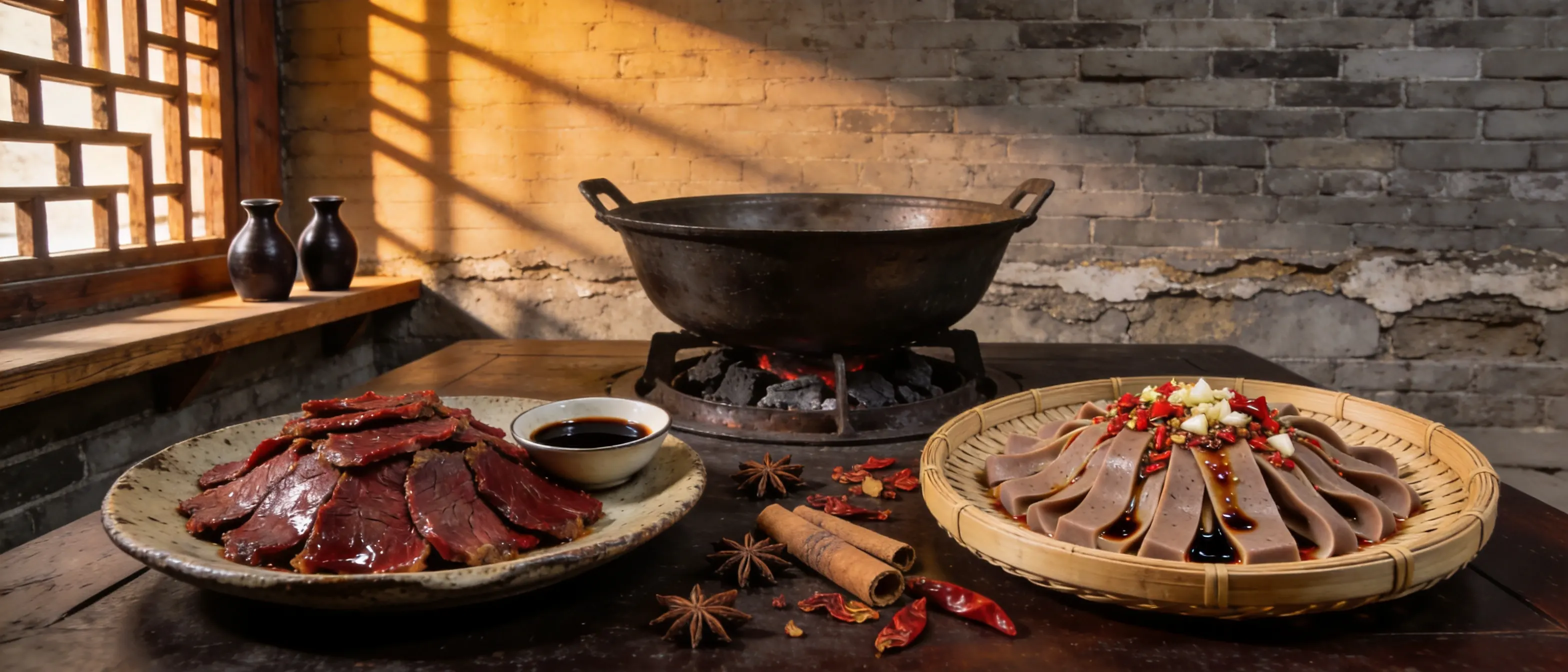
Rough ceramic plate, slices laid out overlapping. A small bowl of Shanxi aged black vinegar on the side — not for dipping, just a few drops dragged across the meat before you eat.
A couple of star anise from the pot, set down beside the plate.
**The vinegar is not optional. The fat in the meat needs something sharp to cut through it.**
---
## 9 · The Feast
Both dishes on the table: the braised shank and cold buckwheat cakes with chili oil. The pot is still on the stove behind them.
The beef is rich, almost heavy. The buckwheat cakes are cool and neutral. They belong together at the same meal.
**If there's leftover braising liquid, don't throw it out. Strain it and freeze it. Next batch starts from there.**
> I've had this cut of beef three times in my life — twice at restaurants, once I made it myself.
> The restaurant versions were fine. Mine took a full day and smelled up the whole building.
> I'd do it again tomorrow.
---
## 1 · The Lineup
One whole beef shank, bone in. A pile of salt, dried chilies, star anise, cassia bark, Sichuan peppercorns.
That's it. No marinade. No pre-made sauce. You're building the flavor from scratch and it's going to take time.
**Don't trim the fat. You'll want it later.**
---
## 2 · The Rub
Push the salt into the meat with both hands. Work it into the grooves along the muscle. The shank is dense — you can feel the resistance.
This isn't a quick toss-and-done situation. Spend a few minutes on it. Get the spice into every side.
**Cover and leave it for at least an hour before it goes in the brine. Overnight if you can.**
---
## 3 · The Brine
Dark soy sauce, aged black vinegar, a piece of rock sugar, water, and the same spices from the rub, doubled.
The shank goes in completely submerged. Use a plate to weigh it down if it floats.
**It needs to sit in this overnight. The color change alone is worth seeing in the morning — the surface goes from raw pink to a deep reddish-brown.**
---
## 4 · The Boil
Coal stove, cast iron pot, high heat. Bring the whole thing up to a hard boil.
You'll see grey foam forming on the surface in the first few minutes. Skim it off. Keep going until the liquid runs clear on top.
**This step takes maybe 10 minutes. Once the foam is gone, turn it way down.**
---
## 5 · The Braise
Lid on, barely cracked. The coal is low — just enough to keep a gentle simmer going. You should hear a faint bubble every few seconds, not a rolling boil.
Walk away. Come back in three hours. The collagen needs time to break down or the meat stays tough in the center.
**If the liquid drops below the halfway point on the shank, add hot water. Cold water will tighten the meat.**
---
## 6 · The Rest
Pull it out and set it on the board. Don't touch it.
The surface looks almost black — that's the brine glaze concentrating. Steam lifts off for a few minutes before it settles. The bone is still fully intact inside.
**Give it 15 minutes minimum before you cut. The juices are still moving around inside.**
---
## 7 · The Slice
The cleaver goes alongside the bone, not through it. You're slicing the meat off in sections, working around the shank.
The cross-section when you open it: tight dark red muscle, fat threads running through the grain, the outer edge nearly black from the braise.
**Keep the slices thick enough to hold together — about half a centimeter. Too thin and they fall apart on the plate.**
---
## 8 · The Plate
Rough ceramic plate, slices laid out overlapping. A small bowl of Shanxi aged black vinegar on the side — not for dipping, just a few drops dragged across the meat before you eat.
A couple of star anise from the pot, set down beside the plate.
**The vinegar is not optional. The fat in the meat needs something sharp to cut through it.**
---
## 9 · The Feast
Both dishes on the table: the braised shank and cold buckwheat cakes with chili oil. The pot is still on the stove behind them.
The beef is rich, almost heavy. The buckwheat cakes are cool and neutral. They belong together at the same meal.
**If there's leftover braising liquid, don't throw it out. Strain it and freeze it. Next batch starts from there.**