·5/12/2026
from
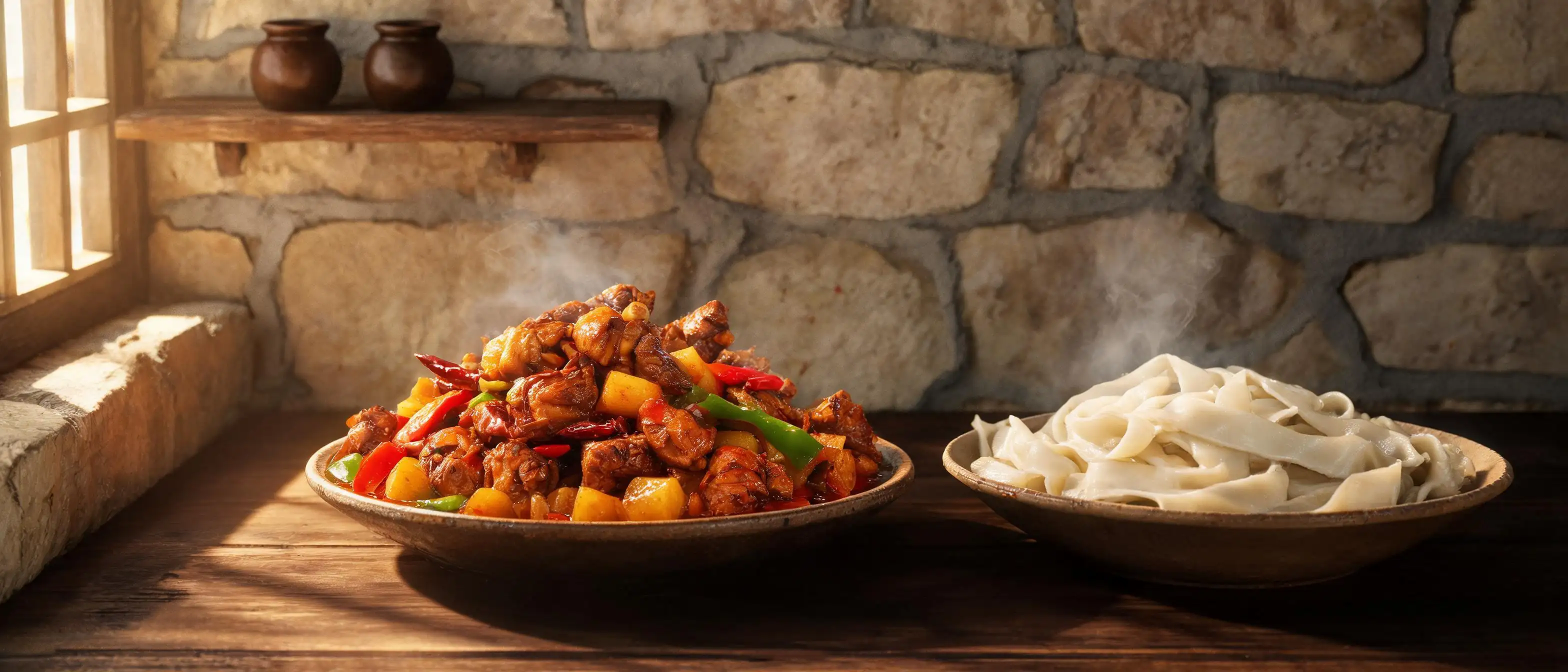
Big Plate Chicken
# Big Plate Chicken — How It's Made
---
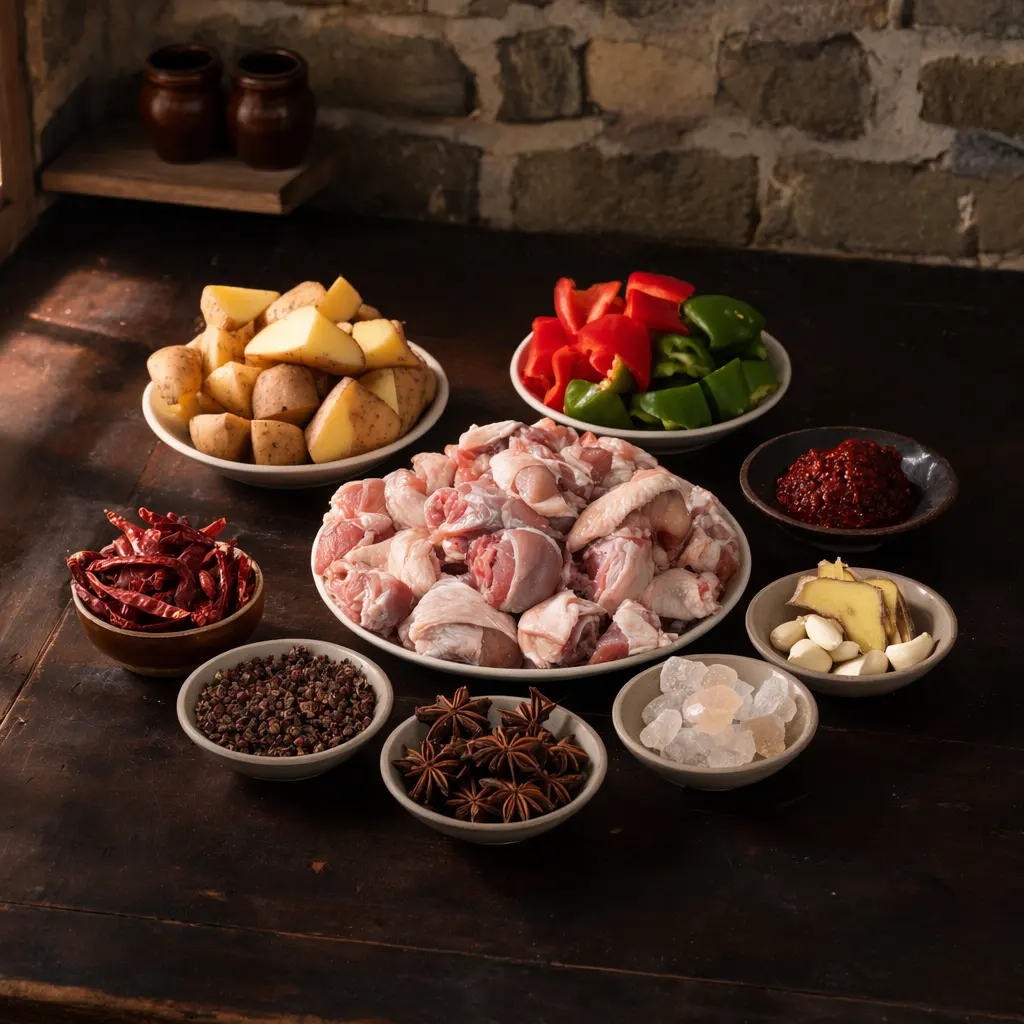
## 01 · The Lineup
Every good meal starts with respect for the ingredients.
Bone-in chicken. Rock sugar. Dried chilies. Sichuan peppercorns. Doubanjiang. Potatoes. Bell peppers. Nothing fancy, nothing exotic — just honest pantry staples that, when treated right, turn into something people talk about for years.
This is what the table looks like before the fire gets involved.
---
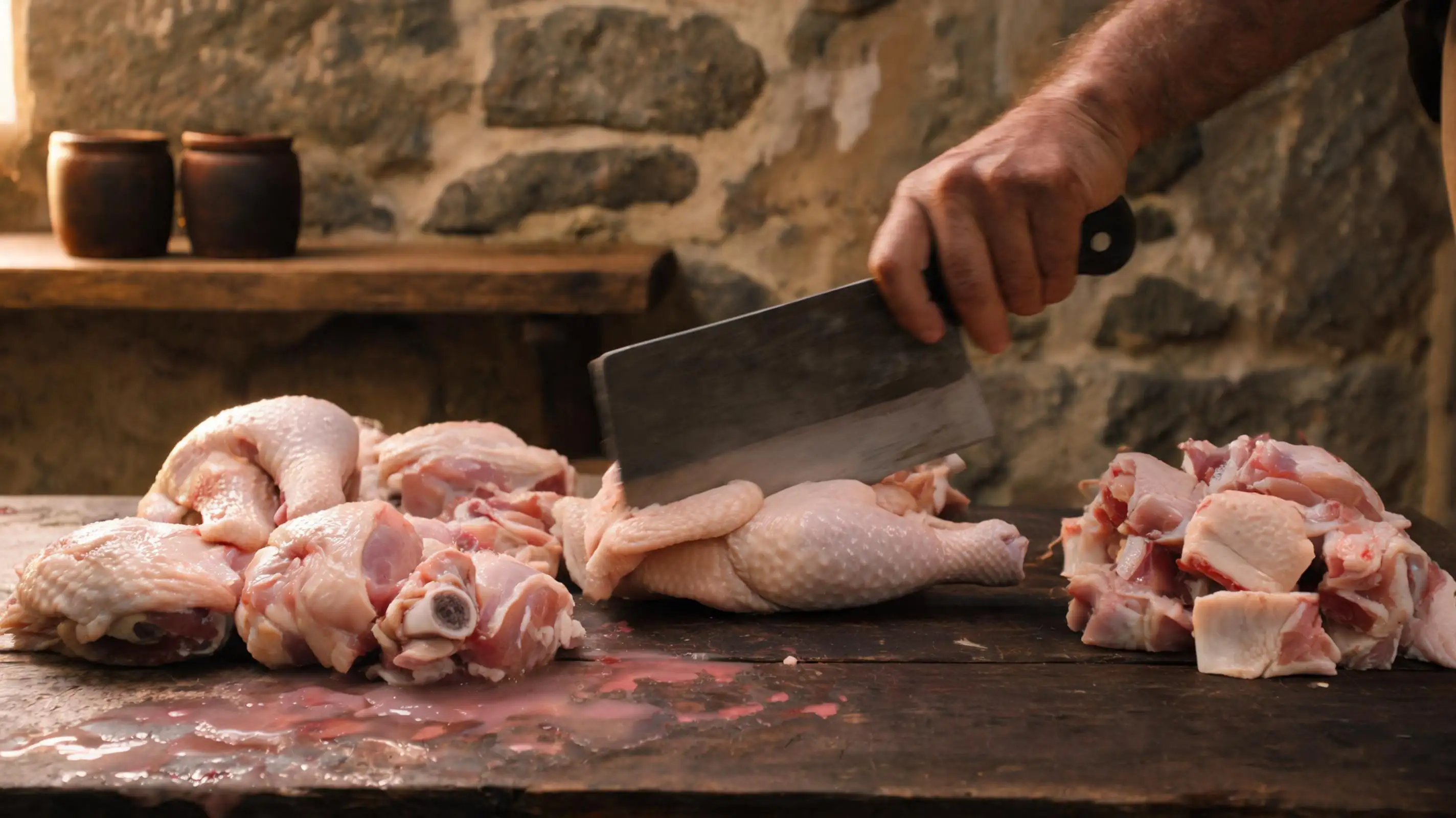
## 02 · The Cut
No thin slices here. A heavy cleaver, a confident hand, and bone-in pieces big enough to hold up to an hour of hard braising.
The bones matter. They give the sauce body. The skin matters too — it holds the fat that the whole dish runs on. Take your time with the cuts, but don't overthink them. Rustic is the point.
---
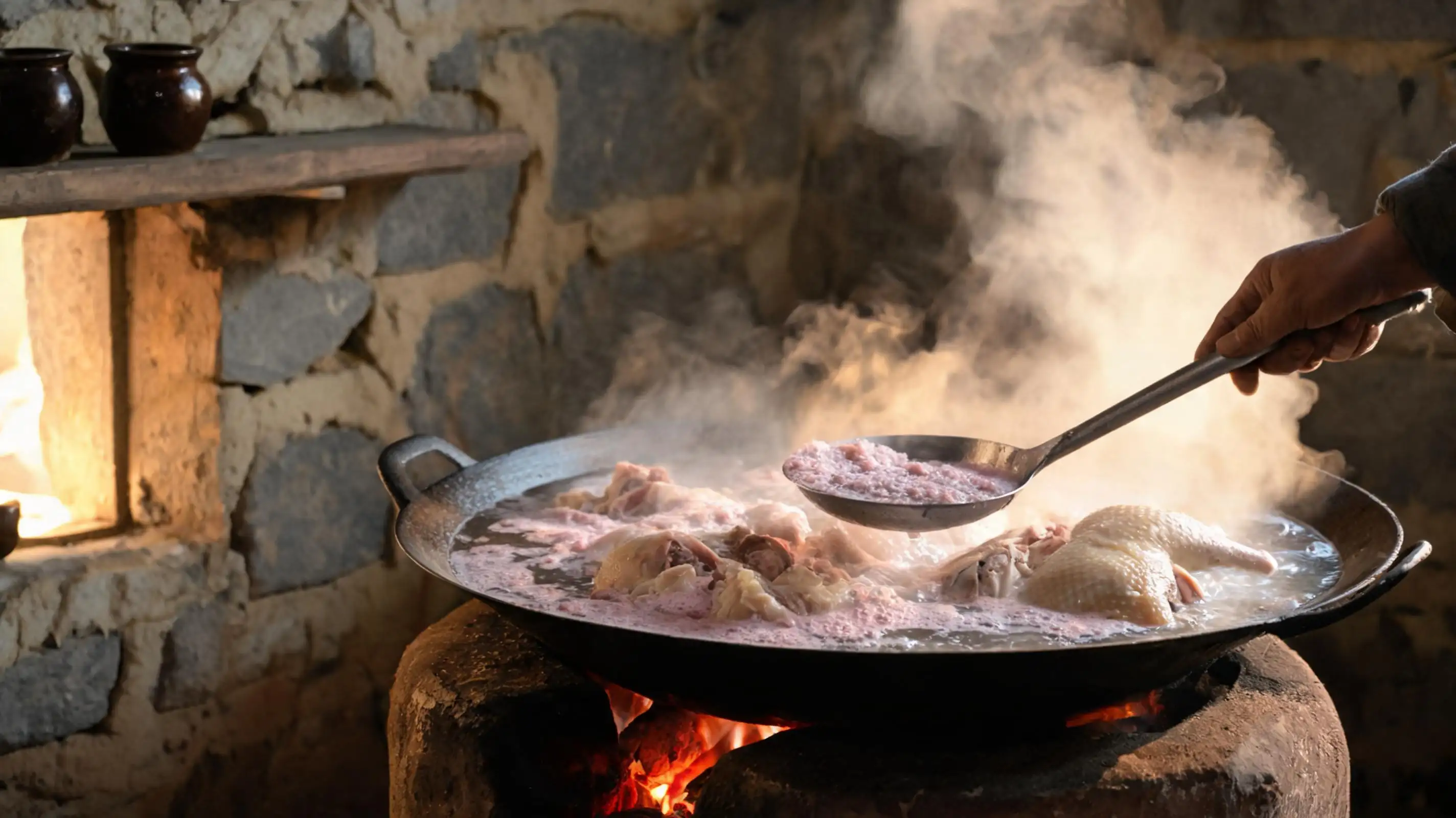
## 03 · The Blanch
Before anything goes in the wok, the chicken gets a quick dunk in boiling water.
This pulls out the blood and the grayness, gives you a cleaner base, and means the sauce you build later won't be clouded with foam. Skim as it rises. A couple of minutes is enough. Then pull the pieces out and let them drain.
It's a step a lot of home cooks skip. It shows.
---
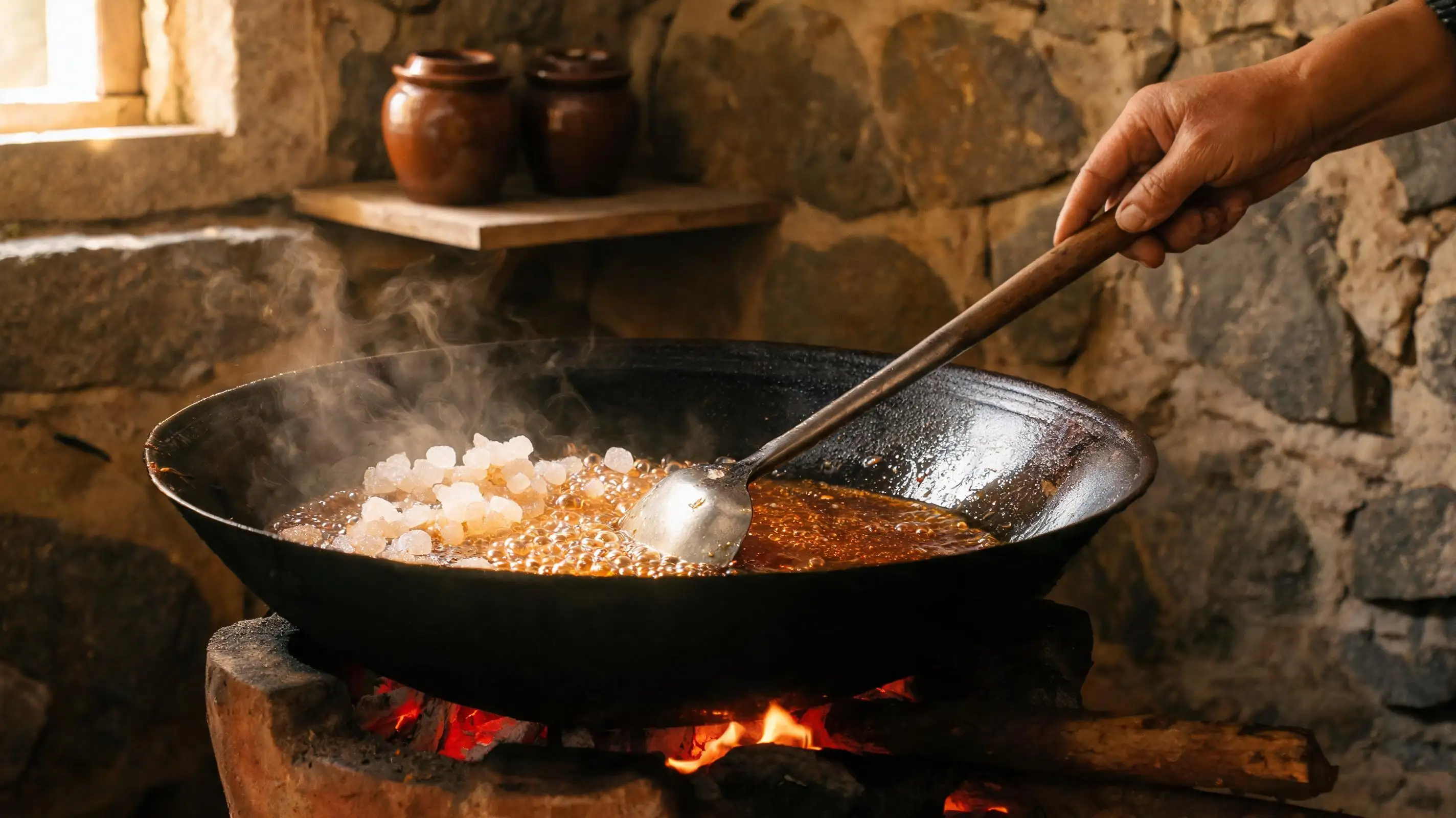
## 04 · The Caramel
A dry wok. A handful of rock sugar. Medium heat.
Watch it melt. Watch it bubble. Watch it turn from clear to gold to amber to a deep, almost angry brown. This is where the color of the whole dish comes from — that mahogany-lacquered finish that makes big plate chicken look the way it does.
Pull it too early and the sauce tastes sweet. Hold it a beat too long and it turns bitter. You learn by burning it once.
---
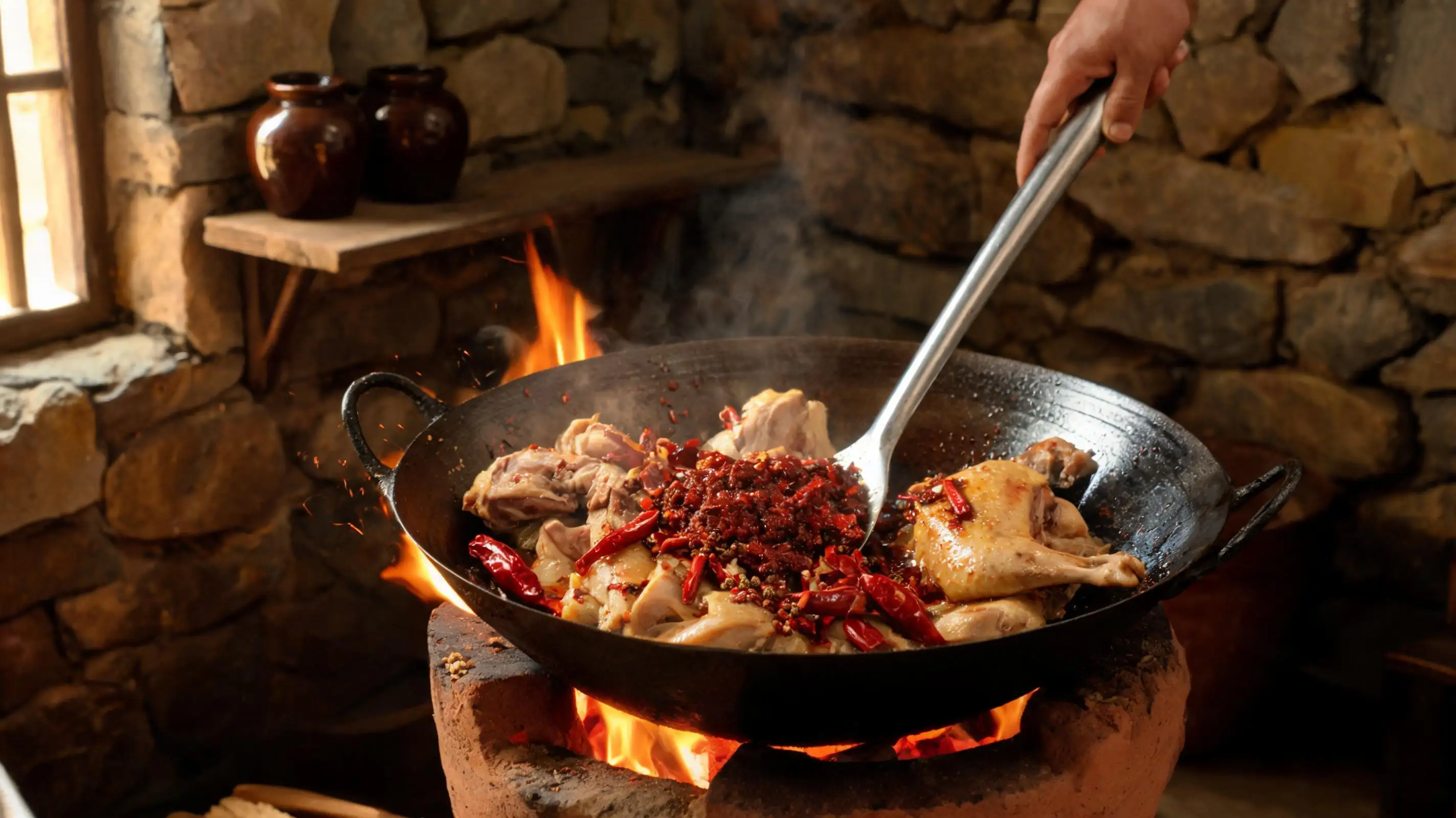
## 05 · The Sizzle
The chicken goes in. The noise is immediate.
While the pieces sear and coat in the caramel, the doubanjiang gets added directly — no bowls, no ceremony, just the paste dropped straight onto the hot oil. It fries fast, the red oil bleeds out, and the whole kitchen fills with that particular smell: fermented beans, chili heat, rendered fat.
Dried chilies and Sichuan peppercorns pile in next. The spatula keeps moving.
---
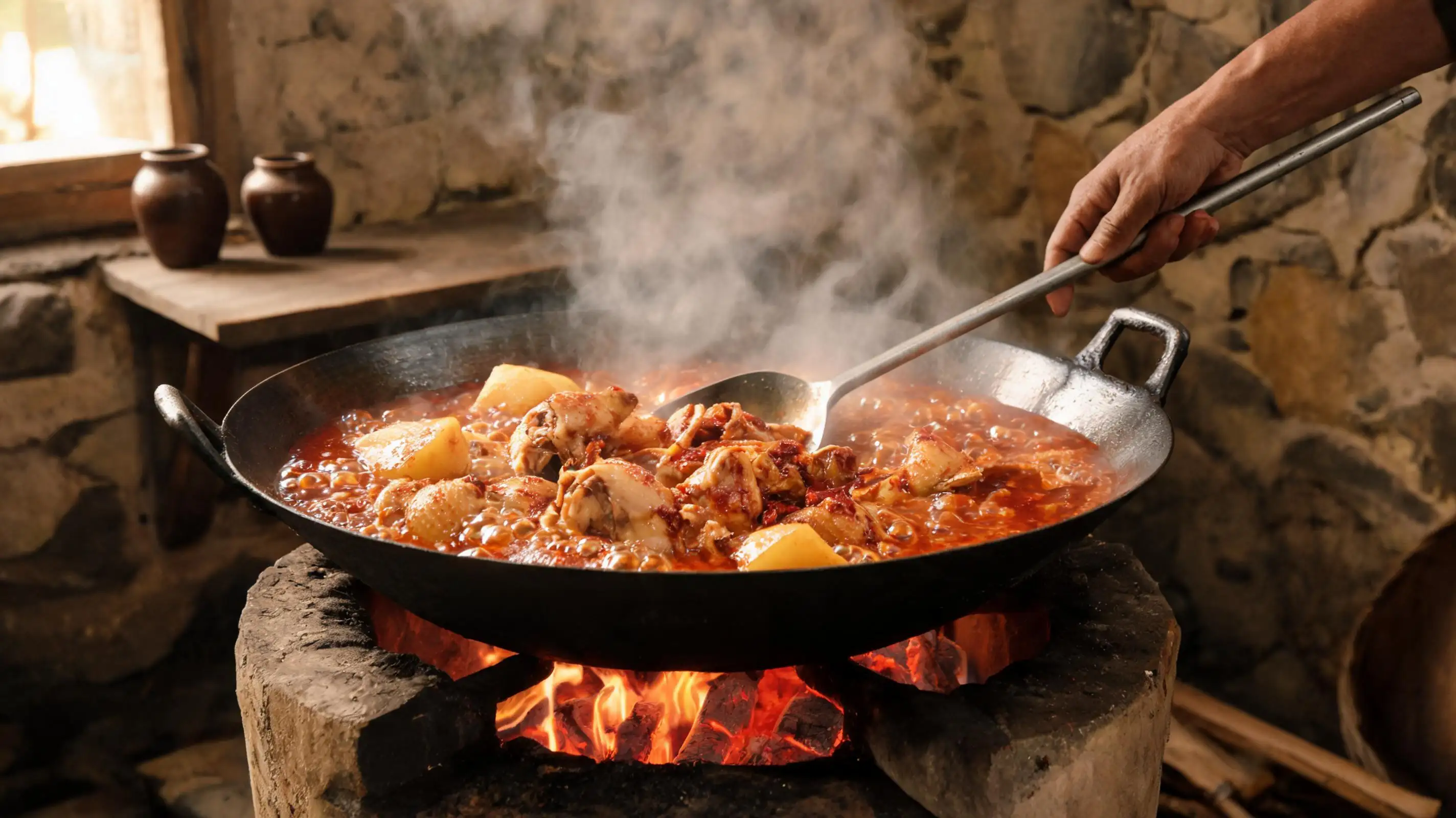
## 06 · The Braise
Hot water hits the wok and everything changes register.
The potatoes go in — cut thick, skin left on. The liquid comes up around the chicken, red-brown and already rich from everything that came before it. A hard boil to start, then settle it down to a steady roll and leave it alone.
This is where patience earns its keep. Twenty minutes, lid on, medium heat. The potatoes take on the sauce. The chicken gets tender all the way to the bone.
---
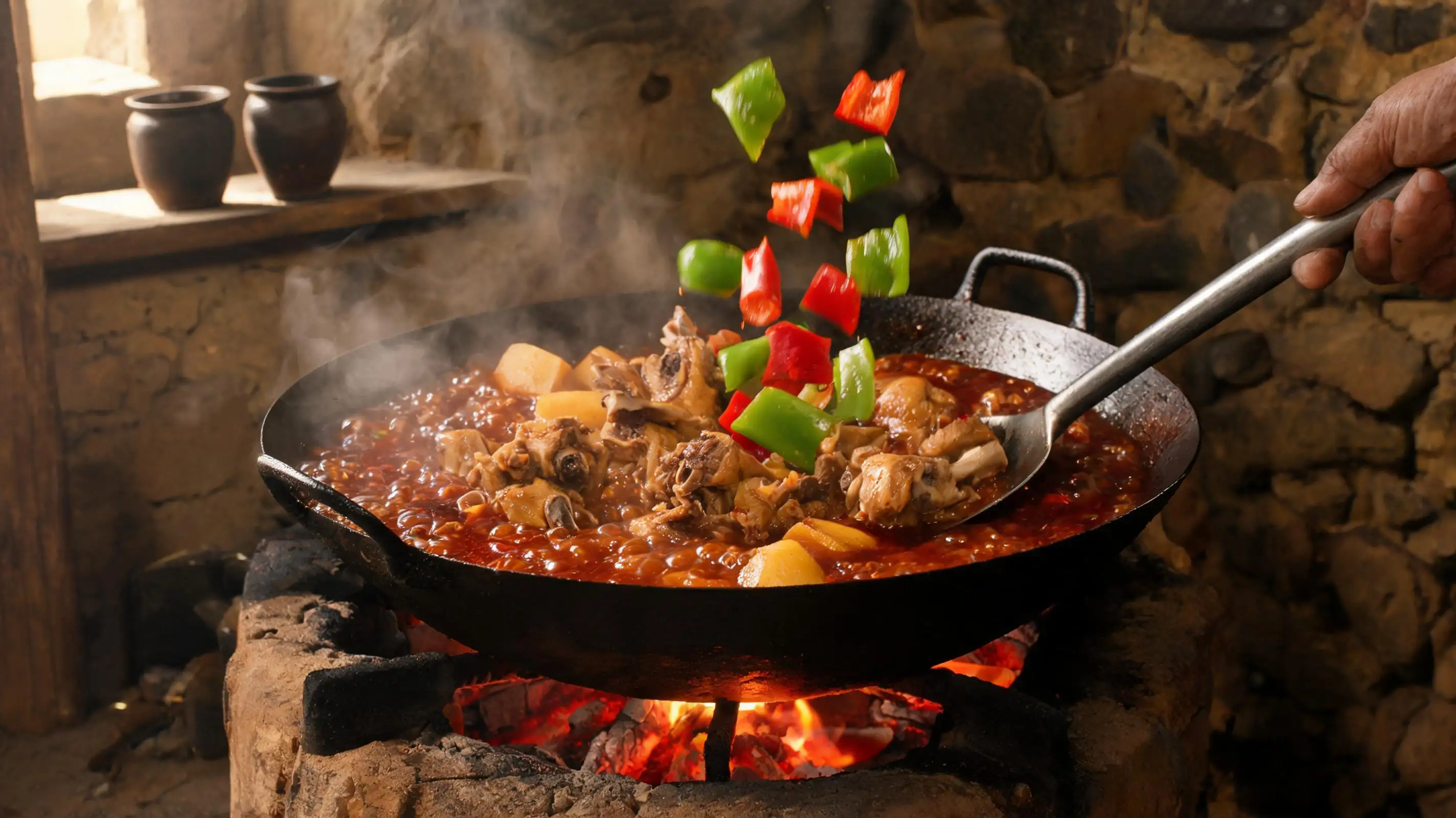
## 07 · The Color
Right at the end, the bell peppers.
Green and red, cut into wide chunks, dropped in over the top. They don't need long — five minutes at most. You want them just softened, still with some bite, their color still vivid against the dark sauce.
This is the last thing that goes in before the fire goes off.
---
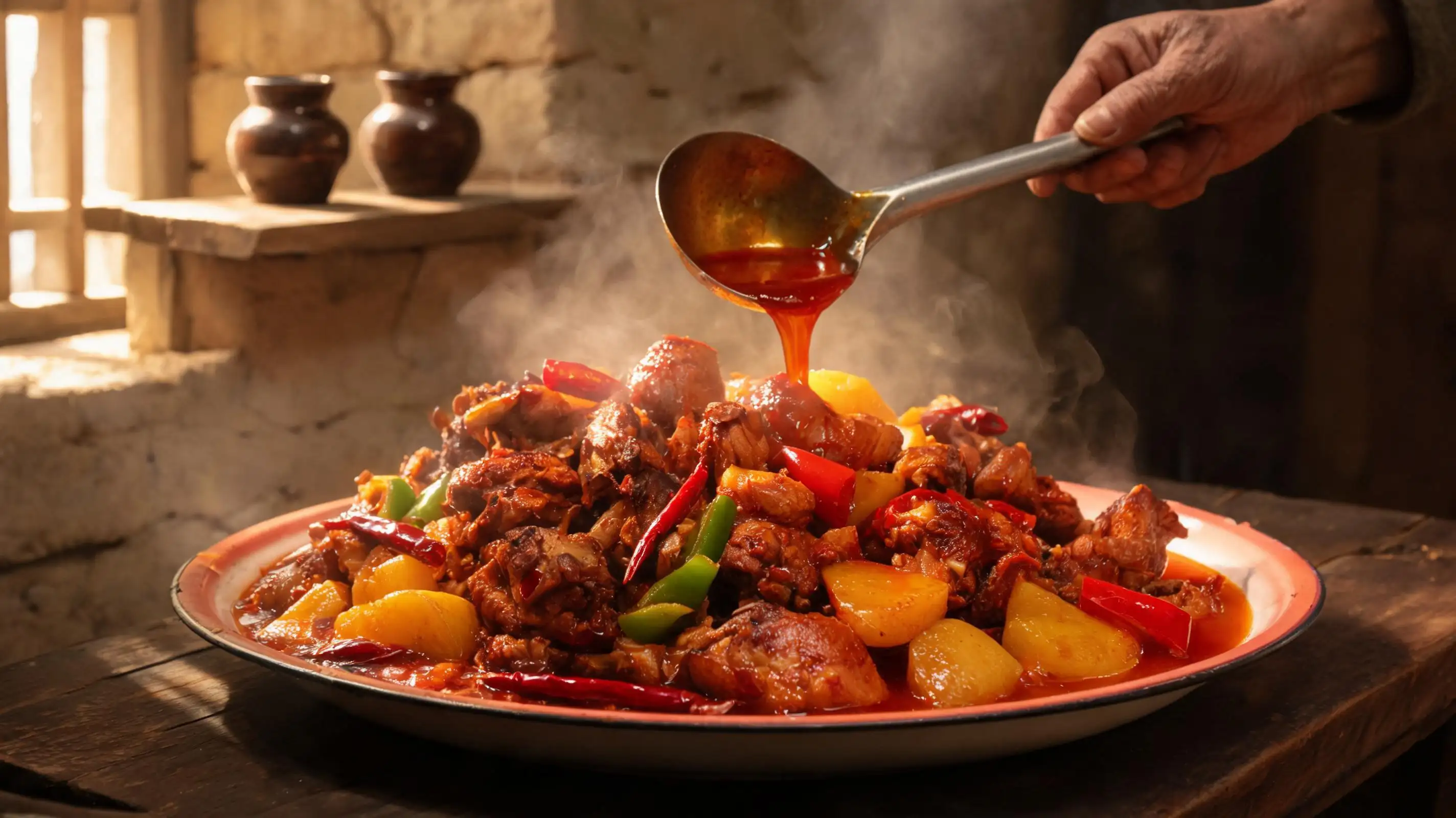
## 08 · The Plate
Out of the wok, onto the dish.
The sauce goes last — ladled over the top in a slow pour so it coats everything on the way down. There's enough of it that it pools at the bottom of the platter, ready to be soaked up.
Serve it while it's still steaming. It doesn't improve with waiting.
---
## 09 · The Feast
On the table: the chicken. Next to it: a bowl of wide hand-pulled noodles.
This is the part that separates big plate chicken from everything else. The noodles aren't a side — they're the whole second act. You pull them through the sauce, you eat them alongside the chicken, and somewhere around the third or fourth bite you understand why this dish has its own category.
One pot. Two bowls. As many people as you can fit around the table.
---
*Shot on a wood-burning clay stove, in a stone-walled kitchen, the way it's supposed to be made.*
---
## 01 · The Lineup
Every good meal starts with respect for the ingredients.
Bone-in chicken. Rock sugar. Dried chilies. Sichuan peppercorns. Doubanjiang. Potatoes. Bell peppers. Nothing fancy, nothing exotic — just honest pantry staples that, when treated right, turn into something people talk about for years.
This is what the table looks like before the fire gets involved.
---
## 02 · The Cut
No thin slices here. A heavy cleaver, a confident hand, and bone-in pieces big enough to hold up to an hour of hard braising.
The bones matter. They give the sauce body. The skin matters too — it holds the fat that the whole dish runs on. Take your time with the cuts, but don't overthink them. Rustic is the point.
---
## 03 · The Blanch
Before anything goes in the wok, the chicken gets a quick dunk in boiling water.
This pulls out the blood and the grayness, gives you a cleaner base, and means the sauce you build later won't be clouded with foam. Skim as it rises. A couple of minutes is enough. Then pull the pieces out and let them drain.
It's a step a lot of home cooks skip. It shows.
---
## 04 · The Caramel
A dry wok. A handful of rock sugar. Medium heat.
Watch it melt. Watch it bubble. Watch it turn from clear to gold to amber to a deep, almost angry brown. This is where the color of the whole dish comes from — that mahogany-lacquered finish that makes big plate chicken look the way it does.
Pull it too early and the sauce tastes sweet. Hold it a beat too long and it turns bitter. You learn by burning it once.
---
## 05 · The Sizzle
The chicken goes in. The noise is immediate.
While the pieces sear and coat in the caramel, the doubanjiang gets added directly — no bowls, no ceremony, just the paste dropped straight onto the hot oil. It fries fast, the red oil bleeds out, and the whole kitchen fills with that particular smell: fermented beans, chili heat, rendered fat.
Dried chilies and Sichuan peppercorns pile in next. The spatula keeps moving.
---
## 06 · The Braise
Hot water hits the wok and everything changes register.
The potatoes go in — cut thick, skin left on. The liquid comes up around the chicken, red-brown and already rich from everything that came before it. A hard boil to start, then settle it down to a steady roll and leave it alone.
This is where patience earns its keep. Twenty minutes, lid on, medium heat. The potatoes take on the sauce. The chicken gets tender all the way to the bone.
---
## 07 · The Color
Right at the end, the bell peppers.
Green and red, cut into wide chunks, dropped in over the top. They don't need long — five minutes at most. You want them just softened, still with some bite, their color still vivid against the dark sauce.
This is the last thing that goes in before the fire goes off.
---
## 08 · The Plate
Out of the wok, onto the dish.
The sauce goes last — ladled over the top in a slow pour so it coats everything on the way down. There's enough of it that it pools at the bottom of the platter, ready to be soaked up.
Serve it while it's still steaming. It doesn't improve with waiting.
---
## 09 · The Feast
On the table: the chicken. Next to it: a bowl of wide hand-pulled noodles.
This is the part that separates big plate chicken from everything else. The noodles aren't a side — they're the whole second act. You pull them through the sauce, you eat them alongside the chicken, and somewhere around the third or fourth bite you understand why this dish has its own category.
One pot. Two bowls. As many people as you can fit around the table.
---
*Shot on a wood-burning clay stove, in a stone-walled kitchen, the way it's supposed to be made.*