·5/11/2026
from
🐟Sweet and sour fish
# · TÁNG CÙ LÍ YÚ ·
## Sweet and Sour Carp — Crispy, Glossy, Unapologetically Bold
> One whole carp. One wok of furious oil. One ladle of lacquer-red sauce.
> The score cuts fan open in the heat like a peacock spreading its tail —
> and the moment that crimson glaze hits the golden crust, the kitchen goes silent.
---
## Ingredients
| Item | Amount |
|------|--------|
| Whole carp (cleaned) | 1 fish, ~1.2 kg |
| Cornstarch | 150 g |
| Eggs | 2 |
| Tomato paste | 3 tbsp |
| White sugar | 4 tbsp |
| Zhenjiang black vinegar | 3 tbsp |
| Cooking wine (料酒) | 2 tbsp |
| Fresh ginger | 6 slices |
| Garlic cloves | 4, minced |
| Green onion | 2 stalks |
| Salt | 1 tsp |
| Neutral oil | enough to deep-fry |
> Yield: 2–3 servings · Best served immediately · The crust does not survive leftovers
---
## Step 1 · The Lineup
### Everything on the board before the knife moves
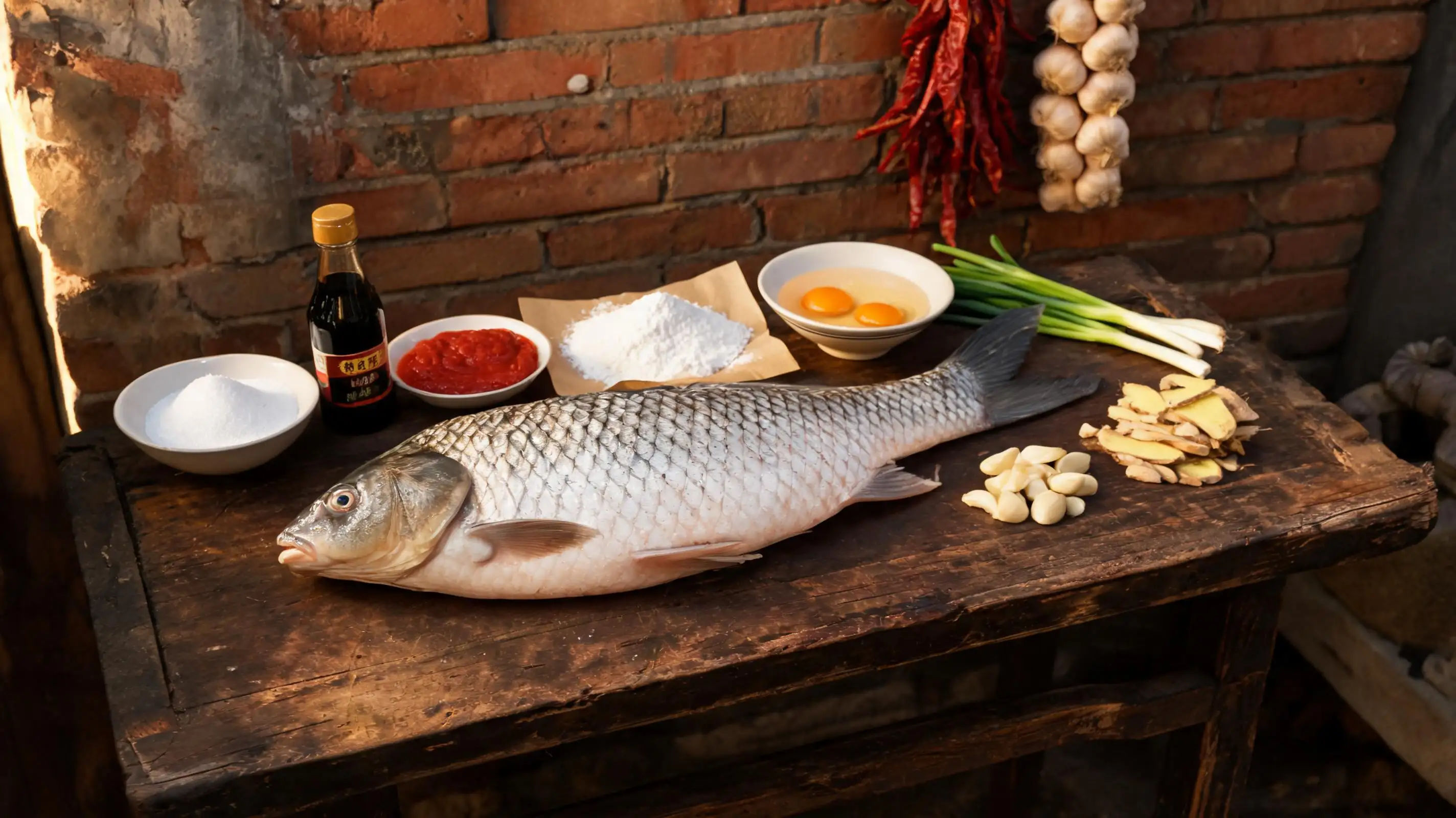
A whole carp still smells like the river. Lay it flat on the wooden counter and take stock: cornstarch, eggs, tomato paste, vinegar, sugar, ginger, garlic. Each one earns its place.
**Buy the freshest fish you can find — clear eyes, bright silver scales, no ammonia smell.** This dish cannot rescue a mediocre ingredient; it can only amplify a great one.
---
## Step 2 · The Score
### Deep diagonal cuts, all the way to the spine
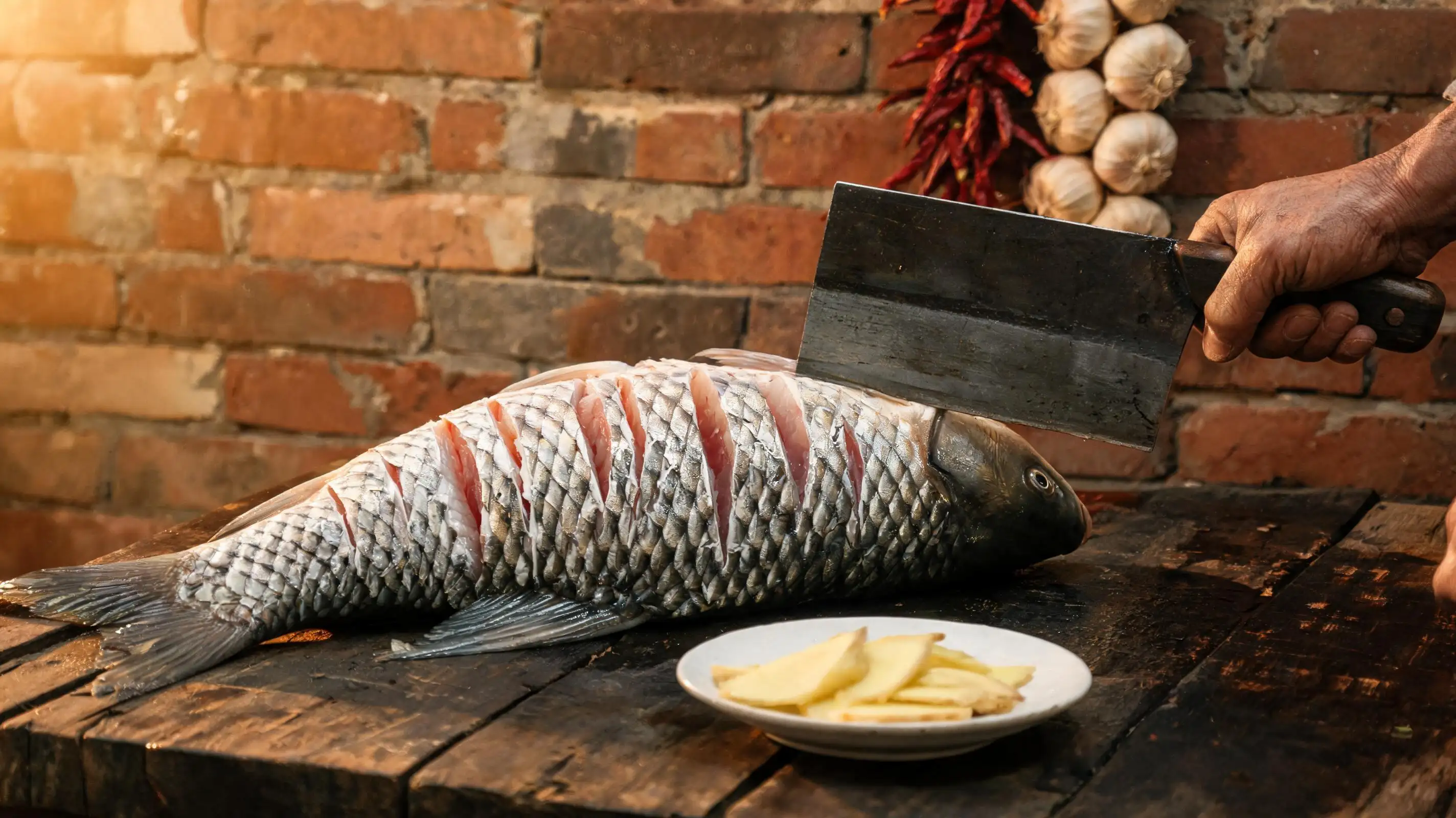
Hold the fish firm. Angle the cleaver at 45 degrees and press down hard — each cut **must reach the bone** to allow the flesh to fan open properly in the oil. Space them 2 cm apart, running head to tail on both sides.
These aren't decorative. **Without deep score cuts, the fish stays stiff in the wok, the starch bakes on in clumps, and the sauce has nowhere to cling.** Seventeen cuts. Both sides. No shortcuts.
---
## Step 3 · The Marinate
### Cooking wine, ginger, salt — thirty minutes of patience
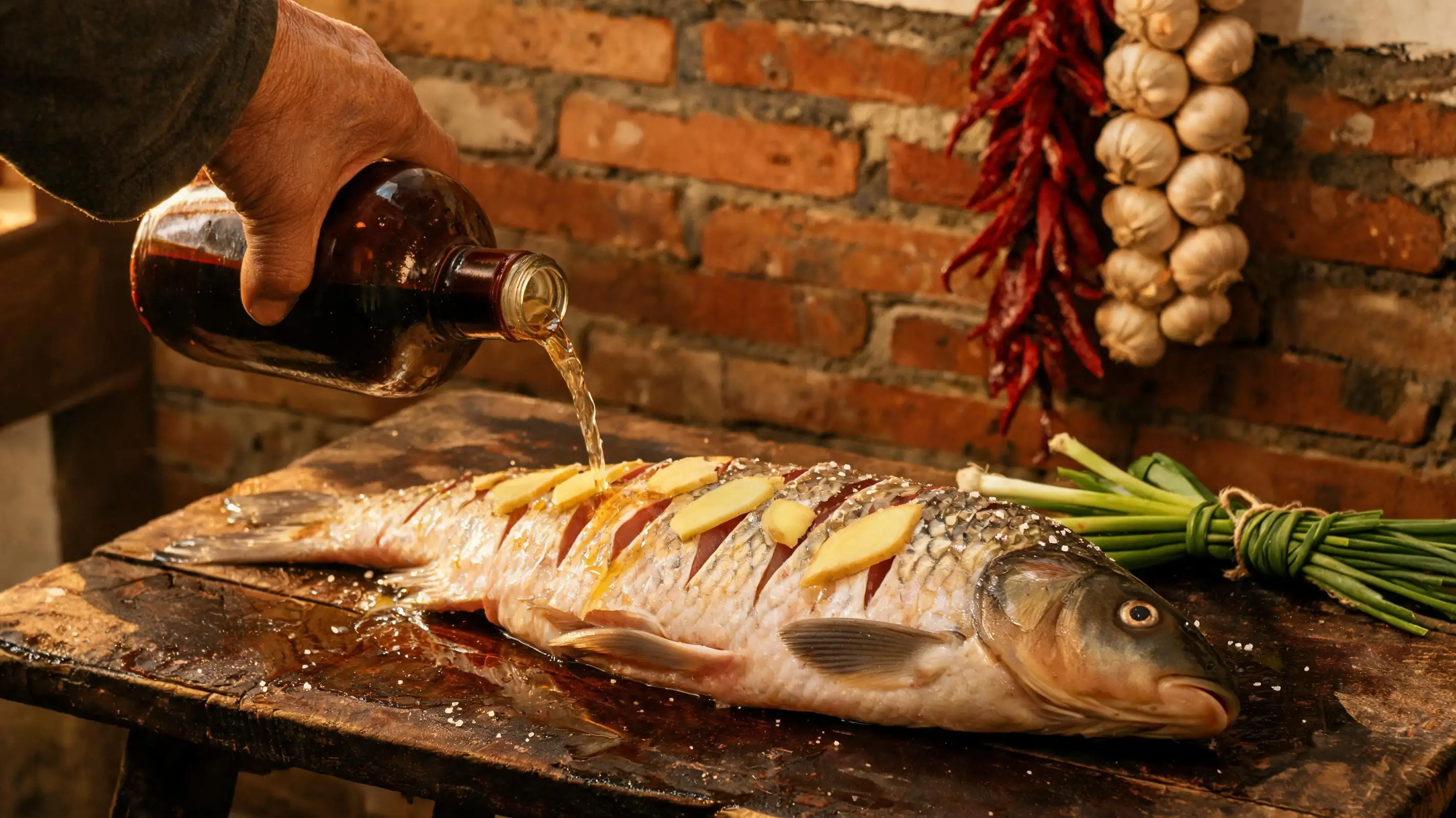
Tuck a ginger slice into every single cut. Pour cooking wine over the scored surface generously, letting it run deep into each opening. Rub salt into the skin and the slashes. Tie two green onion knots around the body and set aside.
**Thirty minutes minimum.** The wine draws out the muddy river notes; the ginger seals the gap. Skip this step and the fish will fight back at the table — a faint earthy bitterness that no sauce can fully bury.
---
## Step 4 · The Coat
### A blizzard of white starch, into every cut
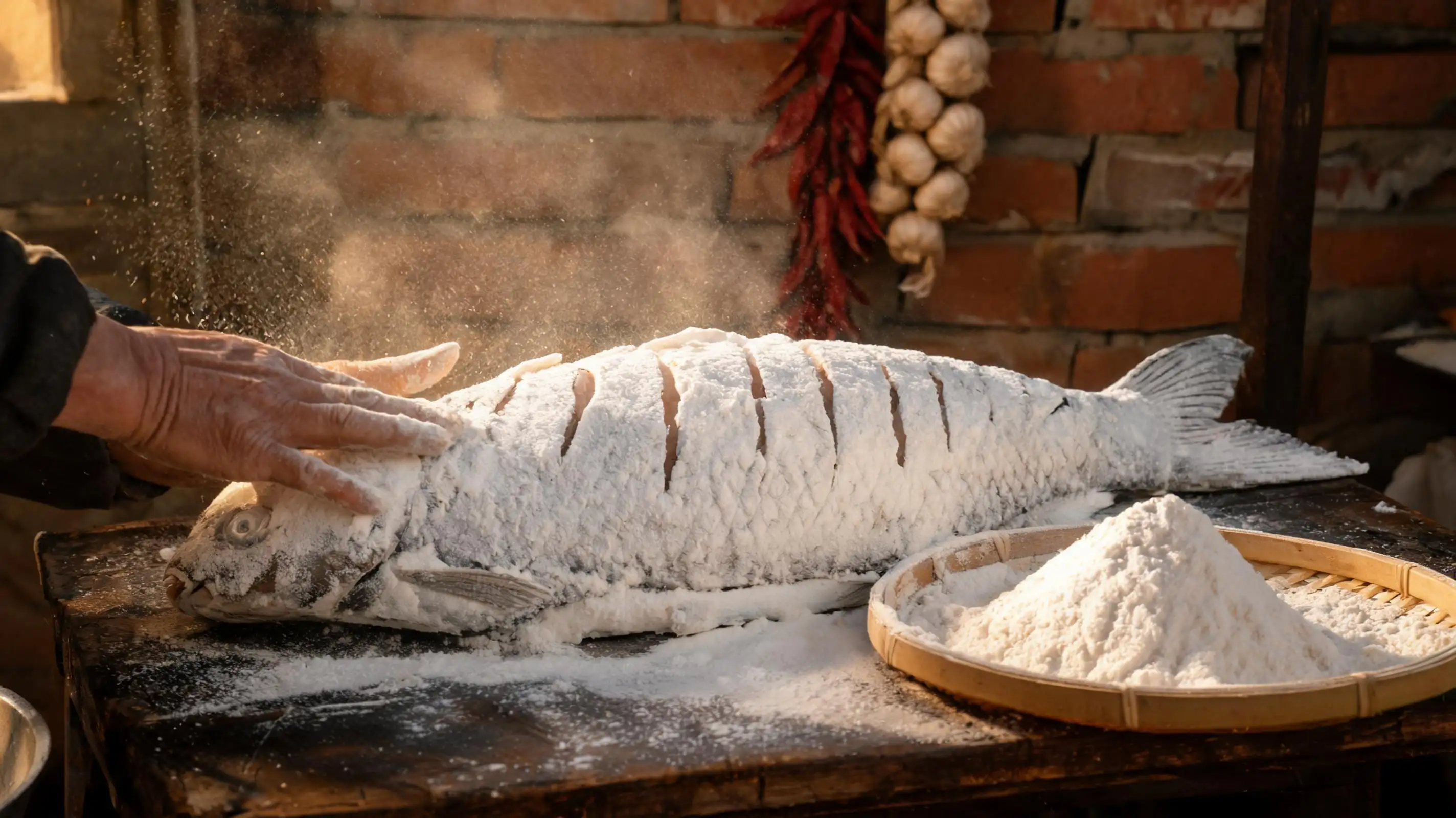
Pat the fish completely dry first — moisture is the enemy of a crispy crust. Then dust cornstarch over every surface: the skin, the fins, the inside of each score cut. Press it in with your palm. A small cloud of white powder will float up in the morning light.
**The fish should be uniformly snow-white before it touches the oil.** Any bare patch will blister and stick. Any thick clump will create a doughy bubble instead of a crisp shell.
---
## Step 5 · The Fry
### Grip the tail. Lower it into the fury.
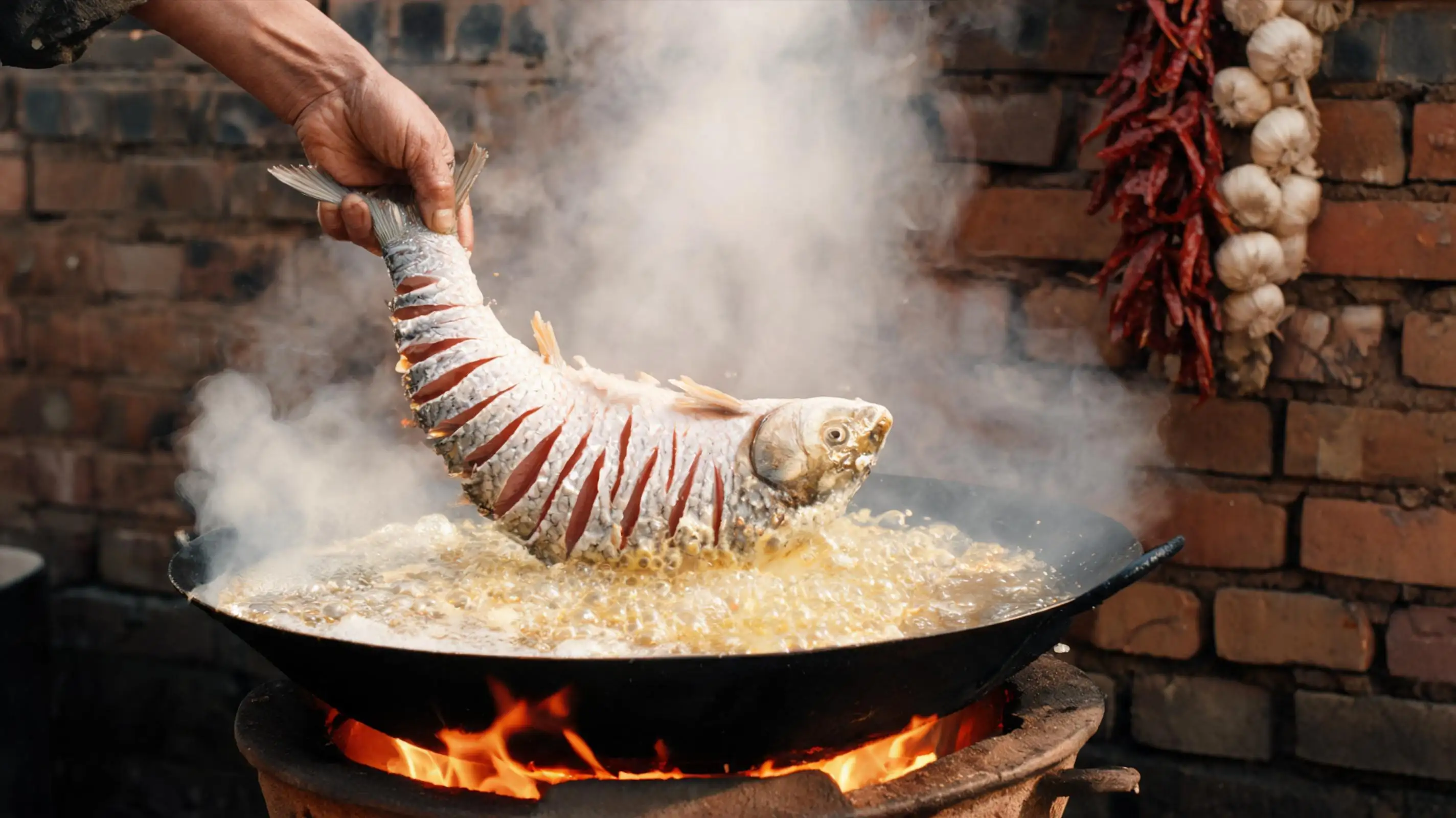
Heat the oil to 200°C — a pinch of starch dropped in should sizzle violently on contact. Grip the carp firmly by the tail and lower it head-first into the wok in a single committed motion.
*The score cuts explode open immediately, fanning into ridges like a peacock at full display.* The starch turns golden in under ninety seconds at the submerged end. Hold the tail high, basting the upper body with spoonfuls of hot oil, until the entire fish is deep amber and rigid.
**Do not crowd. Do not rush. Do not walk away.**
| Stage | Time | Visual Cue |
|-------|------|------------|
| Initial contact | 0–30 sec | Violent bubbling, cuts fan open |
| First fry | 1–3 min | Starch crisps to pale gold |
| Second fry (re-fry) | 1 min | Deep golden-brown, shell knocks hollow |
> ⚠️ Re-frying at high heat for the final 60 seconds is not optional — it drives out residual moisture and locks in the crunch that survives the sauce pour.
---
## Step 6 · The Sauce
### Tomato red goes lacquer-glossy at exactly the right moment
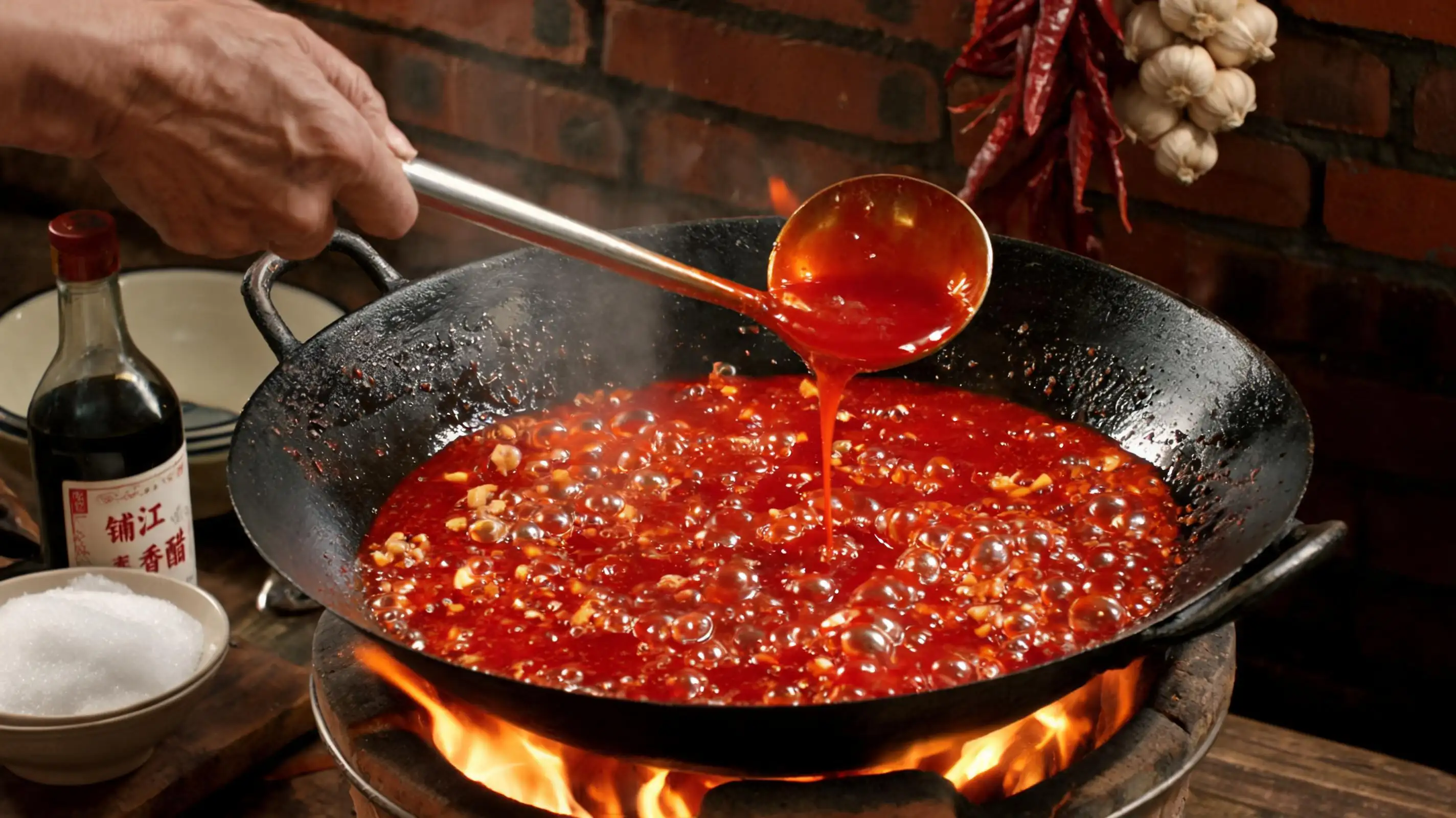
In a clean wok over high heat: a splash of oil, then garlic and ginger until fragrant. Add tomato paste and stir until it darkens slightly and smells toasted — about 90 seconds. Pour in sugar, vinegar, and a splash of water. **Stir constantly as the sugar dissolves and the mixture begins to bubble across the entire surface.**
When the sauce pulls away from the sides of the wok in a slow, glossy sheet — *that* is the moment. Add a cornstarch slurry, stir once, and watch it thicken to a trembling, translucent crimson syrup.
**The sauce should coat the back of a spoon and fall in a slow ribbon, not run off like water.**
---
## Step 7 · The Finish
### Pour from height. Let it sizzle. Put it on the table.
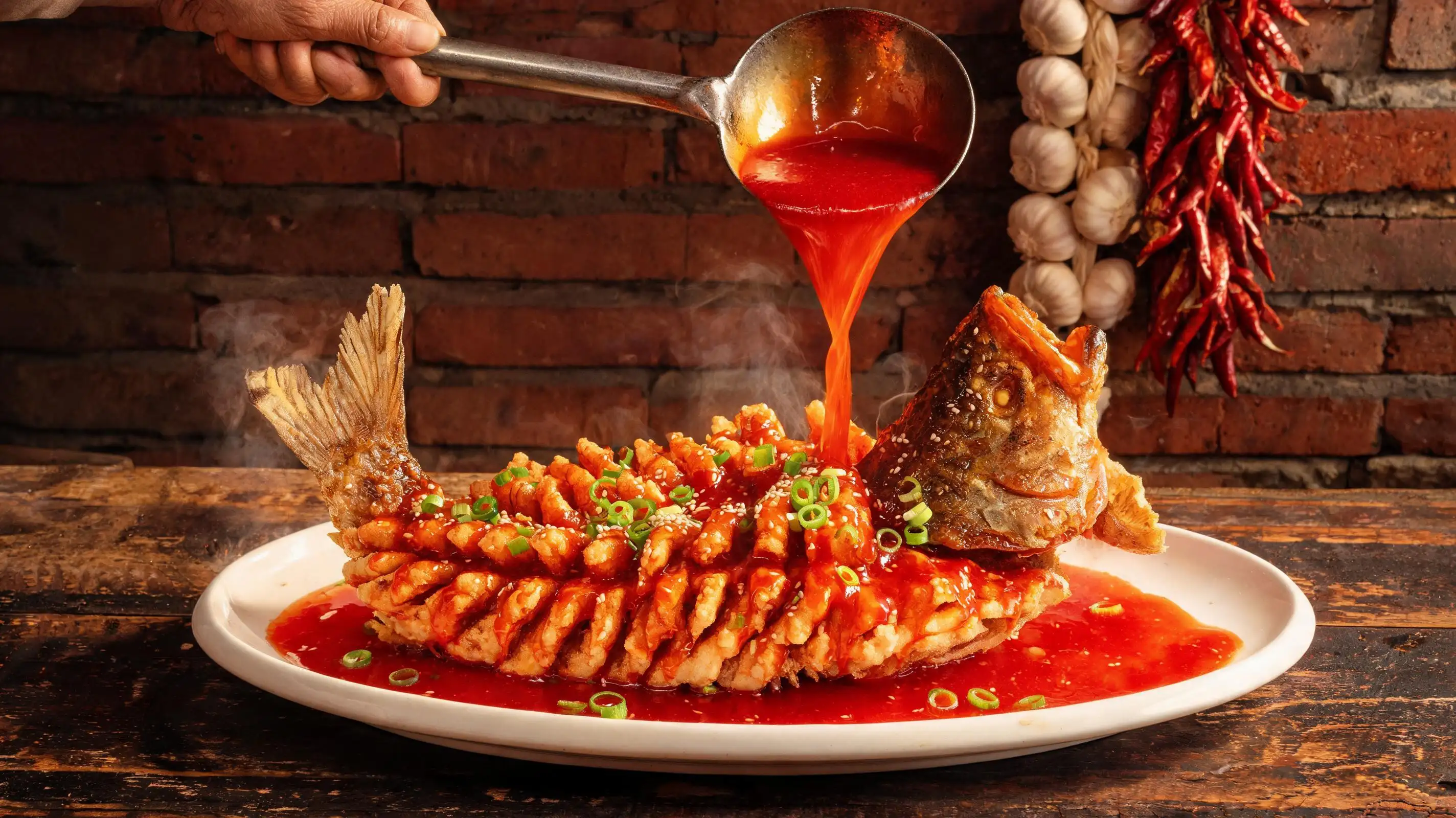
Plate the fried carp on a wide ceramic platter. Hold the ladle high — **not drizzling, pouring** — and let the crimson sauce cascade down from above, splashing across the golden ridges and pooling around the fish in a vivid red moat.
The hot sauce hits the hot crust and *sings*. A thin wisp of steam rises. Scatter green onion rings and sesame seeds. Carry it to the table while it is still crackling.
## Sweet and Sour Carp — Crispy, Glossy, Unapologetically Bold
> One whole carp. One wok of furious oil. One ladle of lacquer-red sauce.
> The score cuts fan open in the heat like a peacock spreading its tail —
> and the moment that crimson glaze hits the golden crust, the kitchen goes silent.
---
## Ingredients
| Item | Amount |
|------|--------|
| Whole carp (cleaned) | 1 fish, ~1.2 kg |
| Cornstarch | 150 g |
| Eggs | 2 |
| Tomato paste | 3 tbsp |
| White sugar | 4 tbsp |
| Zhenjiang black vinegar | 3 tbsp |
| Cooking wine (料酒) | 2 tbsp |
| Fresh ginger | 6 slices |
| Garlic cloves | 4, minced |
| Green onion | 2 stalks |
| Salt | 1 tsp |
| Neutral oil | enough to deep-fry |
> Yield: 2–3 servings · Best served immediately · The crust does not survive leftovers
---
## Step 1 · The Lineup
### Everything on the board before the knife moves
A whole carp still smells like the river. Lay it flat on the wooden counter and take stock: cornstarch, eggs, tomato paste, vinegar, sugar, ginger, garlic. Each one earns its place.
**Buy the freshest fish you can find — clear eyes, bright silver scales, no ammonia smell.** This dish cannot rescue a mediocre ingredient; it can only amplify a great one.
---
## Step 2 · The Score
### Deep diagonal cuts, all the way to the spine
Hold the fish firm. Angle the cleaver at 45 degrees and press down hard — each cut **must reach the bone** to allow the flesh to fan open properly in the oil. Space them 2 cm apart, running head to tail on both sides.
These aren't decorative. **Without deep score cuts, the fish stays stiff in the wok, the starch bakes on in clumps, and the sauce has nowhere to cling.** Seventeen cuts. Both sides. No shortcuts.
---
## Step 3 · The Marinate
### Cooking wine, ginger, salt — thirty minutes of patience
Tuck a ginger slice into every single cut. Pour cooking wine over the scored surface generously, letting it run deep into each opening. Rub salt into the skin and the slashes. Tie two green onion knots around the body and set aside.
**Thirty minutes minimum.** The wine draws out the muddy river notes; the ginger seals the gap. Skip this step and the fish will fight back at the table — a faint earthy bitterness that no sauce can fully bury.
---
## Step 4 · The Coat
### A blizzard of white starch, into every cut
Pat the fish completely dry first — moisture is the enemy of a crispy crust. Then dust cornstarch over every surface: the skin, the fins, the inside of each score cut. Press it in with your palm. A small cloud of white powder will float up in the morning light.
**The fish should be uniformly snow-white before it touches the oil.** Any bare patch will blister and stick. Any thick clump will create a doughy bubble instead of a crisp shell.
---
## Step 5 · The Fry
### Grip the tail. Lower it into the fury.
Heat the oil to 200°C — a pinch of starch dropped in should sizzle violently on contact. Grip the carp firmly by the tail and lower it head-first into the wok in a single committed motion.
*The score cuts explode open immediately, fanning into ridges like a peacock at full display.* The starch turns golden in under ninety seconds at the submerged end. Hold the tail high, basting the upper body with spoonfuls of hot oil, until the entire fish is deep amber and rigid.
**Do not crowd. Do not rush. Do not walk away.**
| Stage | Time | Visual Cue |
|-------|------|------------|
| Initial contact | 0–30 sec | Violent bubbling, cuts fan open |
| First fry | 1–3 min | Starch crisps to pale gold |
| Second fry (re-fry) | 1 min | Deep golden-brown, shell knocks hollow |
> ⚠️ Re-frying at high heat for the final 60 seconds is not optional — it drives out residual moisture and locks in the crunch that survives the sauce pour.
---
## Step 6 · The Sauce
### Tomato red goes lacquer-glossy at exactly the right moment
In a clean wok over high heat: a splash of oil, then garlic and ginger until fragrant. Add tomato paste and stir until it darkens slightly and smells toasted — about 90 seconds. Pour in sugar, vinegar, and a splash of water. **Stir constantly as the sugar dissolves and the mixture begins to bubble across the entire surface.**
When the sauce pulls away from the sides of the wok in a slow, glossy sheet — *that* is the moment. Add a cornstarch slurry, stir once, and watch it thicken to a trembling, translucent crimson syrup.
**The sauce should coat the back of a spoon and fall in a slow ribbon, not run off like water.**
---
## Step 7 · The Finish
### Pour from height. Let it sizzle. Put it on the table.
Plate the fried carp on a wide ceramic platter. Hold the ladle high — **not drizzling, pouring** — and let the crimson sauce cascade down from above, splashing across the golden ridges and pooling around the fish in a vivid red moat.
The hot sauce hits the hot crust and *sings*. A thin wisp of steam rises. Scatter green onion rings and sesame seeds. Carry it to the table while it is still crackling.