·6/8/2026
from
Hot and Sour Shredded Potato
**Hot and Sour Shredded Potato** *(酸辣土豆丝)*
---
**Ingredients**
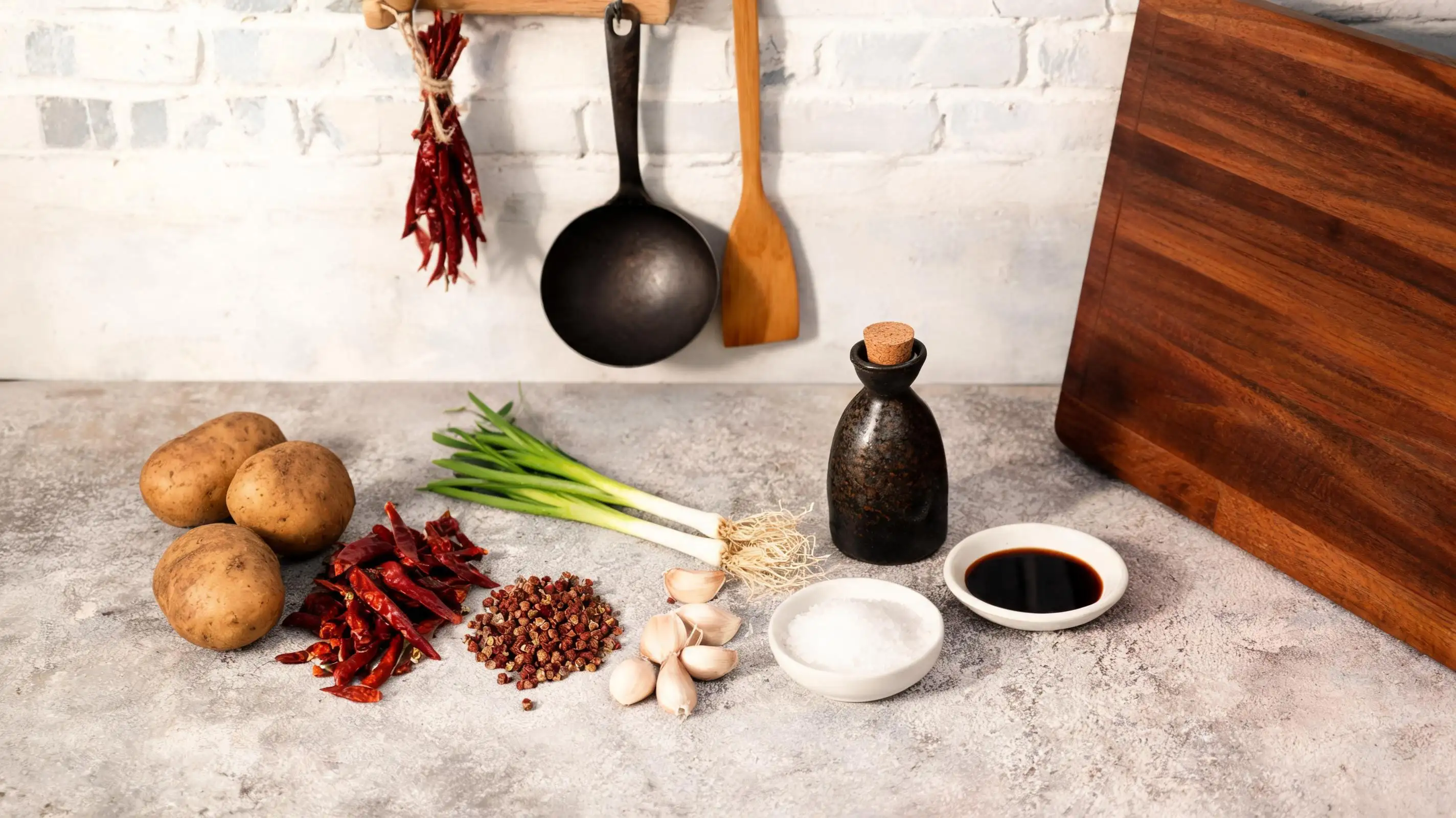
russet potatoes — two or three medium, peeled
dried red chili peppers — a small handful, cut into short sections, seeds shaken out or kept depending on heat preference
Sichuan peppercorns — a small pinch
garlic — three or four cloves, thinly sliced
scallion — one or two stalks, roots reserved for frying, green tops sliced thin for finishing
aged black vinegar (陈醋) — a generous pour, around two tablespoons
light soy sauce — a small splash
coarse salt
neutral cooking oil
---
**How it's made**
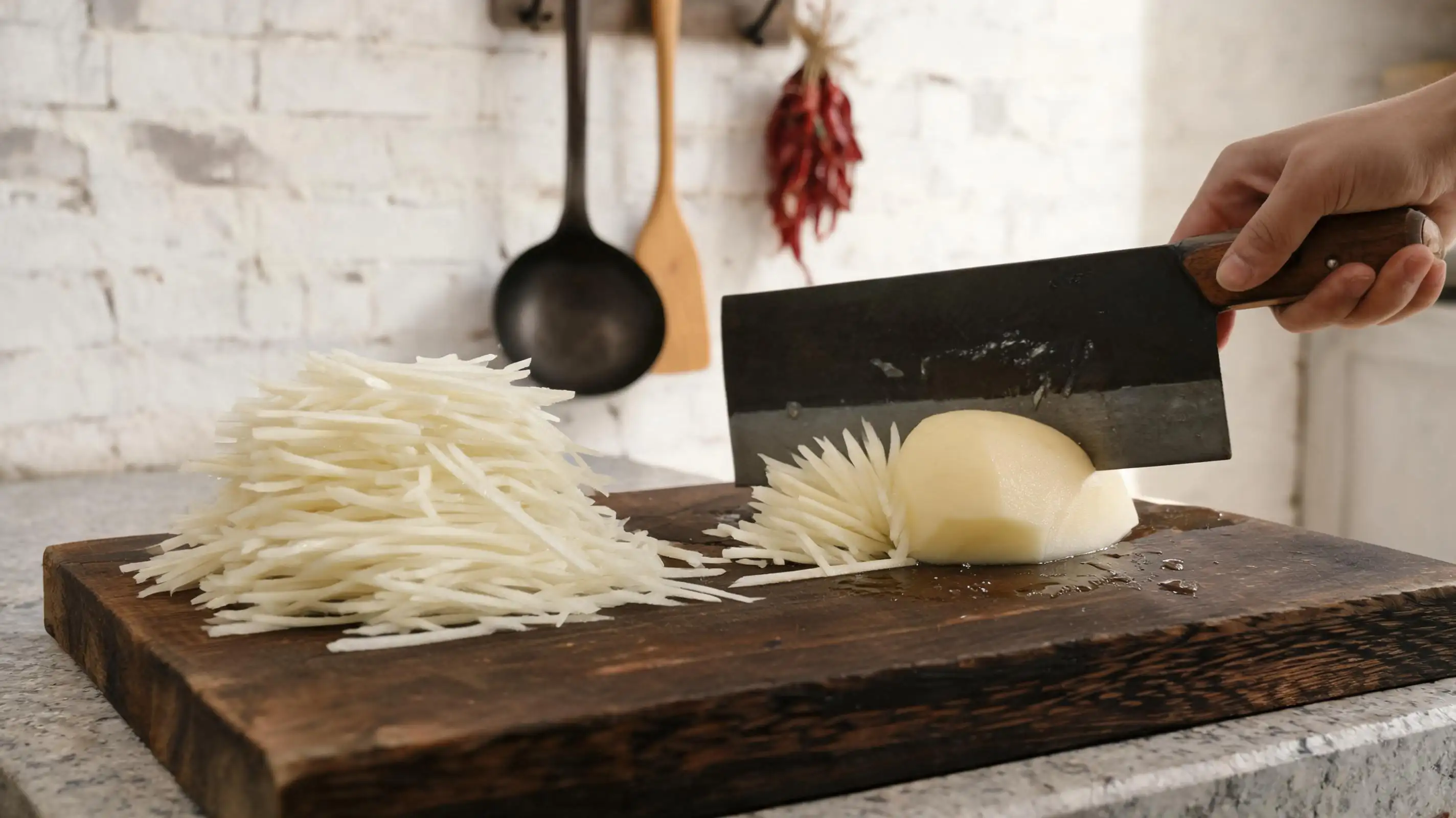
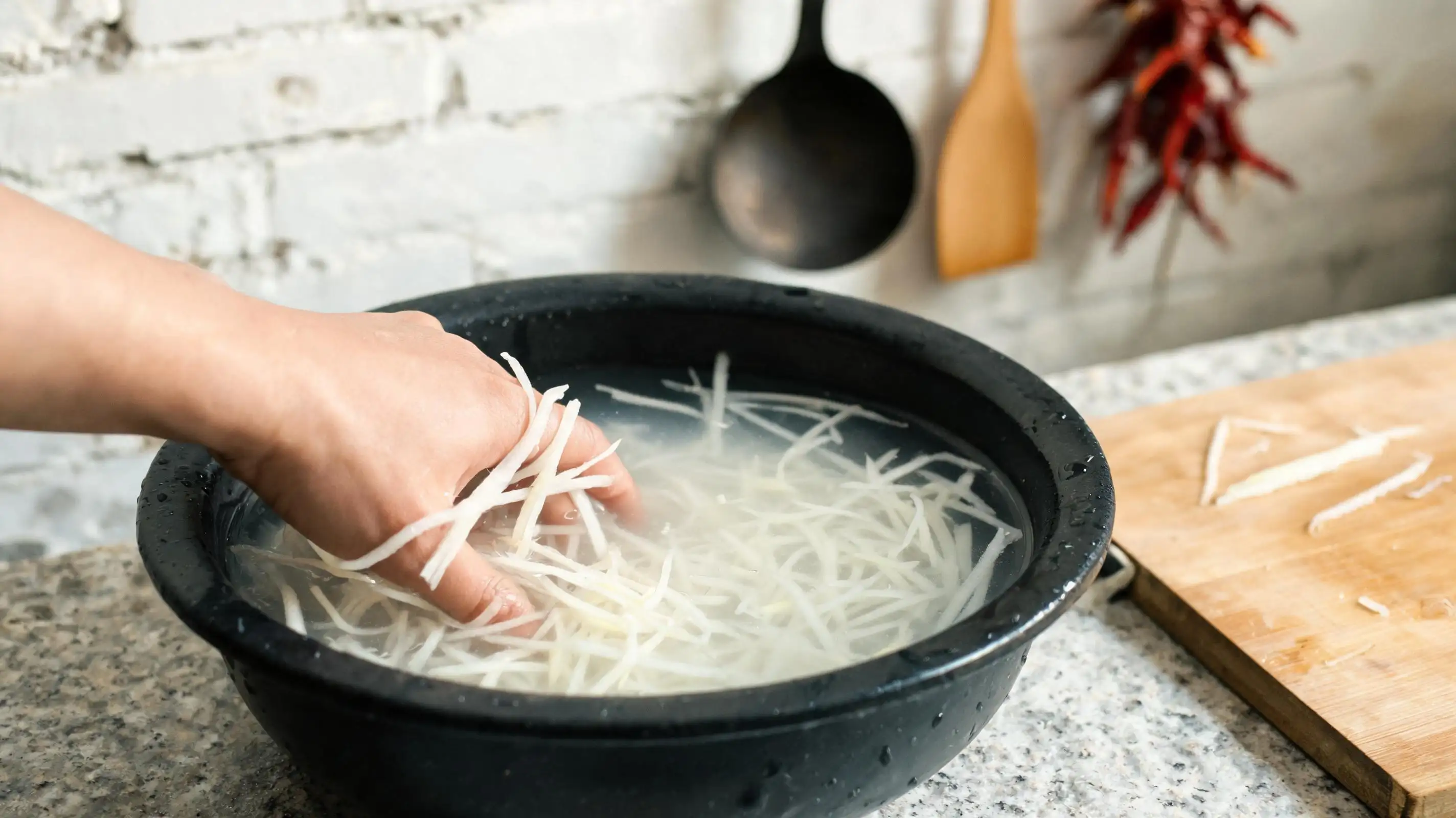
The potatoes are peeled and cut into thin planks, then each plank is stacked and cut again into matchstick shreds — thin enough that light passes through them, but not so thin they fall apart in the wok. The knife work takes practice: the shreds should be even and consistent, each one roughly the same width as the next. Once cut, they go straight into a bowl of cold water, the starch bleeding out in slow white clouds. The water turns milky within minutes. This step is not decorative — it is the difference between shreds that clump and turn gluey in the pan and shreds that stay separate and crisp. The soaking water is changed once, and the shreds rest for ten minutes before being drained and shaken dry.
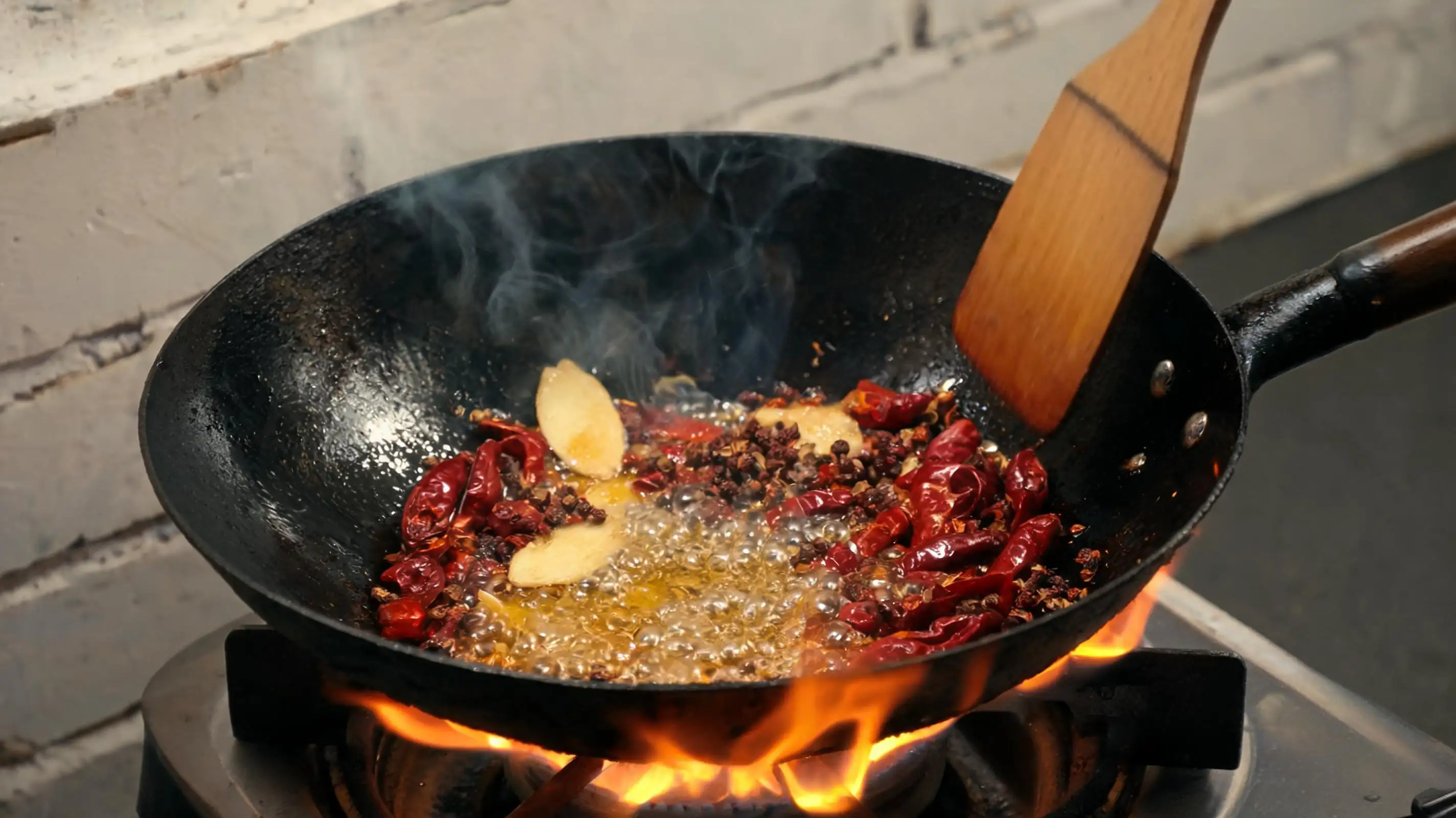
The wok goes on high heat, as high as the burner allows. Oil in, and immediately the dried chili sections and Sichuan peppercorns — not waiting for the oil to smoke, adding them while the temperature is still climbing so they infuse rather than burn. The chilies deepen from bright red to a darker shade, their surfaces blistering slightly, the oil around them turning faint amber-red. The garlic slices follow, thirty seconds behind, their edges just beginning to color. The whole wok at this point smells like something has been unlocked.
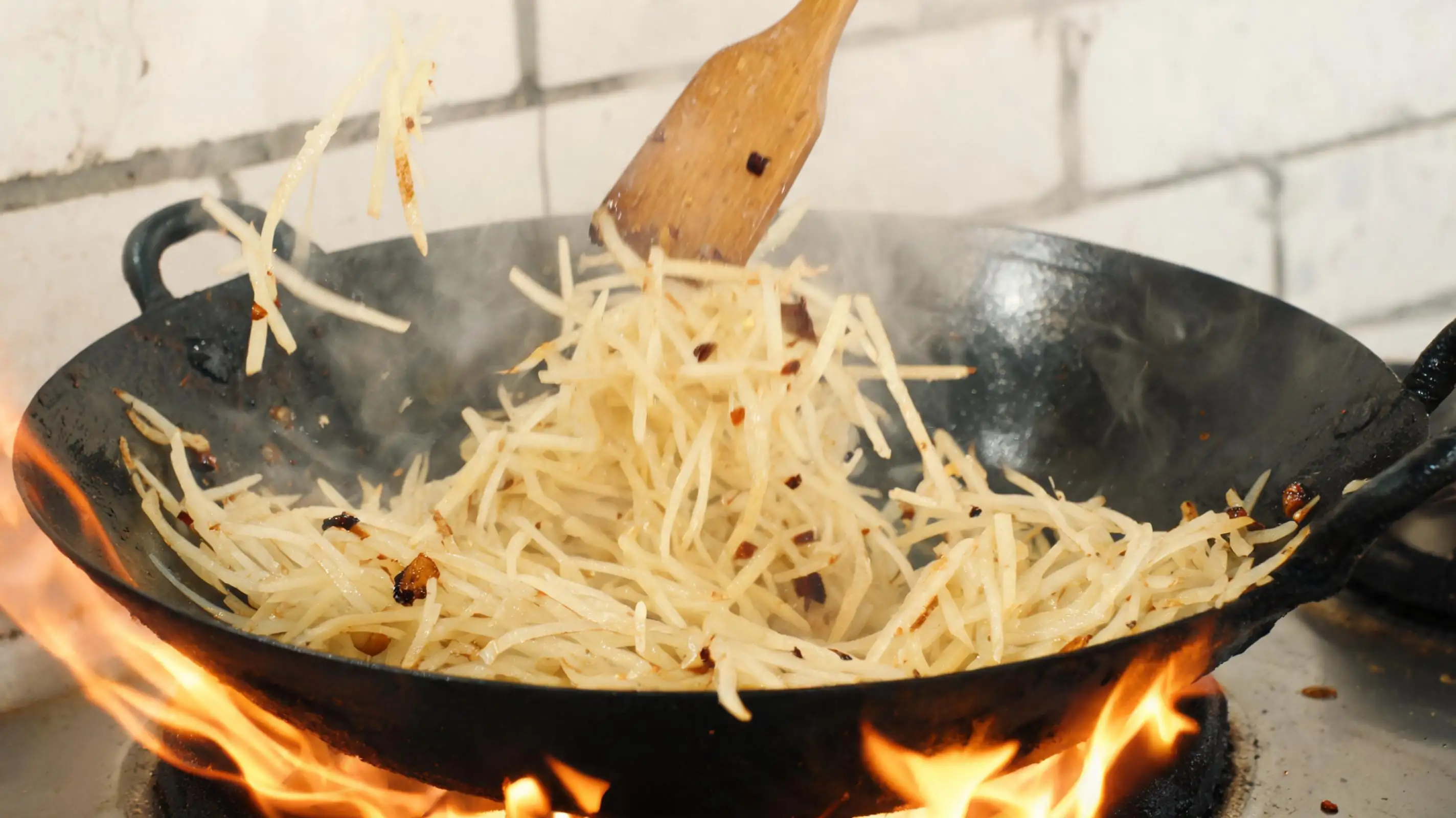
The drained potato shreds go in all at once. The heat stays high. The shreds hit the hot oiled surface and begin cooking almost immediately, the outer surfaces shifting from raw white to a softer, slightly translucent shade. The spatula moves constantly — lifting, folding, pressing the shreds against the wok wall, lifting again. They should not sit still long enough to stick. The wok needs to be loud.
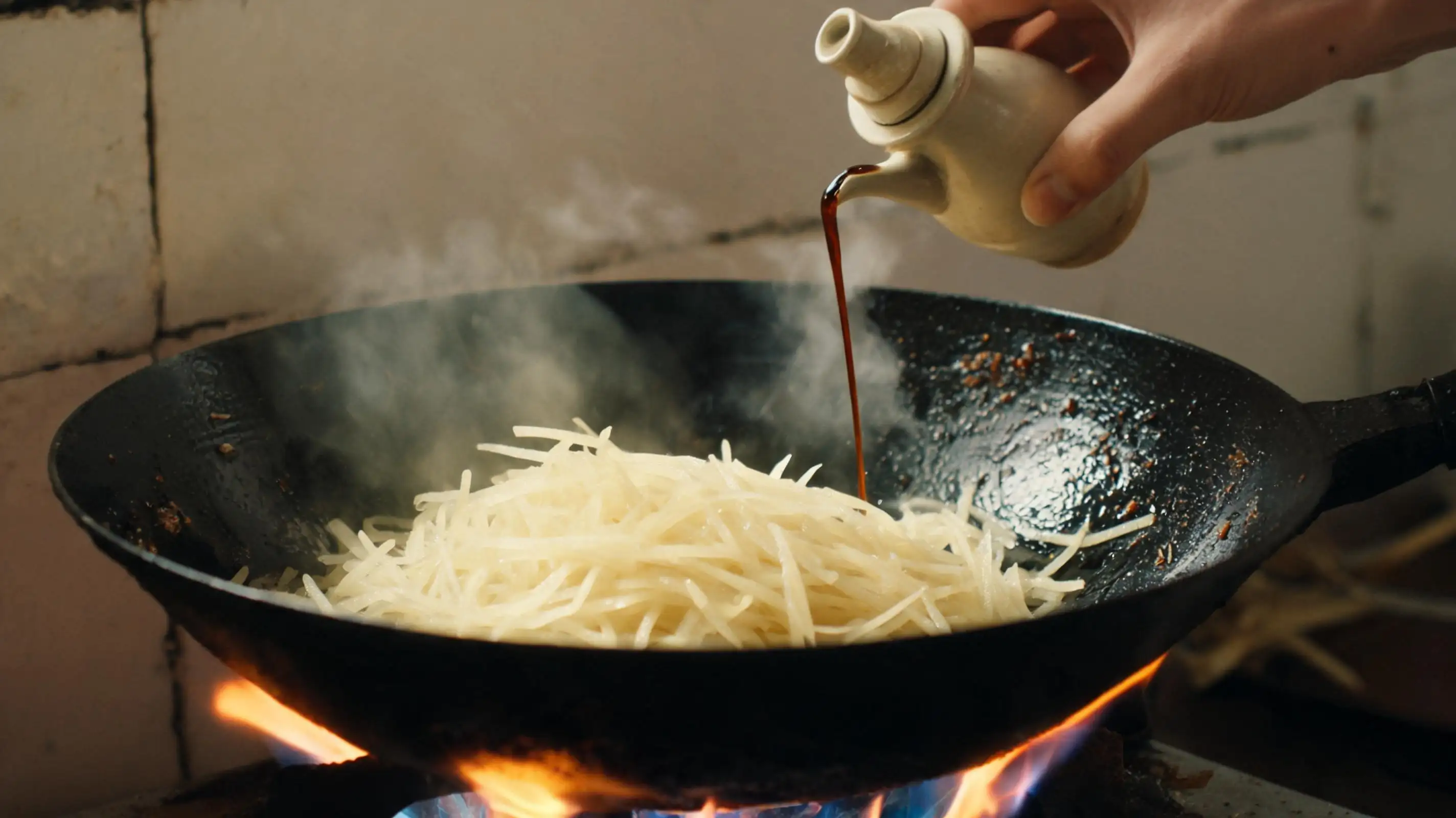
Before the shreds are fully cooked — while they still have a little resistance at the center — the vinegar goes in along the wok wall, not poured directly onto the food. The dark stream hits the scorching iron and vaporizes on contact, a sharp white puff of steam rising from the wok edge, the vinegar smell hitting the air before it reaches the ingredients. This technique lets the vinegar cook briefly against the iron before mixing in, softening its raw edge while keeping its brightness. A small splash of soy sauce follows. Salt. Final toss.
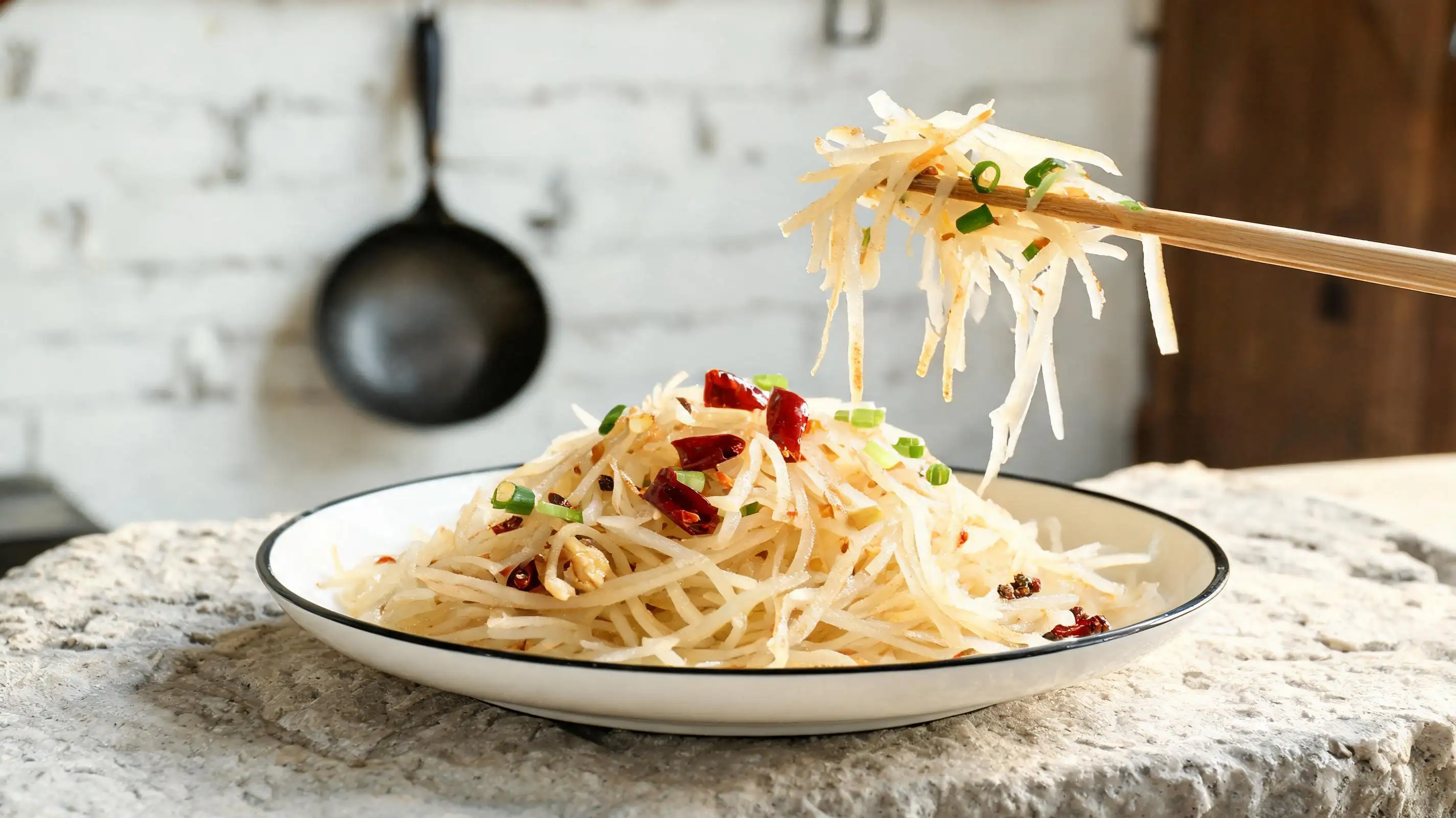
Seven minutes from when the shreds first hit the wok to when they reach the plate. The finished dish should be pale and lightly glistening, the shreds still holding their shape, with a clean sharp acidity and a warmth from the chili that builds rather than immediately burns. The Sichuan peppercorns leave a faint numbing echo. The garlic is mostly dissolved into the oil by now, present as flavor rather than as texture. The scallion greens go on last, their raw freshness sitting lightly on top of everything else.
This is a dish that appears on almost every home dinner table in China in some version or other — varying by region in the ratio of acid to heat, in the choice of vinegar, in whether the peppercorn is included or left out. It is sometimes considered too simple to order at a restaurant, the kind of thing you make yourself on a weeknight when you need something real on the table and don't have much time. The simplicity is not a limitation. It is the point.
---
**Ingredients**
russet potatoes — two or three medium, peeled
dried red chili peppers — a small handful, cut into short sections, seeds shaken out or kept depending on heat preference
Sichuan peppercorns — a small pinch
garlic — three or four cloves, thinly sliced
scallion — one or two stalks, roots reserved for frying, green tops sliced thin for finishing
aged black vinegar (陈醋) — a generous pour, around two tablespoons
light soy sauce — a small splash
coarse salt
neutral cooking oil
---
**How it's made**
The potatoes are peeled and cut into thin planks, then each plank is stacked and cut again into matchstick shreds — thin enough that light passes through them, but not so thin they fall apart in the wok. The knife work takes practice: the shreds should be even and consistent, each one roughly the same width as the next. Once cut, they go straight into a bowl of cold water, the starch bleeding out in slow white clouds. The water turns milky within minutes. This step is not decorative — it is the difference between shreds that clump and turn gluey in the pan and shreds that stay separate and crisp. The soaking water is changed once, and the shreds rest for ten minutes before being drained and shaken dry.
The wok goes on high heat, as high as the burner allows. Oil in, and immediately the dried chili sections and Sichuan peppercorns — not waiting for the oil to smoke, adding them while the temperature is still climbing so they infuse rather than burn. The chilies deepen from bright red to a darker shade, their surfaces blistering slightly, the oil around them turning faint amber-red. The garlic slices follow, thirty seconds behind, their edges just beginning to color. The whole wok at this point smells like something has been unlocked.
The drained potato shreds go in all at once. The heat stays high. The shreds hit the hot oiled surface and begin cooking almost immediately, the outer surfaces shifting from raw white to a softer, slightly translucent shade. The spatula moves constantly — lifting, folding, pressing the shreds against the wok wall, lifting again. They should not sit still long enough to stick. The wok needs to be loud.
Before the shreds are fully cooked — while they still have a little resistance at the center — the vinegar goes in along the wok wall, not poured directly onto the food. The dark stream hits the scorching iron and vaporizes on contact, a sharp white puff of steam rising from the wok edge, the vinegar smell hitting the air before it reaches the ingredients. This technique lets the vinegar cook briefly against the iron before mixing in, softening its raw edge while keeping its brightness. A small splash of soy sauce follows. Salt. Final toss.
Seven minutes from when the shreds first hit the wok to when they reach the plate. The finished dish should be pale and lightly glistening, the shreds still holding their shape, with a clean sharp acidity and a warmth from the chili that builds rather than immediately burns. The Sichuan peppercorns leave a faint numbing echo. The garlic is mostly dissolved into the oil by now, present as flavor rather than as texture. The scallion greens go on last, their raw freshness sitting lightly on top of everything else.
This is a dish that appears on almost every home dinner table in China in some version or other — varying by region in the ratio of acid to heat, in the choice of vinegar, in whether the peppercorn is included or left out. It is sometimes considered too simple to order at a restaurant, the kind of thing you make yourself on a weeknight when you need something real on the table and don't have much time. The simplicity is not a limitation. It is the point.