·5/13/2026
from
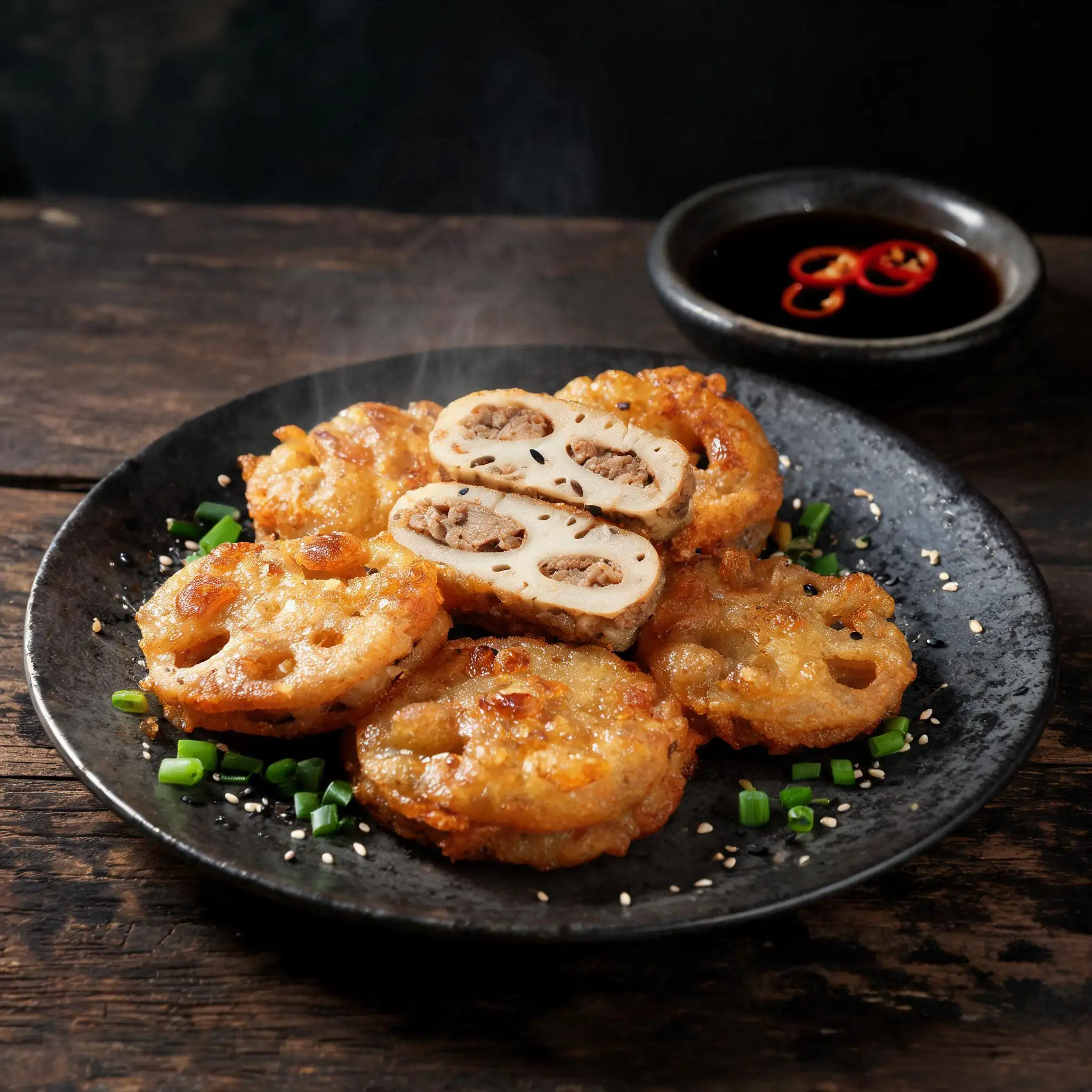
Lotus root stuffed with meat
# · ŌU JIÀ ·
## Stuffed Lotus Root Sandwich — Battered, Fried, Still Piping Hot
> The lotus root is already good on its own — sweet, crunchy, faintly earthy
> Two thin slices stay hinged at the base, pork filling pressed between them like a secret
> What comes out of the oil is something else entirely
---
**Serves** 3–4 · **Active time** 35 min · **Total time** 50 min
---
## Ingredients
**Main**
| Item | Amount |
|------|--------|
| Fresh lotus root, mid-section | 600 g (2–3 thick sections) |
| Ground pork, 30% fat | 300 g |
**Pork Marinade**
| Item | Amount |
|------|--------|
| Scallions, finely minced | 2 stalks |
| Fresh ginger, grated | 1 tsp |
| Light soy sauce | 1 tbsp |
| Sesame oil | 1 tsp |
| Ground white pepper | ¼ tsp |
| Salt | ½ tsp |
| Egg white | from 1 egg |
**Batter**
| Item | Amount |
|------|--------|
| All-purpose flour | 100 g |
| Cornstarch | 30 g |
| Egg | 1 whole |
| Cold water | 130–140 ml |
| Salt | a pinch |
**Dipping Sauce**
| Item | Amount |
|------|--------|
| Light soy sauce | 3 tbsp |
| Rice vinegar | 1 tbsp |
| Fresh red chili, sliced into rings | 3–4 rings |
| Sesame oil | a few drops |
---
## Step 1 · The Lineup
### Everything on the board before the oil goes on
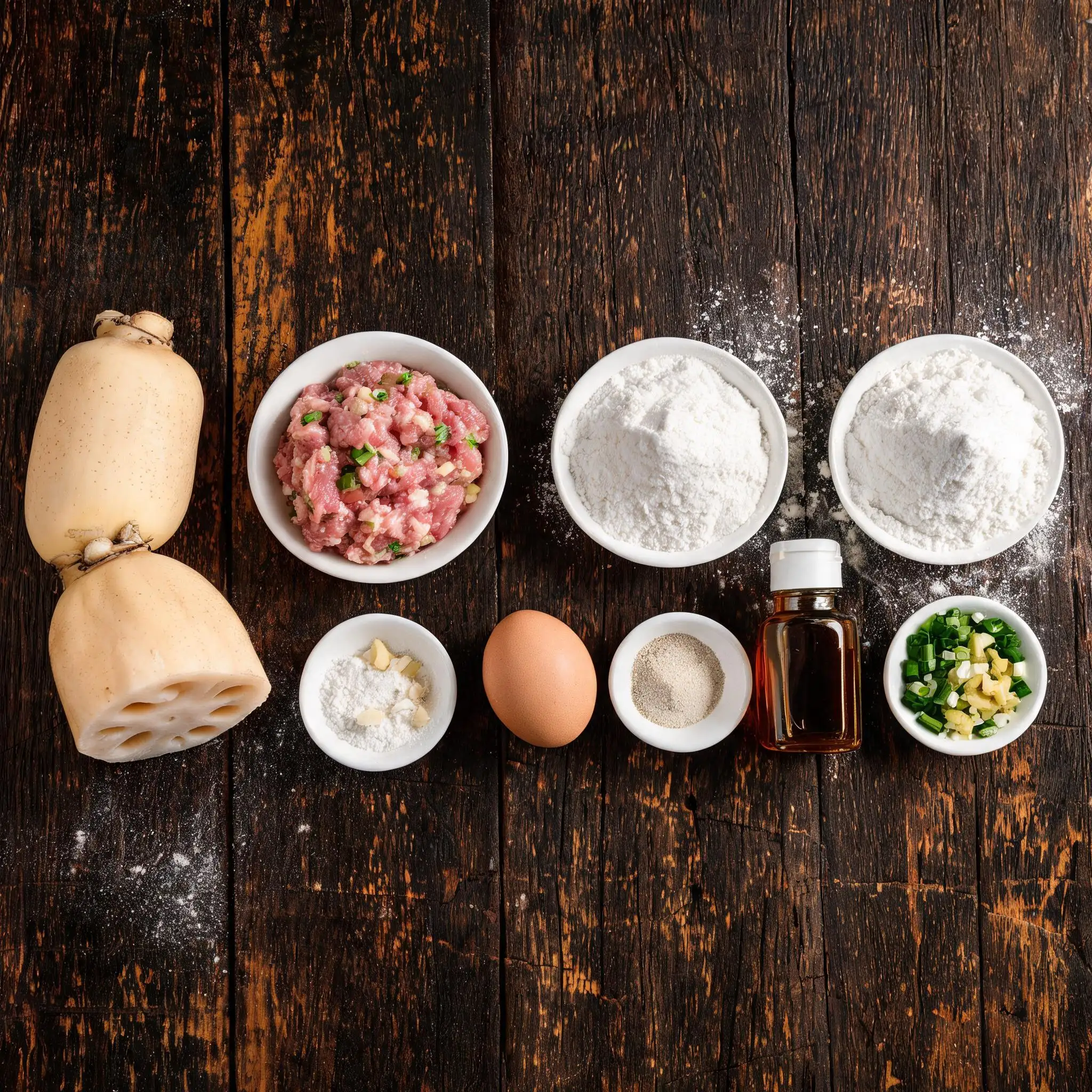
Lay out everything before you start cutting. The lotus root should feel heavy and firm — knock on it lightly and it sounds almost hollow from the air channels inside. Avoid anything soft at the ends or with dark spots through the flesh.
Put the pork in a bowl with soy sauce, ginger, scallion, sesame oil, white pepper, and egg white. Mix it by hand — not a spoon — until the meat starts to feel sticky and holds together when you press it into a ball.
**Mix the pork at least 10 minutes before cutting the lotus root.** It needs to rest and firm up so it doesn't slide out when pressed between the slices.
---
## Step 2 · The Butterfly Cut
### One cut that doesn't go all the way through
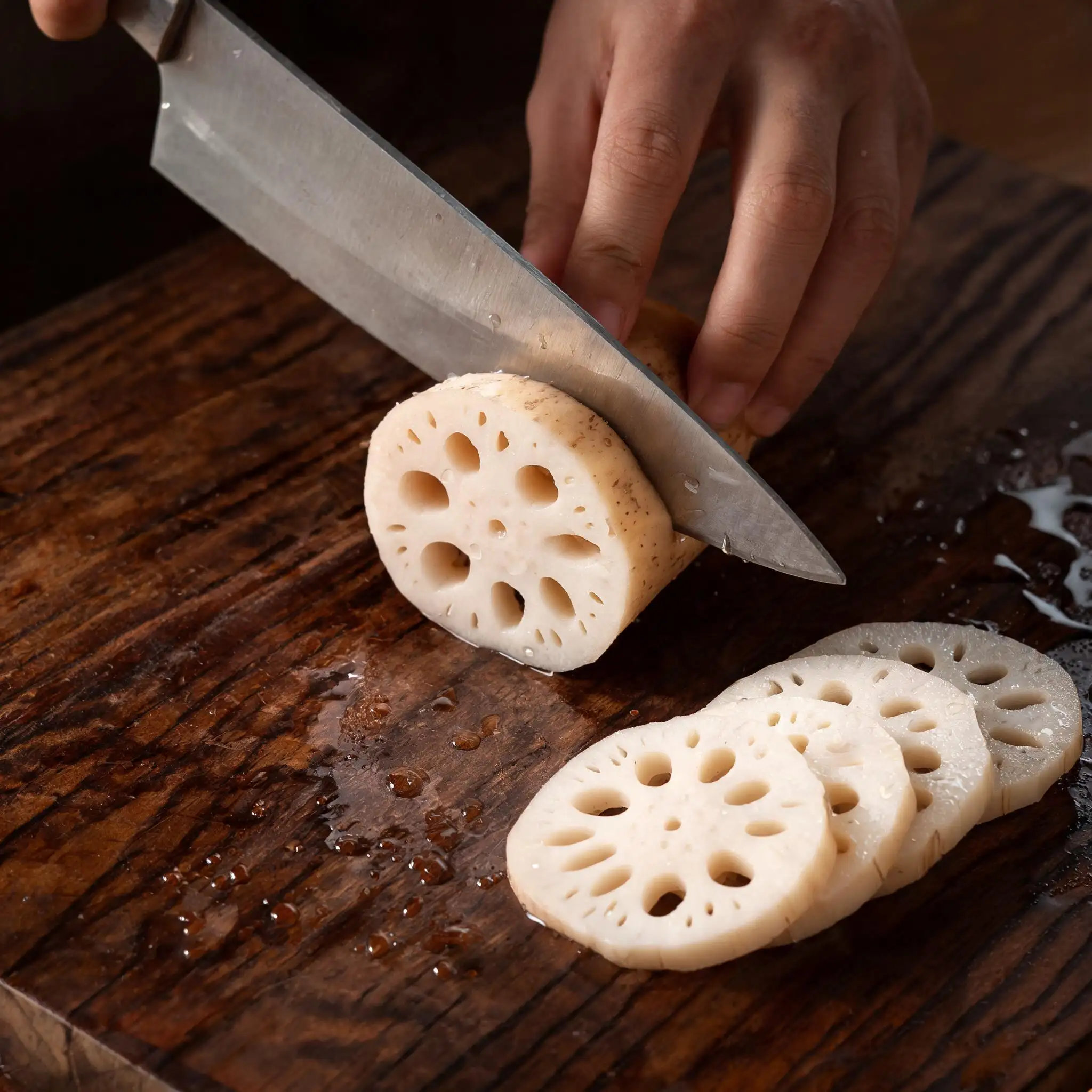
Peel the lotus root and cut it into sections about 8 cm long. Stand a section upright and slice down almost to the base — stop 3–4 mm before you hit the board. Rotate slightly and make a second parallel cut so the two slices open like a book, still connected at the bottom hinge.
**Keep the cut faces wet.** Lotus root browns fast after cutting. Work through all sections quickly and keep them in cold water with a splash of vinegar until you're ready to fill.
> ⚠️ The hinge is everything. Cut all the way through and the filling has nothing to hold it in the oil. That 3 mm of connected base is the whole structure.
---
## Step 3 · The Filling
### Pressing the pork in, then closing it shut
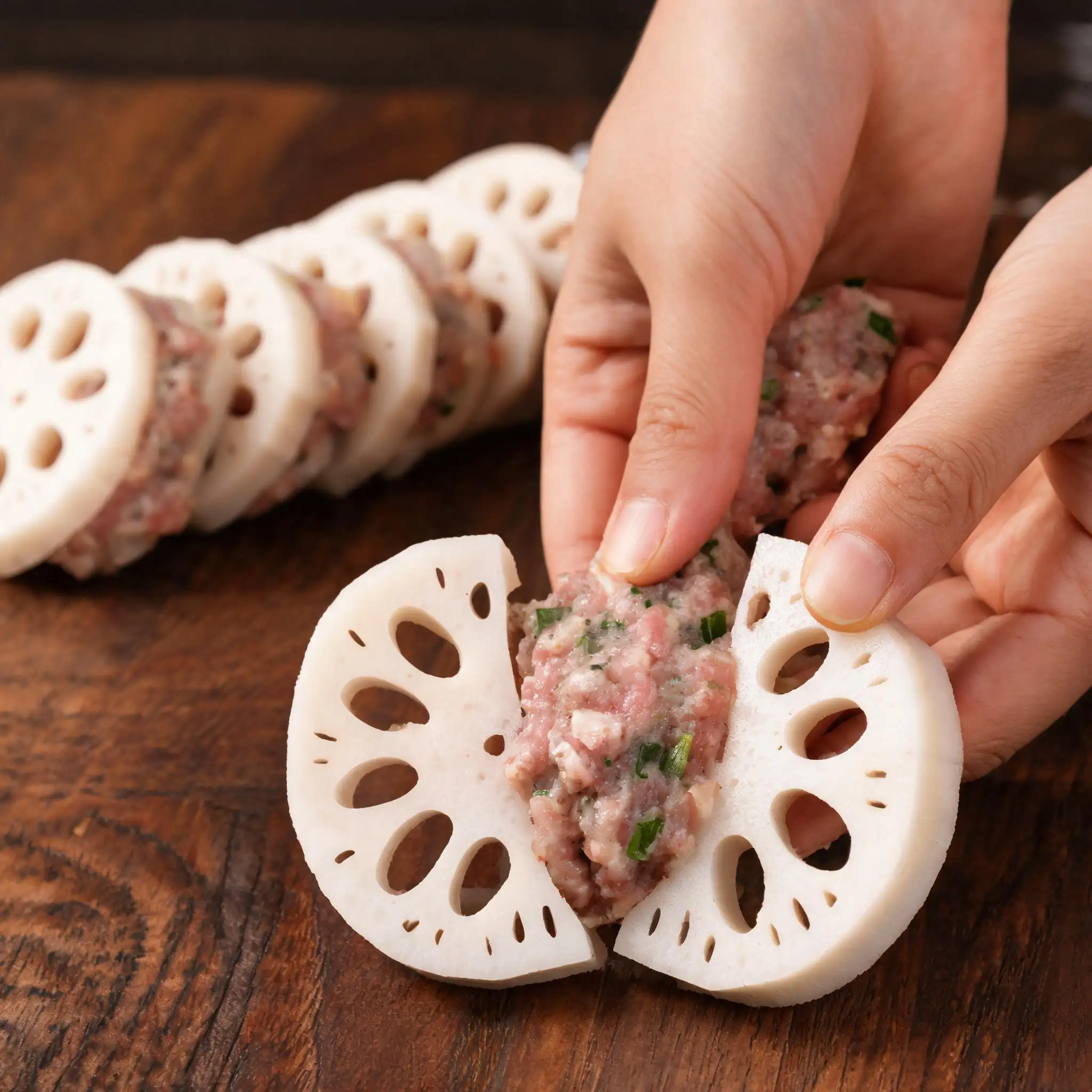
Take a piece from the water and pat it dry. Open it like a book. Place a rounded tablespoon of pork filling onto one face — spread it evenly, leaving a 4 mm border at the edge. Fold the other half down over it and press the two lotus root faces together firmly.
The starch in the lotus root does most of the sealing on its own. Line the finished pieces seam-side up on the board.
**Don't overfill.** The filling should sit flush with the lotus root edge, not bulge past it. Anything that sticks out won't get coated by the batter and will dry out directly in the oil.
---
## Step 4 · The Batter
### Thick enough to coat, thin enough to stay light
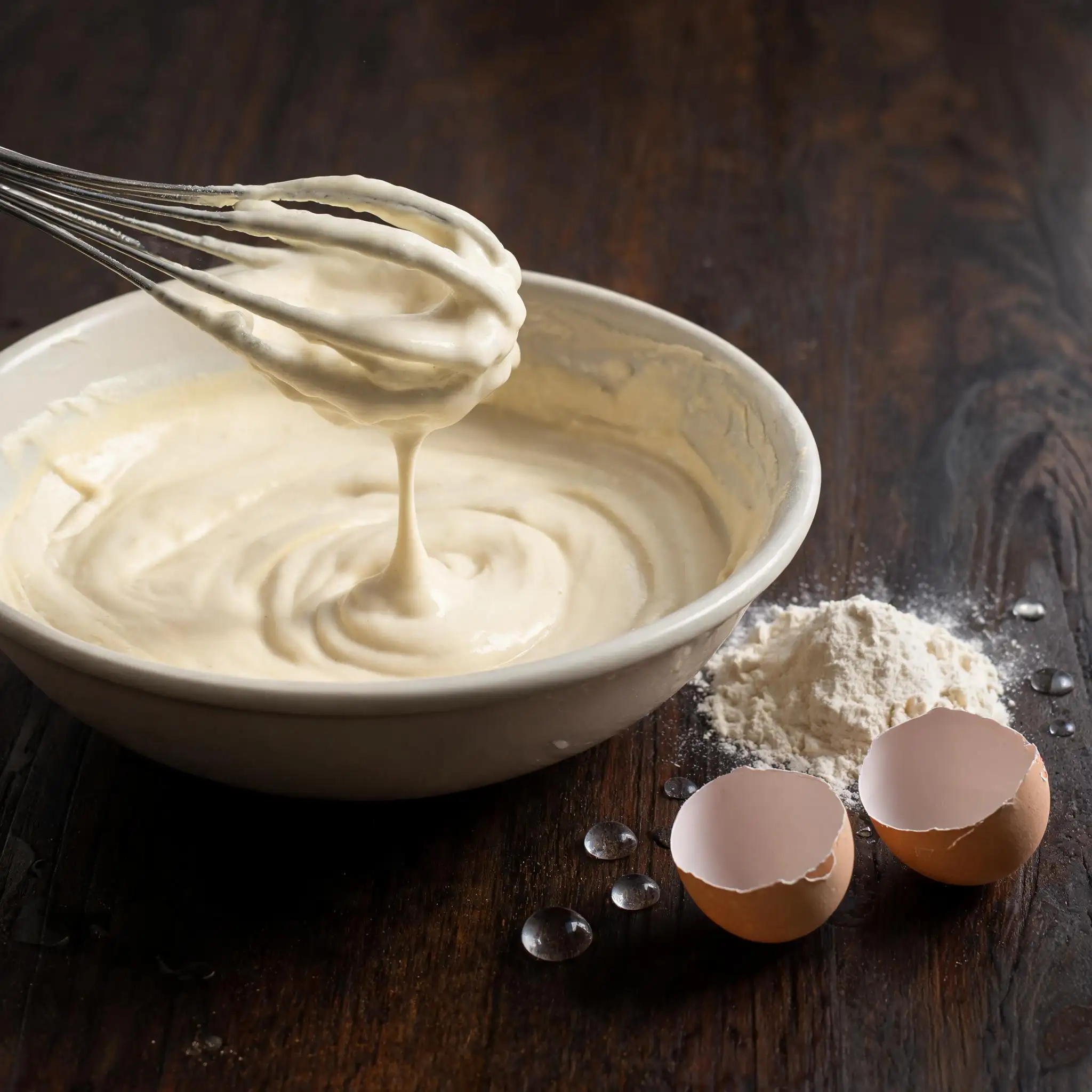
Combine flour, cornstarch, egg, a pinch of salt, and cold water. Whisk until smooth. Lift the whisk — the batter should fall in a slow, steady ribbon. Not watery. Not paste.
**Cold water keeps the gluten from developing**, which is the difference between a crust that shatters and one that chews.
| Batter Test | What It Means |
|-------------|---------------|
| Falls in thin stream | Too thin — add a spoon of flour |
| Falls in thick ribbon | Correct |
| Holds shape, barely drips | Too thick — add water a teaspoon at a time |
---
## Step 5 · The Dip
### One piece at a time, let the excess fall
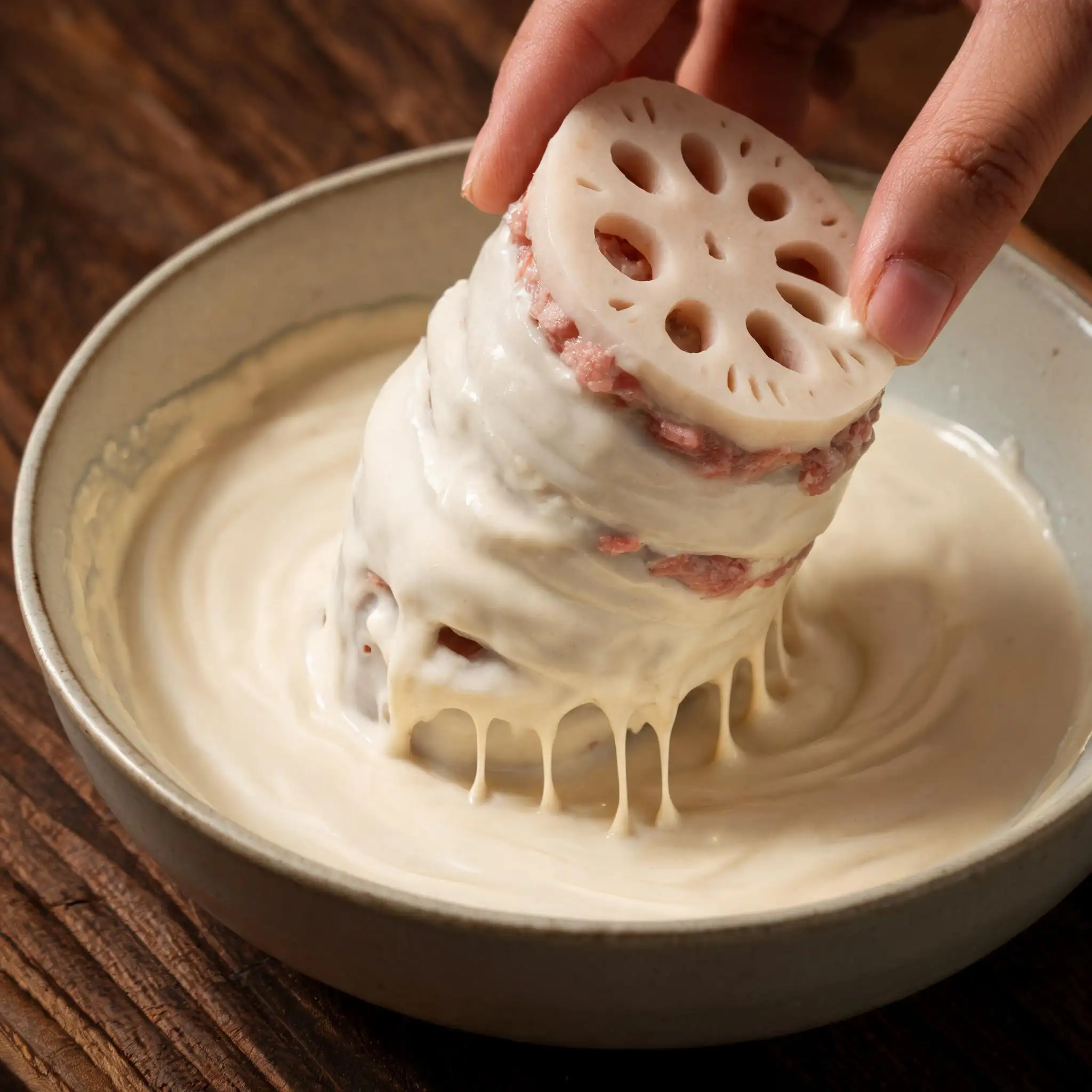
Hold a stuffed piece by one edge and lower it into the batter. Turn it slowly so both faces and all sides get coated. Lift it out and hold it over the bowl a few seconds — let the excess drip back.
The holes in the lotus root will trap a little batter inside each channel. That's fine. What you don't want is a thick blob hanging off one corner.
**Dip each piece right before it goes into the oil.** Pre-coated pieces left on the board will start shedding batter within minutes — the lotus root surface is too smooth to hold it.
---
## Step 6 · The Fry
### 170°C, three to four minutes a side
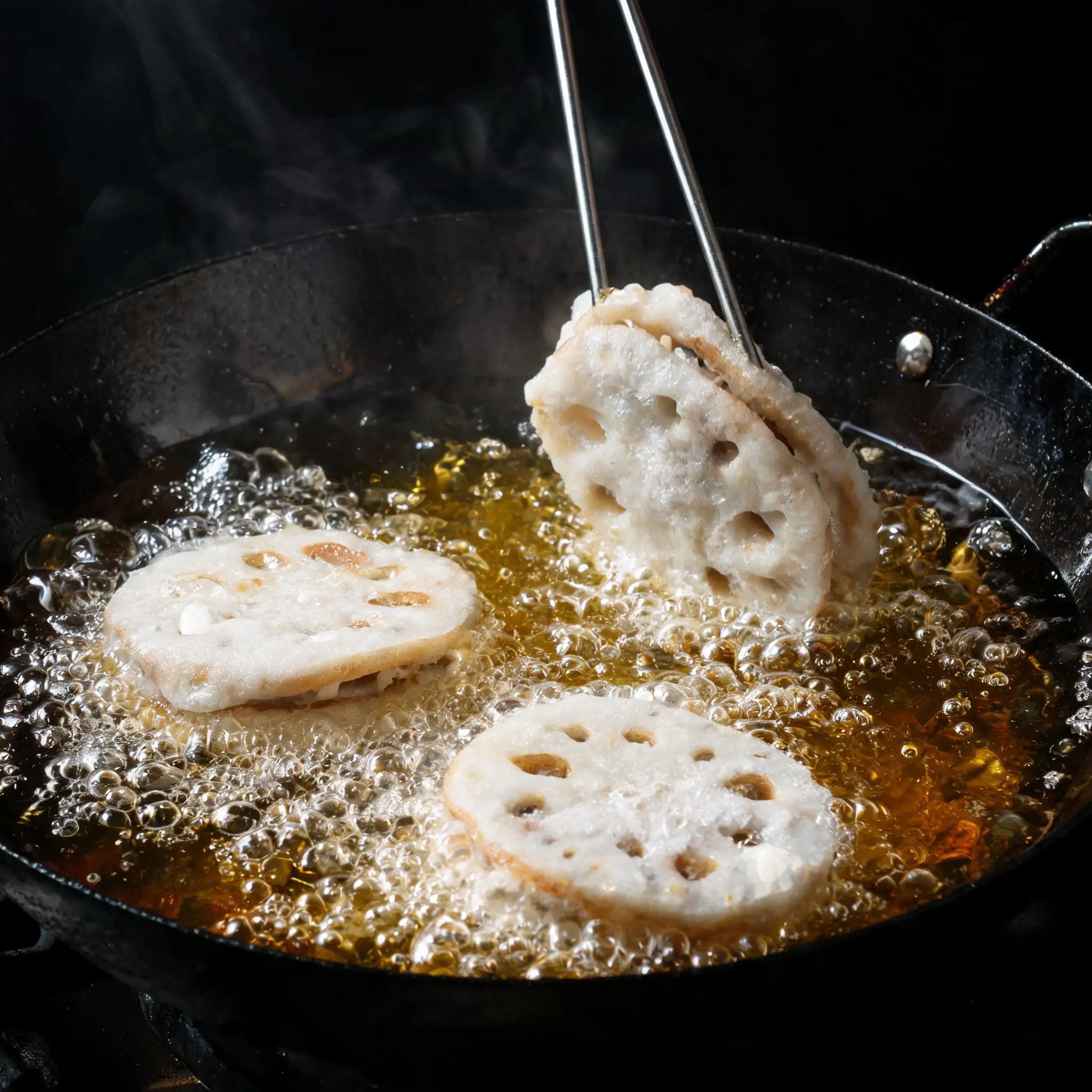
Pour oil to at least 5 cm depth. Heat to 170°C. Lower two or three pieces in at a time — don't crowd. The batter will bubble hard for the first thirty seconds, then settle into a steady sizzle.
Don't touch them. The crust needs time to set before you move them. Flip once when the bottom edge turns amber-gold. Fry the second side another 2–3 minutes.
**170°C cooks the pork through before the crust overbrowns.** Higher heat burns the outside before the filling is done. Lower heat makes the batter greasy and pale.
> ⚠️ Don't push them against the wok wall. The batter tears when it's still soft. Let them float and fry on their own.
---
## Step 7 · The Drain
### Onto the rack, not paper towels
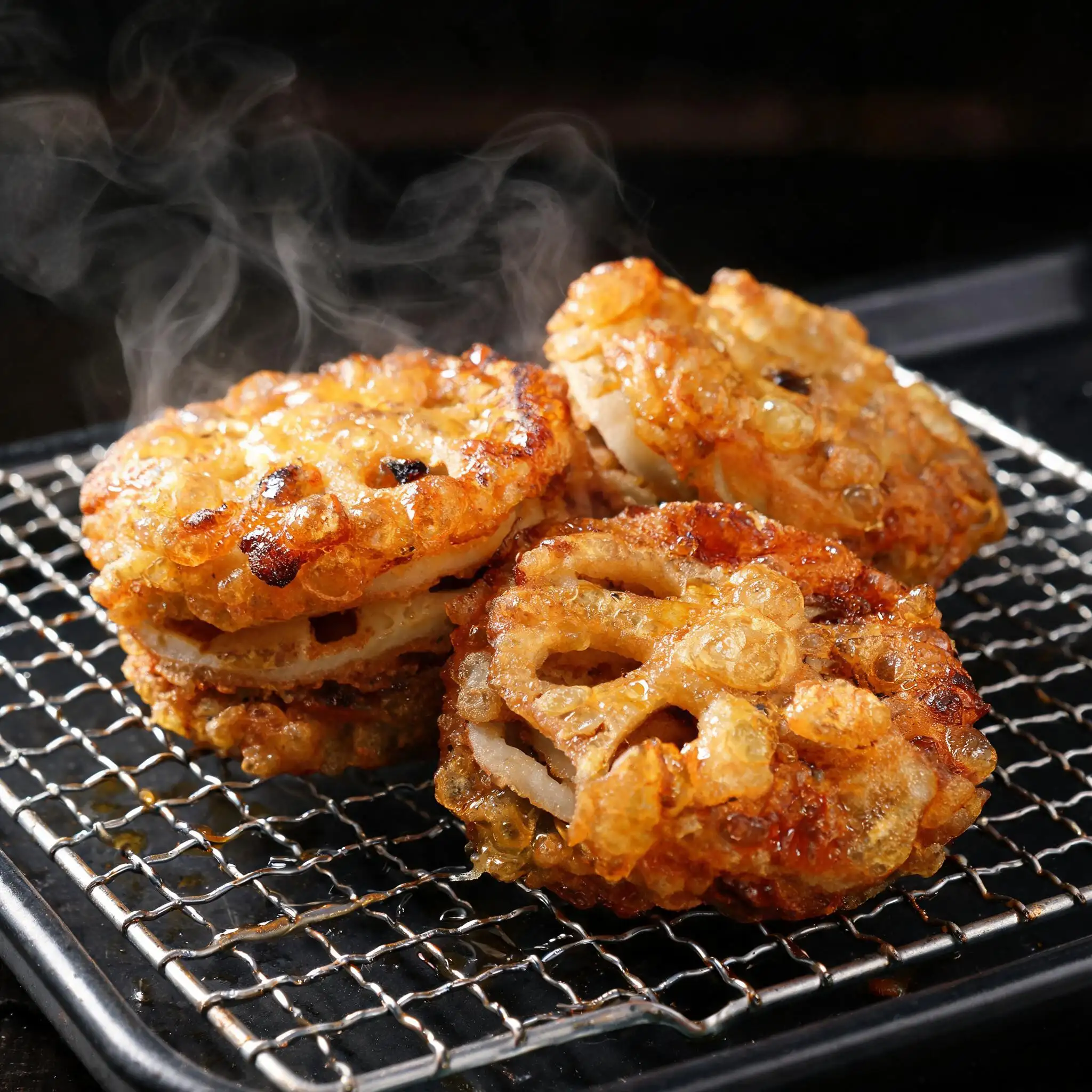
Lift each piece with chopsticks and rest it on a wire rack over a tray. Don't use paper towels — the steam underneath gets trapped and the bottom crust softens in under a minute.
Two minutes on the rack. The surface keeps crisping as moisture steams off.
*They are loudest right after coming out of the oil. That crackling is the crust still setting. It won't last long — eat accordingly.*
---
## Step 8 · The Cross Section
### Cut one open and read the layers
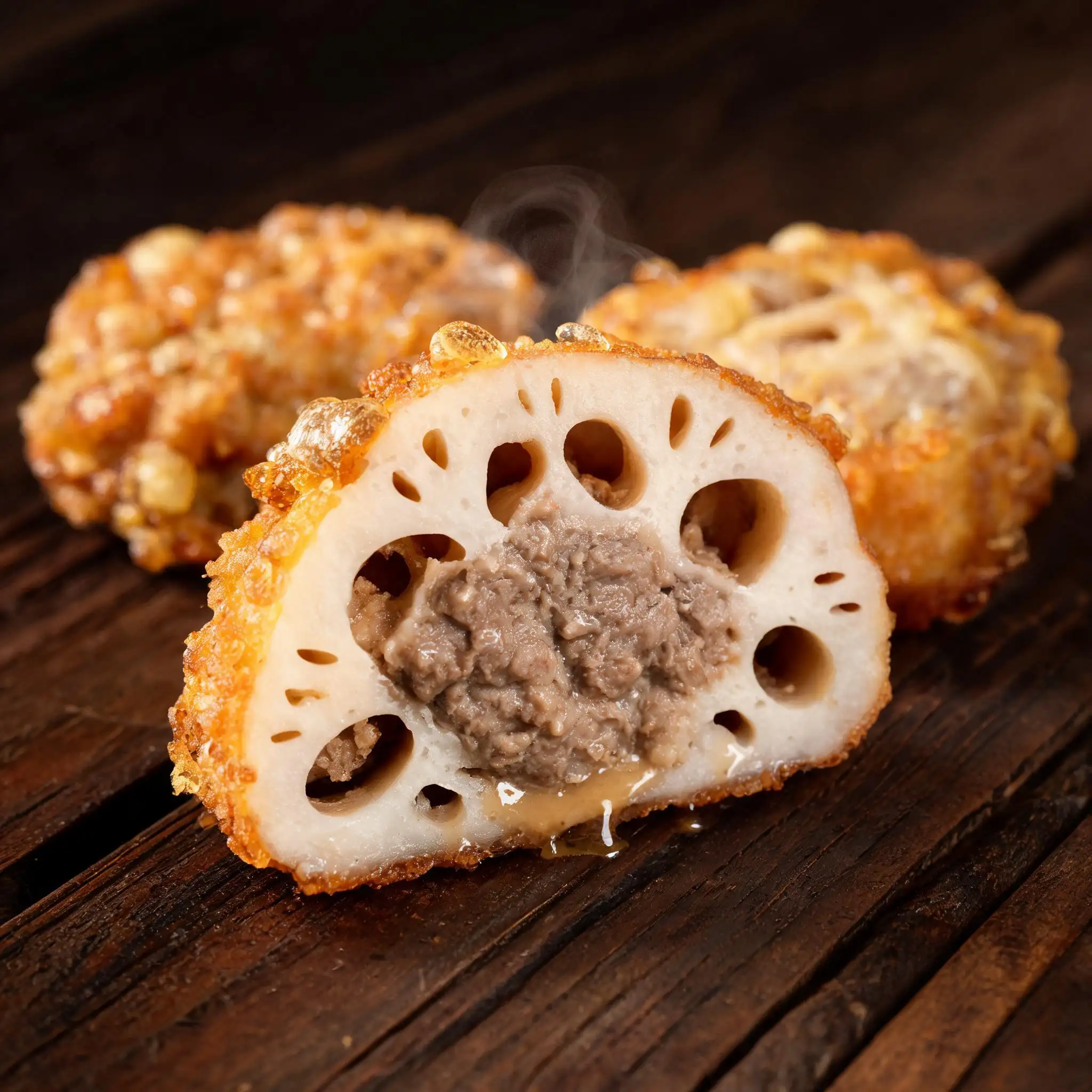
Slice one piece in half. From outside in: amber battered crust, white lotus root with clean round channels, cooked pork filling in the center — tight, a little juicy, and just barely pink at the core if the timing was right.
The lotus root should have a faint crunch left in it. Not raw, but not soft. It holds its structure all the way through because it was never pre-cooked — it went into the oil raw, and the oil finished it.
**This is the best piece at the table.** Eat it immediately.
---
## Step 9 · The Hero Plate
### Pile them loose, cut one open for the table, sauce on the side
Stack the pieces on a dark plate. Cut one in half and lean it against the rest so the cross-section faces out. A few scallion rings and sesame seeds scattered around.
Mix the dipping sauce — soy, vinegar, chili rings, a drop of sesame oil. It cuts straight through the oil and starchy crust in a way plain salt can't match.
Eat them hot. At room temperature the crust softens and the pork filling compresses. They don't rewarm. This is a dish that gives you maybe ten minutes from the rack to the table before something starts to go.
Make sure the table is ready before the oil is.
## Stuffed Lotus Root Sandwich — Battered, Fried, Still Piping Hot
> The lotus root is already good on its own — sweet, crunchy, faintly earthy
> Two thin slices stay hinged at the base, pork filling pressed between them like a secret
> What comes out of the oil is something else entirely
---
**Serves** 3–4 · **Active time** 35 min · **Total time** 50 min
---
## Ingredients
**Main**
| Item | Amount |
|------|--------|
| Fresh lotus root, mid-section | 600 g (2–3 thick sections) |
| Ground pork, 30% fat | 300 g |
**Pork Marinade**
| Item | Amount |
|------|--------|
| Scallions, finely minced | 2 stalks |
| Fresh ginger, grated | 1 tsp |
| Light soy sauce | 1 tbsp |
| Sesame oil | 1 tsp |
| Ground white pepper | ¼ tsp |
| Salt | ½ tsp |
| Egg white | from 1 egg |
**Batter**
| Item | Amount |
|------|--------|
| All-purpose flour | 100 g |
| Cornstarch | 30 g |
| Egg | 1 whole |
| Cold water | 130–140 ml |
| Salt | a pinch |
**Dipping Sauce**
| Item | Amount |
|------|--------|
| Light soy sauce | 3 tbsp |
| Rice vinegar | 1 tbsp |
| Fresh red chili, sliced into rings | 3–4 rings |
| Sesame oil | a few drops |
---
## Step 1 · The Lineup
### Everything on the board before the oil goes on
Lay out everything before you start cutting. The lotus root should feel heavy and firm — knock on it lightly and it sounds almost hollow from the air channels inside. Avoid anything soft at the ends or with dark spots through the flesh.
Put the pork in a bowl with soy sauce, ginger, scallion, sesame oil, white pepper, and egg white. Mix it by hand — not a spoon — until the meat starts to feel sticky and holds together when you press it into a ball.
**Mix the pork at least 10 minutes before cutting the lotus root.** It needs to rest and firm up so it doesn't slide out when pressed between the slices.
---
## Step 2 · The Butterfly Cut
### One cut that doesn't go all the way through
Peel the lotus root and cut it into sections about 8 cm long. Stand a section upright and slice down almost to the base — stop 3–4 mm before you hit the board. Rotate slightly and make a second parallel cut so the two slices open like a book, still connected at the bottom hinge.
**Keep the cut faces wet.** Lotus root browns fast after cutting. Work through all sections quickly and keep them in cold water with a splash of vinegar until you're ready to fill.
> ⚠️ The hinge is everything. Cut all the way through and the filling has nothing to hold it in the oil. That 3 mm of connected base is the whole structure.
---
## Step 3 · The Filling
### Pressing the pork in, then closing it shut
Take a piece from the water and pat it dry. Open it like a book. Place a rounded tablespoon of pork filling onto one face — spread it evenly, leaving a 4 mm border at the edge. Fold the other half down over it and press the two lotus root faces together firmly.
The starch in the lotus root does most of the sealing on its own. Line the finished pieces seam-side up on the board.
**Don't overfill.** The filling should sit flush with the lotus root edge, not bulge past it. Anything that sticks out won't get coated by the batter and will dry out directly in the oil.
---
## Step 4 · The Batter
### Thick enough to coat, thin enough to stay light
Combine flour, cornstarch, egg, a pinch of salt, and cold water. Whisk until smooth. Lift the whisk — the batter should fall in a slow, steady ribbon. Not watery. Not paste.
**Cold water keeps the gluten from developing**, which is the difference between a crust that shatters and one that chews.
| Batter Test | What It Means |
|-------------|---------------|
| Falls in thin stream | Too thin — add a spoon of flour |
| Falls in thick ribbon | Correct |
| Holds shape, barely drips | Too thick — add water a teaspoon at a time |
---
## Step 5 · The Dip
### One piece at a time, let the excess fall
Hold a stuffed piece by one edge and lower it into the batter. Turn it slowly so both faces and all sides get coated. Lift it out and hold it over the bowl a few seconds — let the excess drip back.
The holes in the lotus root will trap a little batter inside each channel. That's fine. What you don't want is a thick blob hanging off one corner.
**Dip each piece right before it goes into the oil.** Pre-coated pieces left on the board will start shedding batter within minutes — the lotus root surface is too smooth to hold it.
---
## Step 6 · The Fry
### 170°C, three to four minutes a side
Pour oil to at least 5 cm depth. Heat to 170°C. Lower two or three pieces in at a time — don't crowd. The batter will bubble hard for the first thirty seconds, then settle into a steady sizzle.
Don't touch them. The crust needs time to set before you move them. Flip once when the bottom edge turns amber-gold. Fry the second side another 2–3 minutes.
**170°C cooks the pork through before the crust overbrowns.** Higher heat burns the outside before the filling is done. Lower heat makes the batter greasy and pale.
> ⚠️ Don't push them against the wok wall. The batter tears when it's still soft. Let them float and fry on their own.
---
## Step 7 · The Drain
### Onto the rack, not paper towels
Lift each piece with chopsticks and rest it on a wire rack over a tray. Don't use paper towels — the steam underneath gets trapped and the bottom crust softens in under a minute.
Two minutes on the rack. The surface keeps crisping as moisture steams off.
*They are loudest right after coming out of the oil. That crackling is the crust still setting. It won't last long — eat accordingly.*
---
## Step 8 · The Cross Section
### Cut one open and read the layers
Slice one piece in half. From outside in: amber battered crust, white lotus root with clean round channels, cooked pork filling in the center — tight, a little juicy, and just barely pink at the core if the timing was right.
The lotus root should have a faint crunch left in it. Not raw, but not soft. It holds its structure all the way through because it was never pre-cooked — it went into the oil raw, and the oil finished it.
**This is the best piece at the table.** Eat it immediately.
---
## Step 9 · The Hero Plate
### Pile them loose, cut one open for the table, sauce on the side
Stack the pieces on a dark plate. Cut one in half and lean it against the rest so the cross-section faces out. A few scallion rings and sesame seeds scattered around.
Mix the dipping sauce — soy, vinegar, chili rings, a drop of sesame oil. It cuts straight through the oil and starchy crust in a way plain salt can't match.
Eat them hot. At room temperature the crust softens and the pork filling compresses. They don't rewarm. This is a dish that gives you maybe ten minutes from the rack to the table before something starts to go.
Make sure the table is ready before the oil is.