·5/11/2026
from
🥩Shanxi-JIEZHOU LAMB PAOMO
# · JIEZHOU LAMB PAOMO ·
## The Soul Soup of Yuncheng — Clear Broth, Torn Bread, Silk-Thread Lamb
> Not a bowl of soup. A ritual.
> Nine steps from raw bone to the most restorative dish in Shanxi's southern plains.
> *Yuncheng, Shanxi. Salt Lake country. The lamb here has always been different.*
---
## Step 1 · The Flock
### Mise en place — stone kitchen, honest ingredients
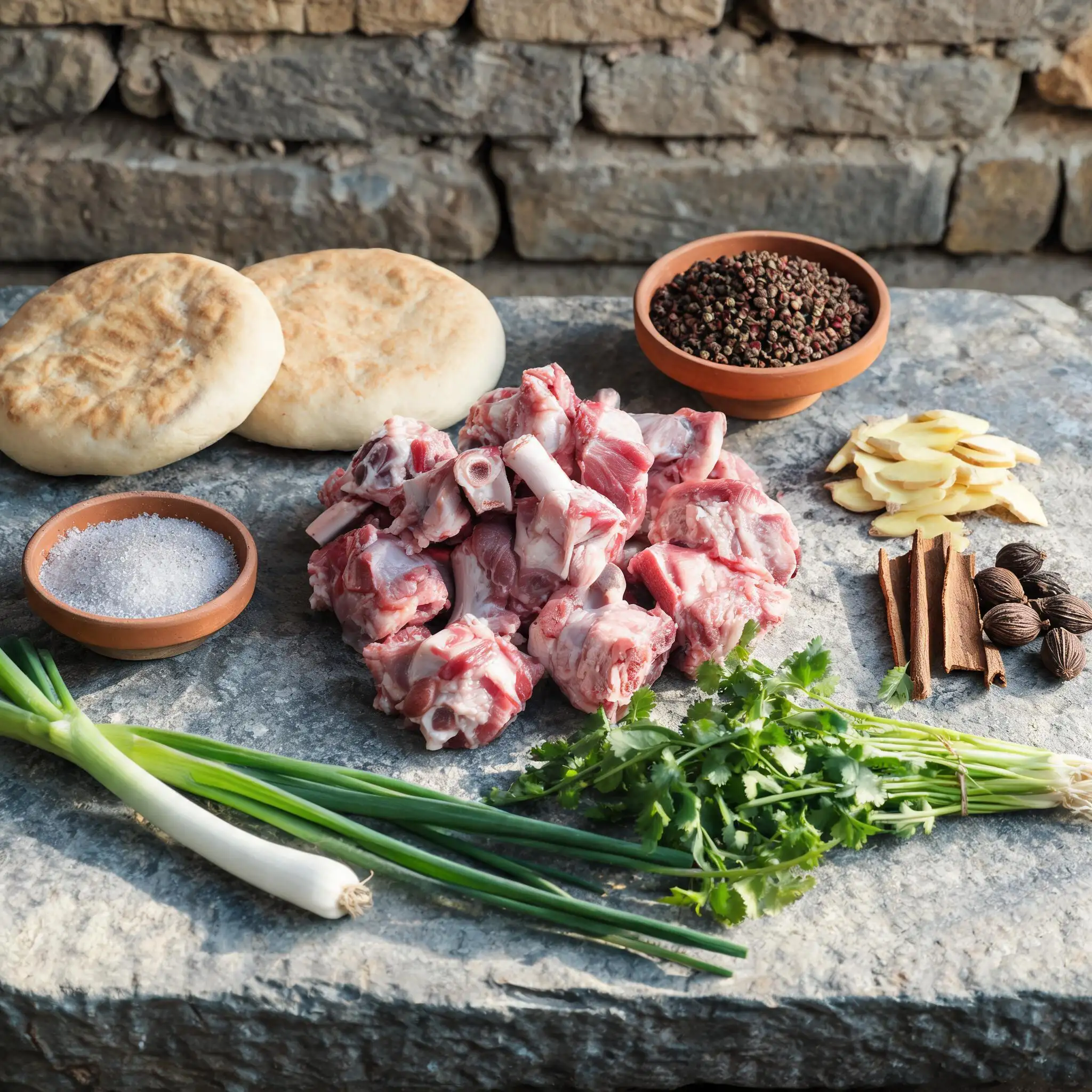
On a rough grey stone table inside a Jindnan village kitchen, everything is laid out with no ceremony: a heap of bone-in lamb pieces, pale pink and fresh. Beside them on the stone — two thick fufu flatbreads (饦饦馍), a terracotta bowl of whole Sichuan peppercorns, sliced fresh ginger, cinnamon bark, black cardamom pods (草果), a bundle of green cilantro, a whole spring onion, a bowl of coarse salt.
**Nothing decorative. Everything essential.** This is how it has always started.
---
## Step 2 · The Blanch
### Purge the blood — the first fire
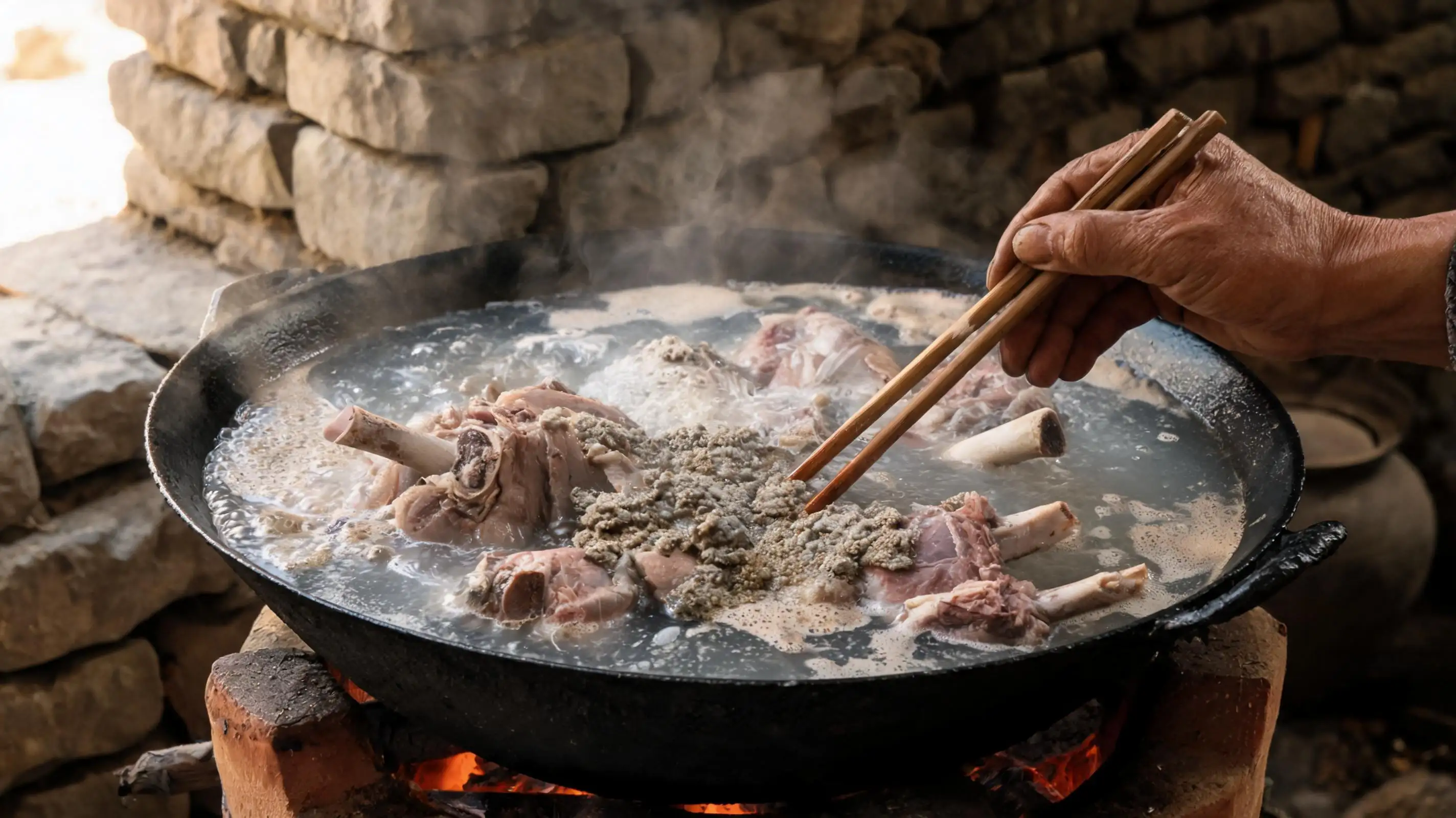
Drop the lamb into a wok of furiously boiling water. **Within minutes, grey-brown foam rises to the surface** — blood, impurities, the rawness of the animal. A weathered hand works wooden chopsticks through the churning water, skimming the foam steadily away. The water grows clearer with every pass. This step cannot be rushed. **The clarity of the final broth depends entirely on this moment.**
Drain. Rinse. The lamb is ready for its second life.
---
## Step 3 · The Broth
### Low fire, long time — the clear soul
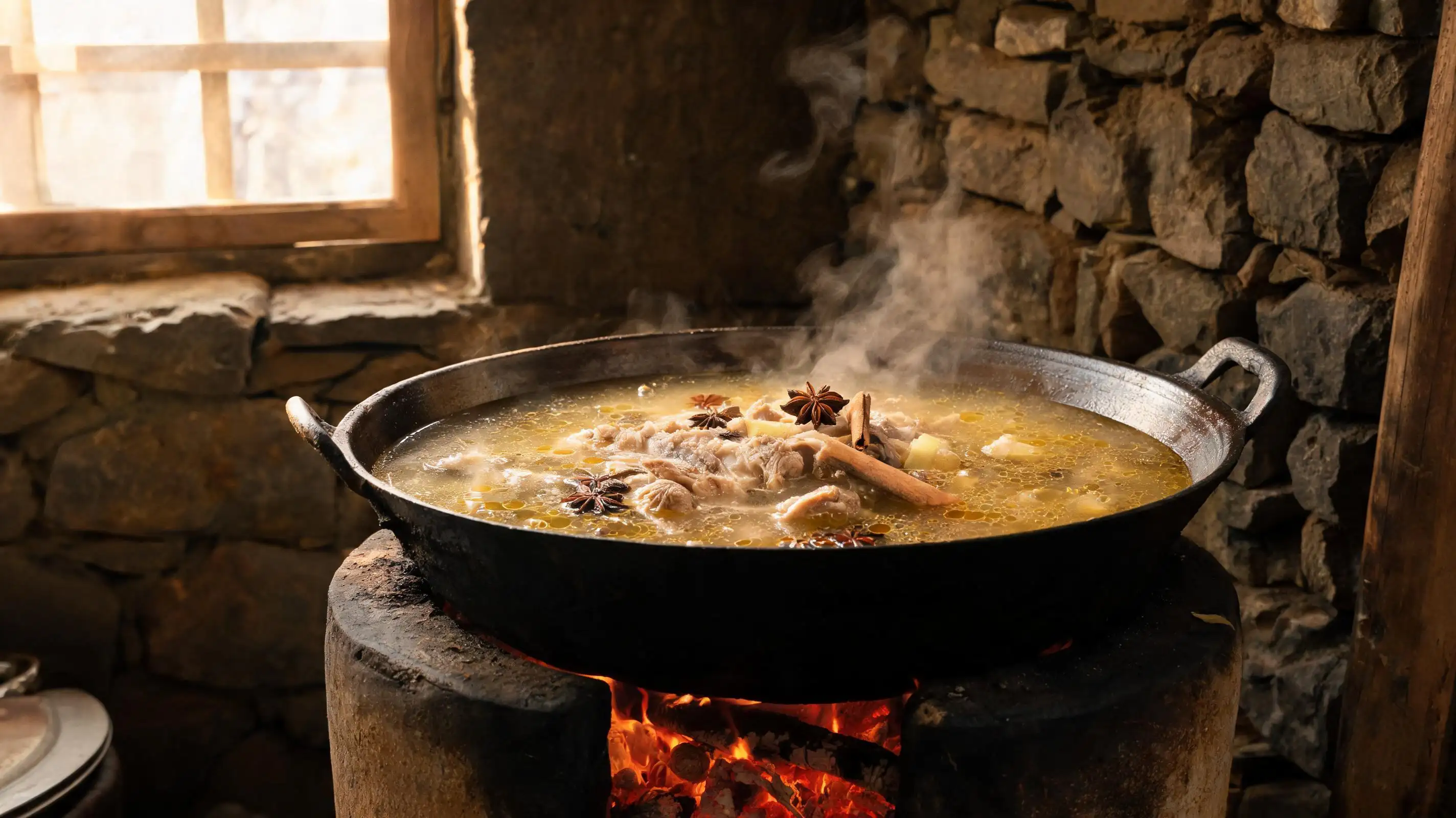
Fresh water into the iron wok. The blanched lamb goes back in, along with the spices — star anise, cinnamon, ginger, black cardamom. **The clay stove set to a low, patient fire.** The broth must simmer gently, never boil hard. Hours pass. The morning light shifts through the stone kitchen window.
The result is not cloudy or milky. It is **luminously clear — golden-amber, trembling with fat droplets on the surface, carrying the full perfume of the spices**. This is the broth that defines the dish.
---
## Step 4 · The Bread
### Fufu flatbread — the foundation
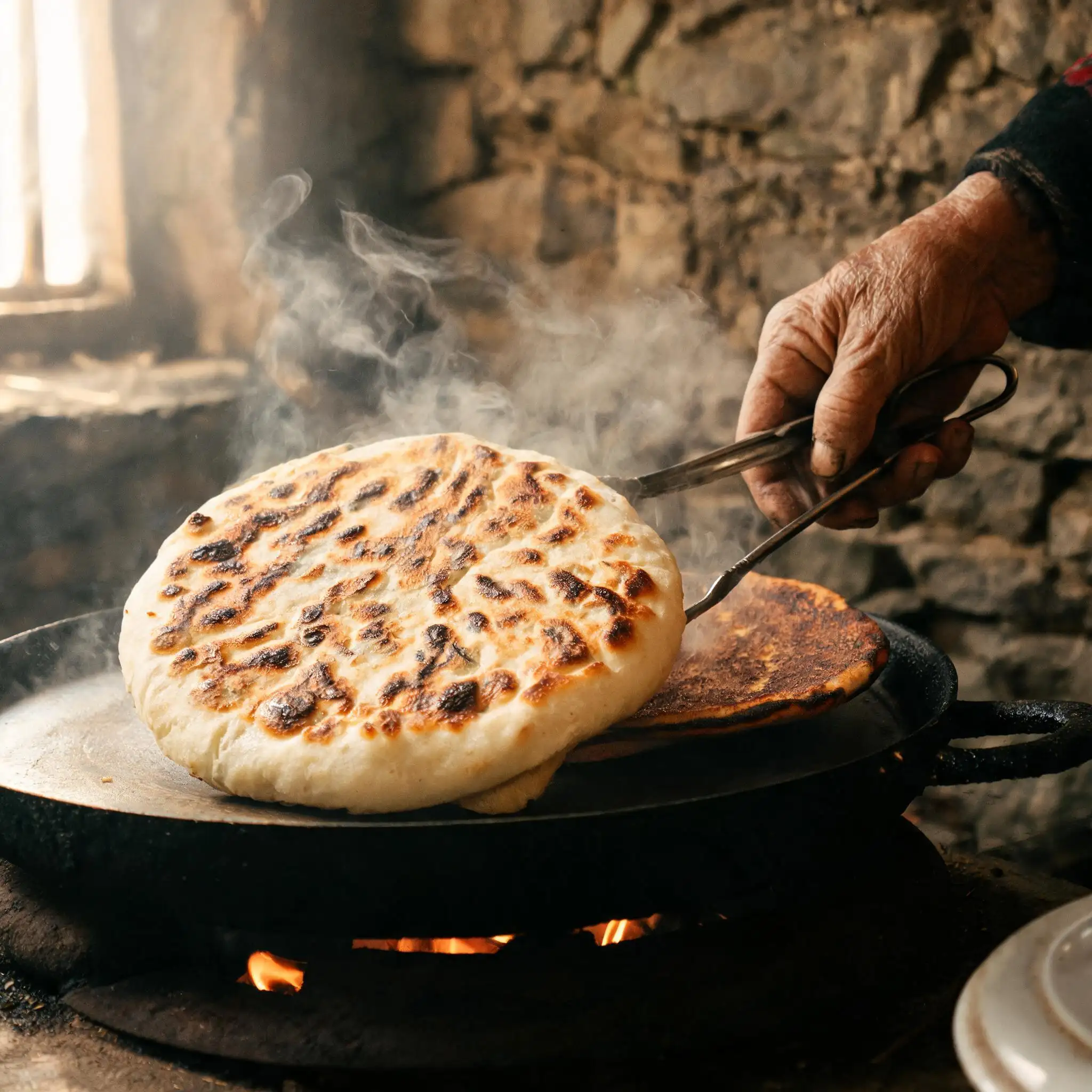
A thick round fufu flatbread goes onto the iron griddle over low heat. **No oil. Direct heat.** The surface blisters and chars in tiger-stripe patches — pale gold and deep brown alternating across the face of the bread. A pair of tongs flips it. The underside is equally charred. Steam rises from the hot bread.
The fufu is not soft bread. It is **thick, dense, chewy** — built to absorb a bowl of hot broth without falling apart. It has been Shanxi's daily bread for a thousand years.
---
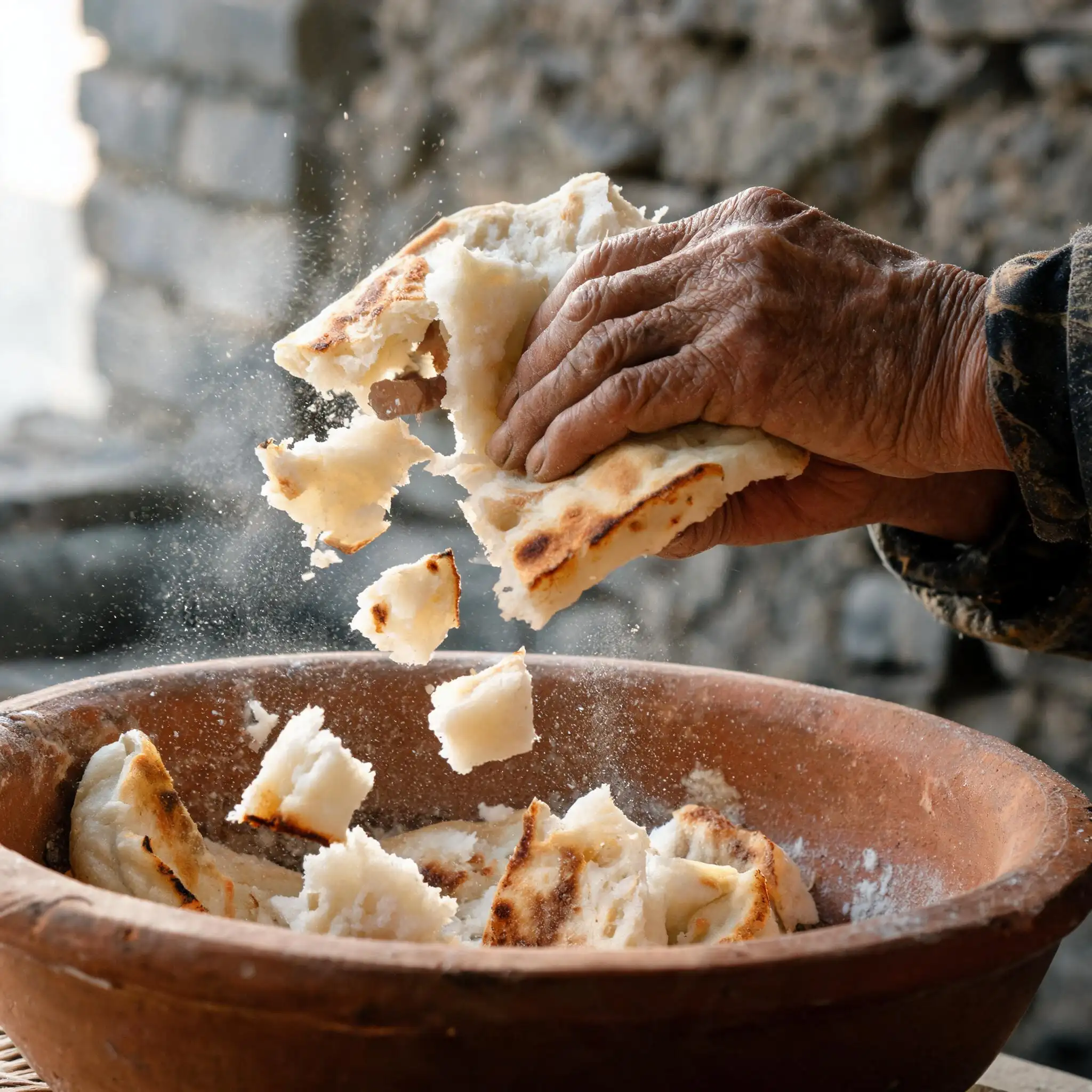
## Step 5 · The Tear
### Hands only — the bread breaks open
No knife. Two hands only. The fufu flatbread is torn, piece by piece, into rough thumb-sized chunks — irregular, imperfect, each with a charred crust edge and a white-cream interior. **The chunks fall into a large terracotta bowl.** Flour dust rises with each tear. The act is meditative.
> In Yuncheng, old-timers say the bread must be torn by the person who will eat it. The size of the tear determines how the broth soaks through. This is the eater's first act of craftsmanship.
---
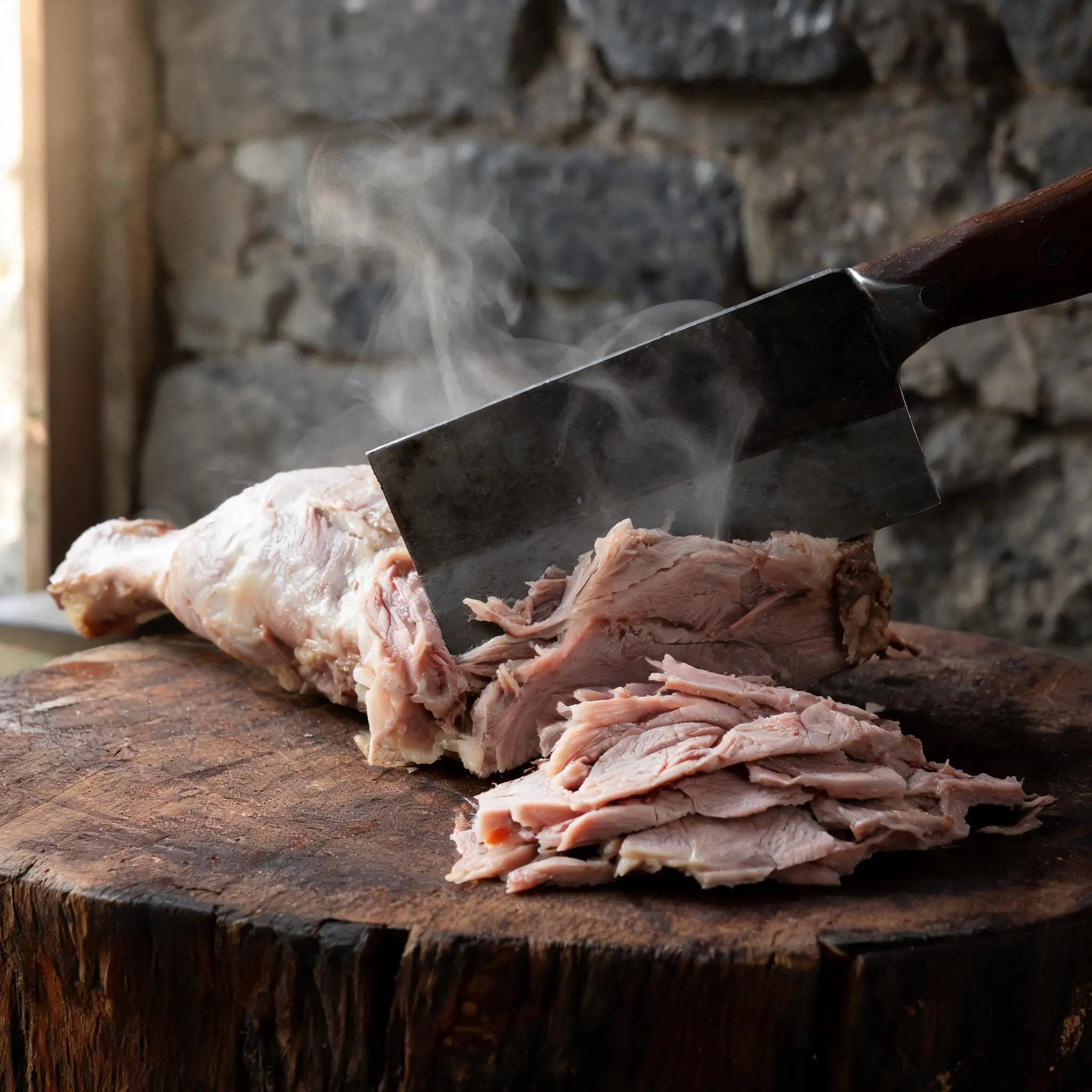
## Step 6 · The Slice
### The lamb reveals itself
The slow-cooked lamb leg is lifted from the broth and set on a thick wooden block. **A heavy cleaver moves through it** — the meat offers no resistance, falling away from the bone in tender layers. Pale pink-white slices, fine grain visible, still steaming. A pile of slices builds beside the whole piece. The smell of slow-cooked lamb fills the stone kitchen.
This is what five hours of patience looks like.
---
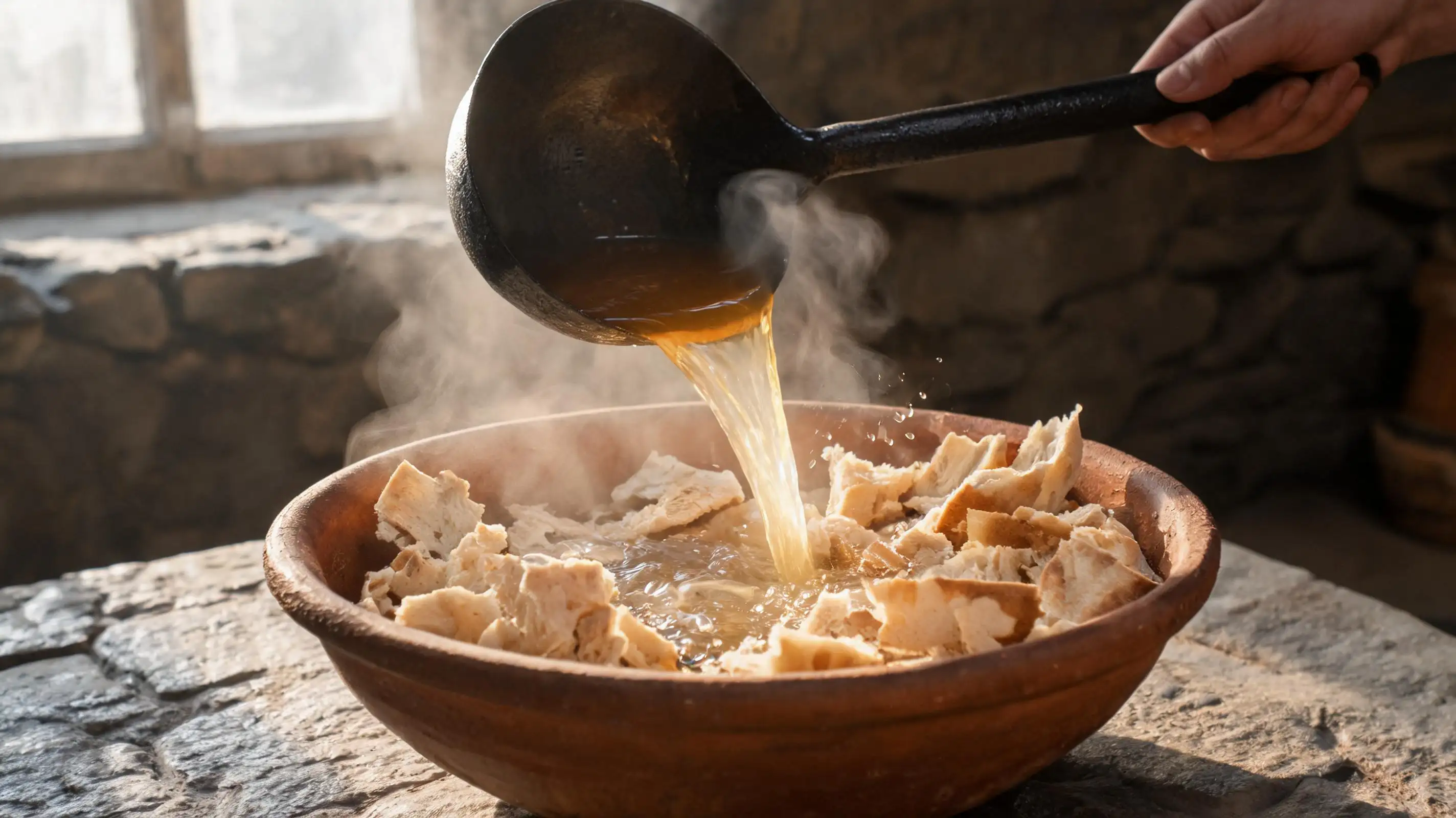
## Step 7 · The Pour
### Broth meets bread — the transformation begins
The iron ladle rises high above the terracotta bowl and tips. **A thin arcing stream of clear golden broth pours down** onto the torn bread chunks below. The broth hits the bread with a splash — small waves, rising steam, a soft hiss. The bread immediately begins to absorb the soup, swelling slightly, turning translucent at the edges.
Pour slowly. Pour completely. The bread must be fully submerged.
**The bowl is now alive.**
---
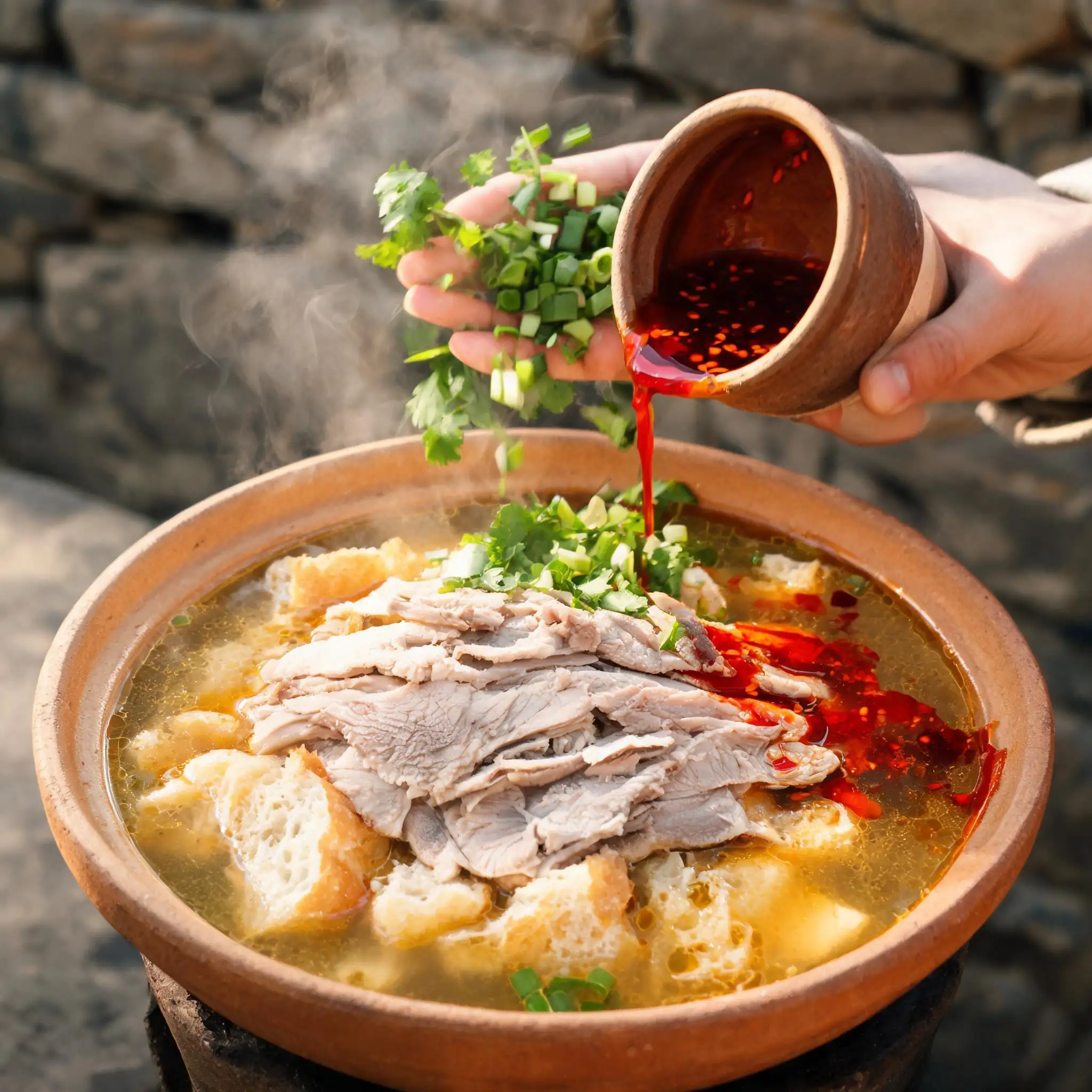
## Step 8 · The Dress
### Three colors finish the work
Tender lamb slices are draped across the soaked bread. Then: **a fistful of fresh cilantro and chopped spring onion** scattered from above — bright green landing on the pale lamb and golden broth. Then: **a small clay pot tilts**, pouring a thread of vivid red chili oil across the surface. Red pooling on gold. Green floating above.
The bowl now holds every color of the Shanxi plains at harvest time.
---
## Step 9 · The Spoon
### First taste — the answer to everything
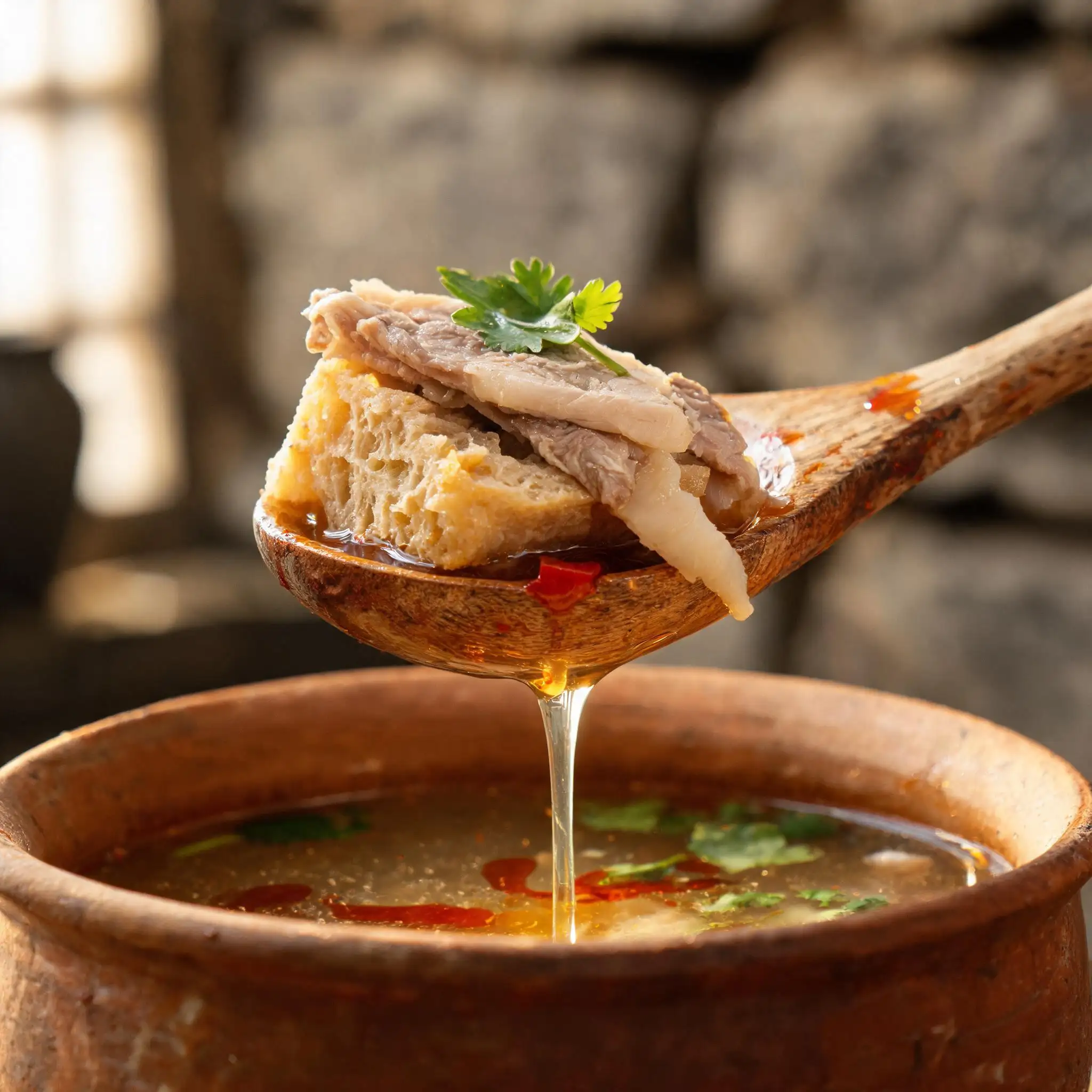
A wooden spoon dips into the bowl and lifts. On it: **one piece of broth-soaked bread, dense and trembling with absorbed soup; one slice of white lamb draped over it; a single cilantro leaf on top.** Clear golden broth runs off the bottom of the spoon in a slow thread, back into the bowl below.
Bring it to your mouth. The bread gives way immediately — **completely saturated, carrying the full weight of the broth inside every fi
## The Soul Soup of Yuncheng — Clear Broth, Torn Bread, Silk-Thread Lamb
> Not a bowl of soup. A ritual.
> Nine steps from raw bone to the most restorative dish in Shanxi's southern plains.
> *Yuncheng, Shanxi. Salt Lake country. The lamb here has always been different.*
---
## Step 1 · The Flock
### Mise en place — stone kitchen, honest ingredients
On a rough grey stone table inside a Jindnan village kitchen, everything is laid out with no ceremony: a heap of bone-in lamb pieces, pale pink and fresh. Beside them on the stone — two thick fufu flatbreads (饦饦馍), a terracotta bowl of whole Sichuan peppercorns, sliced fresh ginger, cinnamon bark, black cardamom pods (草果), a bundle of green cilantro, a whole spring onion, a bowl of coarse salt.
**Nothing decorative. Everything essential.** This is how it has always started.
---
## Step 2 · The Blanch
### Purge the blood — the first fire
Drop the lamb into a wok of furiously boiling water. **Within minutes, grey-brown foam rises to the surface** — blood, impurities, the rawness of the animal. A weathered hand works wooden chopsticks through the churning water, skimming the foam steadily away. The water grows clearer with every pass. This step cannot be rushed. **The clarity of the final broth depends entirely on this moment.**
Drain. Rinse. The lamb is ready for its second life.
---
## Step 3 · The Broth
### Low fire, long time — the clear soul
Fresh water into the iron wok. The blanched lamb goes back in, along with the spices — star anise, cinnamon, ginger, black cardamom. **The clay stove set to a low, patient fire.** The broth must simmer gently, never boil hard. Hours pass. The morning light shifts through the stone kitchen window.
The result is not cloudy or milky. It is **luminously clear — golden-amber, trembling with fat droplets on the surface, carrying the full perfume of the spices**. This is the broth that defines the dish.
---
## Step 4 · The Bread
### Fufu flatbread — the foundation
A thick round fufu flatbread goes onto the iron griddle over low heat. **No oil. Direct heat.** The surface blisters and chars in tiger-stripe patches — pale gold and deep brown alternating across the face of the bread. A pair of tongs flips it. The underside is equally charred. Steam rises from the hot bread.
The fufu is not soft bread. It is **thick, dense, chewy** — built to absorb a bowl of hot broth without falling apart. It has been Shanxi's daily bread for a thousand years.
---
## Step 5 · The Tear
### Hands only — the bread breaks open
No knife. Two hands only. The fufu flatbread is torn, piece by piece, into rough thumb-sized chunks — irregular, imperfect, each with a charred crust edge and a white-cream interior. **The chunks fall into a large terracotta bowl.** Flour dust rises with each tear. The act is meditative.
> In Yuncheng, old-timers say the bread must be torn by the person who will eat it. The size of the tear determines how the broth soaks through. This is the eater's first act of craftsmanship.
---
## Step 6 · The Slice
### The lamb reveals itself
The slow-cooked lamb leg is lifted from the broth and set on a thick wooden block. **A heavy cleaver moves through it** — the meat offers no resistance, falling away from the bone in tender layers. Pale pink-white slices, fine grain visible, still steaming. A pile of slices builds beside the whole piece. The smell of slow-cooked lamb fills the stone kitchen.
This is what five hours of patience looks like.
---
## Step 7 · The Pour
### Broth meets bread — the transformation begins
The iron ladle rises high above the terracotta bowl and tips. **A thin arcing stream of clear golden broth pours down** onto the torn bread chunks below. The broth hits the bread with a splash — small waves, rising steam, a soft hiss. The bread immediately begins to absorb the soup, swelling slightly, turning translucent at the edges.
Pour slowly. Pour completely. The bread must be fully submerged.
**The bowl is now alive.**
---
## Step 8 · The Dress
### Three colors finish the work
Tender lamb slices are draped across the soaked bread. Then: **a fistful of fresh cilantro and chopped spring onion** scattered from above — bright green landing on the pale lamb and golden broth. Then: **a small clay pot tilts**, pouring a thread of vivid red chili oil across the surface. Red pooling on gold. Green floating above.
The bowl now holds every color of the Shanxi plains at harvest time.
---
## Step 9 · The Spoon
### First taste — the answer to everything
A wooden spoon dips into the bowl and lifts. On it: **one piece of broth-soaked bread, dense and trembling with absorbed soup; one slice of white lamb draped over it; a single cilantro leaf on top.** Clear golden broth runs off the bottom of the spoon in a slow thread, back into the bowl below.
Bring it to your mouth. The bread gives way immediately — **completely saturated, carrying the full weight of the broth inside every fi