·5/11/2026
from
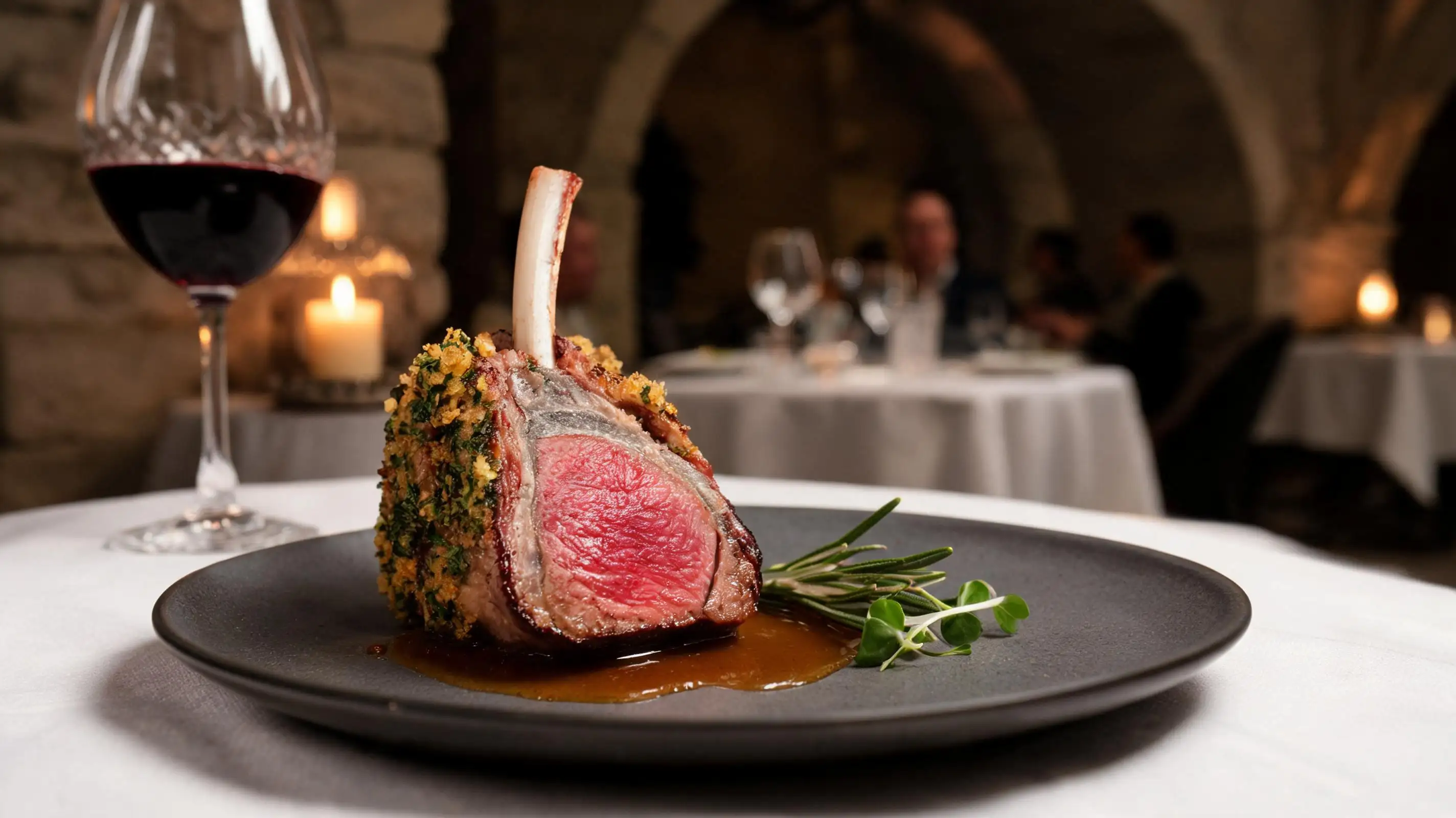
🍖 🔥 RACK OF LAMB PERSILLADE🦴
## The French Crown — Green Crust, Rose Heart, White Throne
> The bones are not handles. They are a crown.
> Nine steps from raw rack to the most elegant plate in French cuisine
> *This is the dish that separates cooks from chefs*
---
## Step 1 · The Lineup
### Mise en place — everything in its place
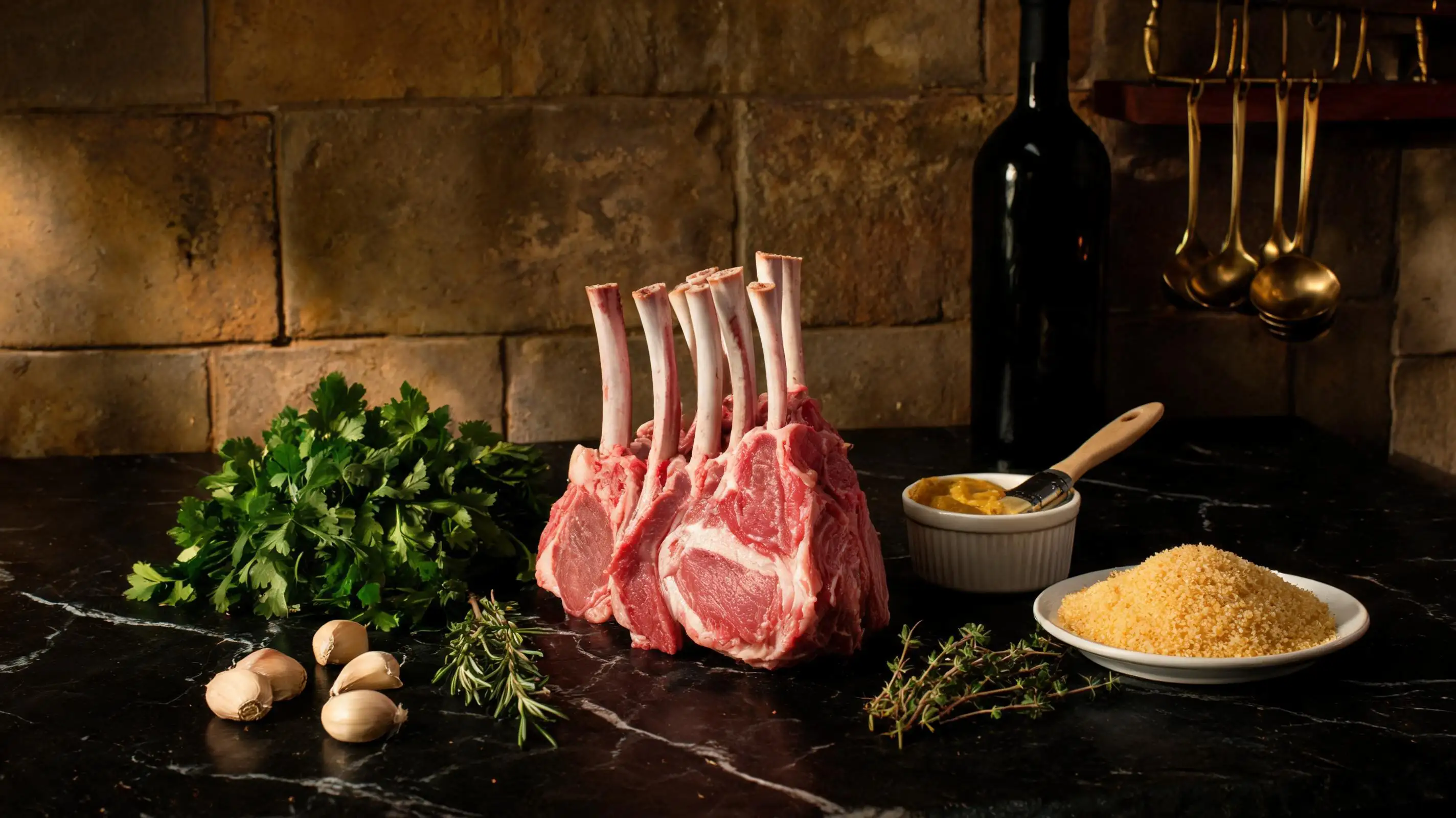
A full frenched rack of lamb stands at the center. Around it: a mound of flat-leaf parsley, three garlic cloves, a ramekin of Dijon mustard with its brush, golden breadcrumbs waiting on the side. **Before the first cut, the entire outcome is already decided by what you have in front of you.**
---
## Step 2 · The French
### Expose the bone — the knife does the talking
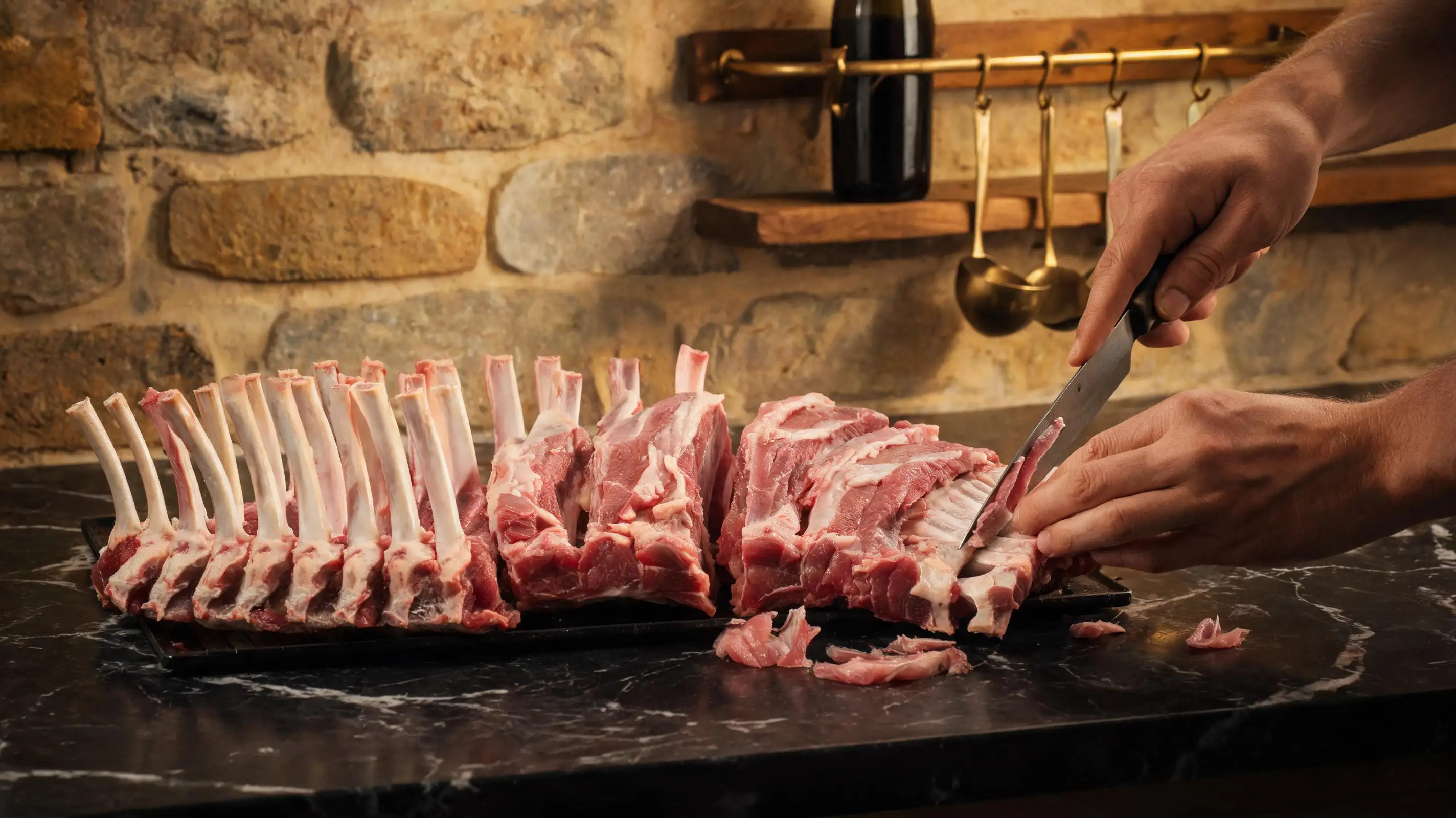
Drive the boning knife down the rib bone in a single scraping stroke, pulling the thin membrane and sinew free. **Each bone must emerge clean and ivory-white — no residue, no compromise.** The before-and-after within one rack tells the story: raw and rough becomes precise and deliberate.
---
## Step 3 · The Sear
### Cast iron, full heat, no hesitation
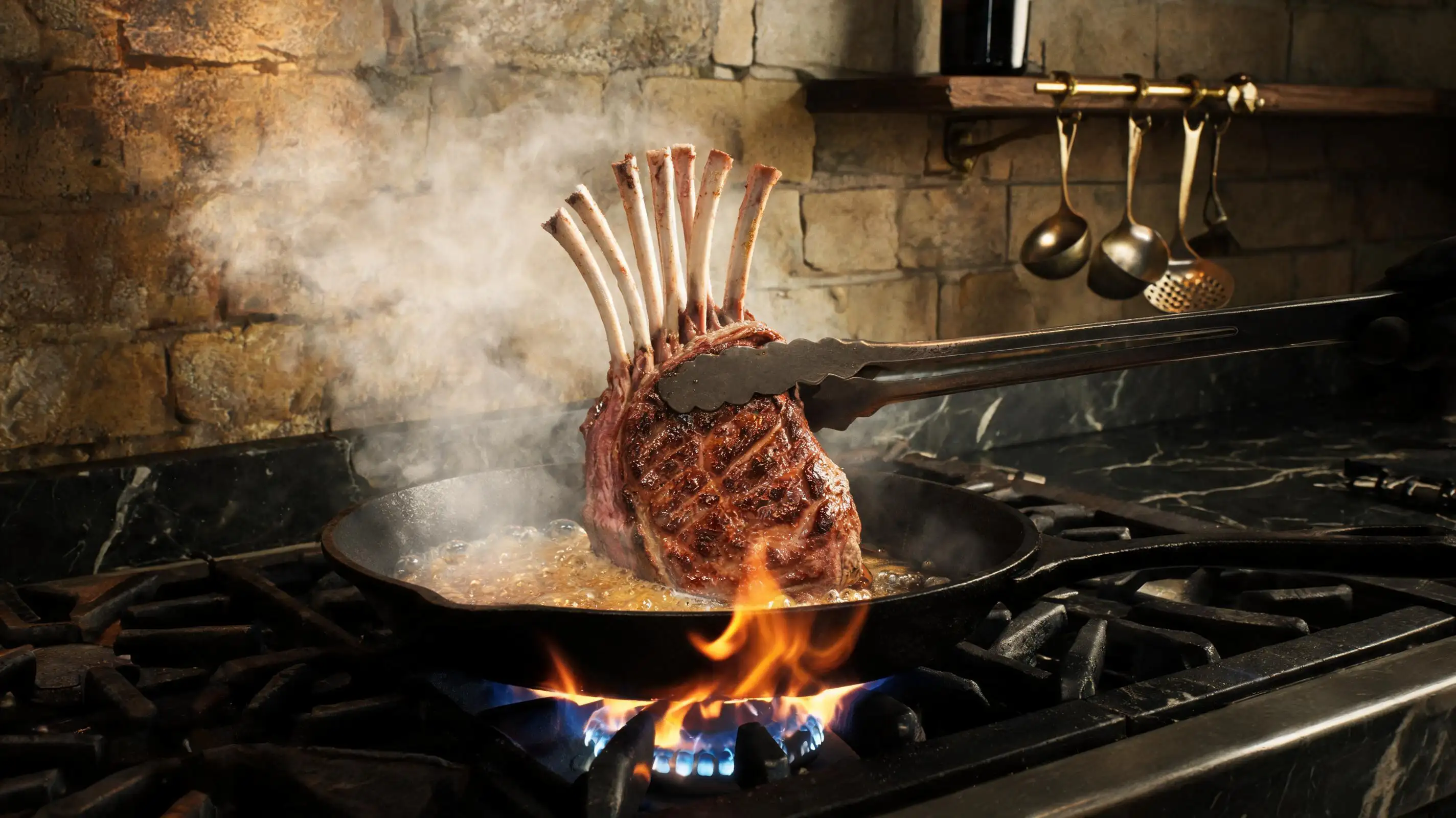
Lower the rack into a screaming-hot cast iron pan. **Press the meat face hard against the iron and hold — 90 seconds per side, turning to seal every surface.** The crust that forms now is the foundation the herb crust will bond to. Blue flame beneath. White smoke above. The kitchen fills with the smell of caramelized lamb fat.
---
## Step 4 · The Herbs
### Build the persillade — the soul of this dish
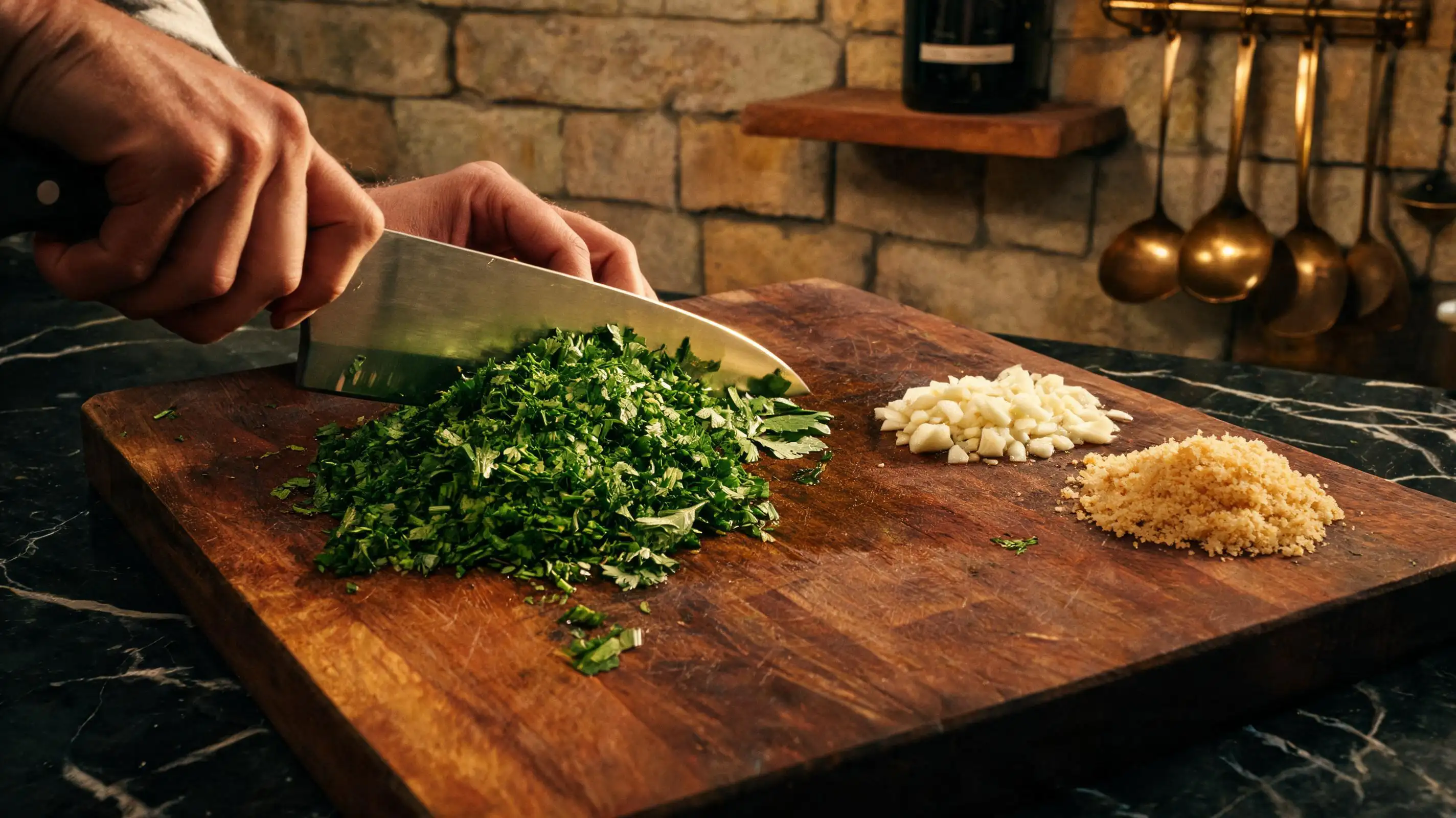
On a dark wooden board, rock the chef's knife through a mountain of flat-leaf parsley until it becomes a vivid green carpet. Add minced garlic, fold in golden breadcrumbs. **The mixture should be bright, fragrant, barely held together** — not a paste, not a powder. This is the crust that will define the plate.
---
## Step 5 · The Mustard
### The binding layer — Dijon bridges meat and herb
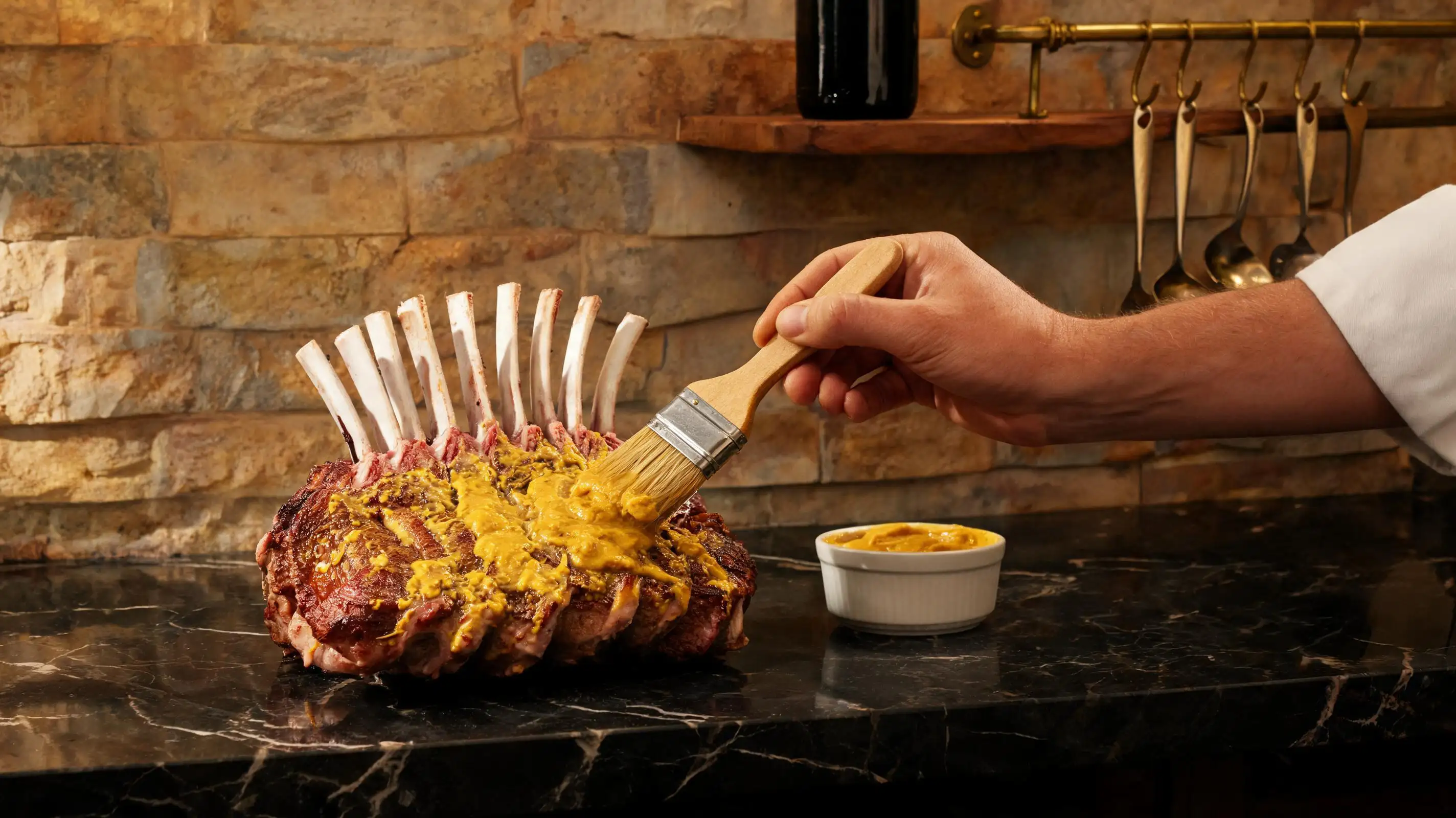
Brush a generous coat of Dijon mustard over every surface of the seared rack while still warm. **The mustard is the glue — it grips the herb crust and adds a sharp, tangy depth that cuts through the richness of the lamb.** Work quickly. The window is narrow.
---
## Step 6 · The Crust
### Press it on — commit to the green
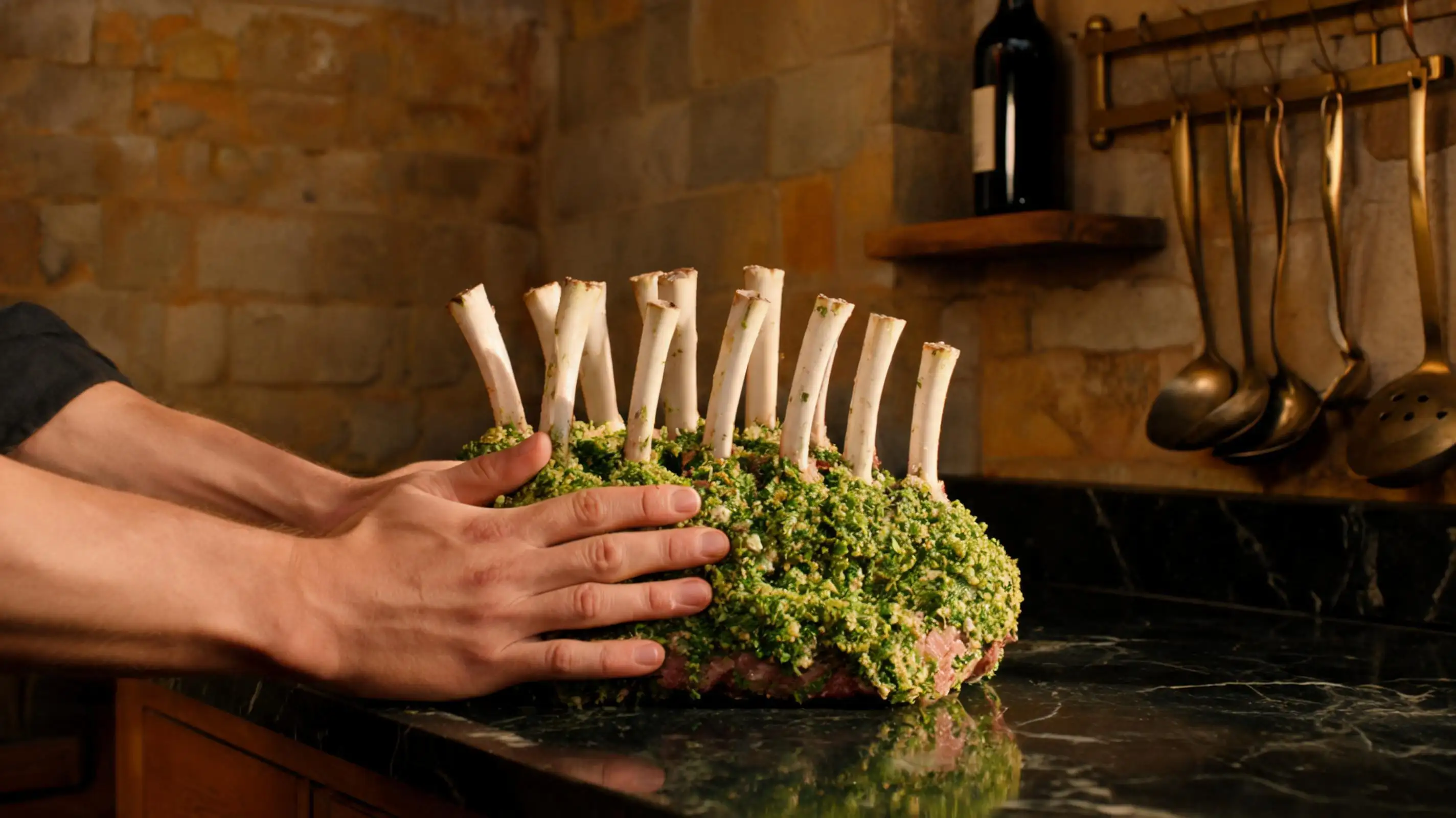
Cup both hands and press the persillade mixture firmly over the mustard-coated surface. **Pack it thick, press it even, let it adhere completely.** The white bones rise cleanly from a bed of electric green — this is the visual that makes guests go silent when the plate arrives.
*The animal is unrecognizable now. That is the point.*
---
## Step 7 · The Roast
### 220°C, bones wrapped, oven does the rest
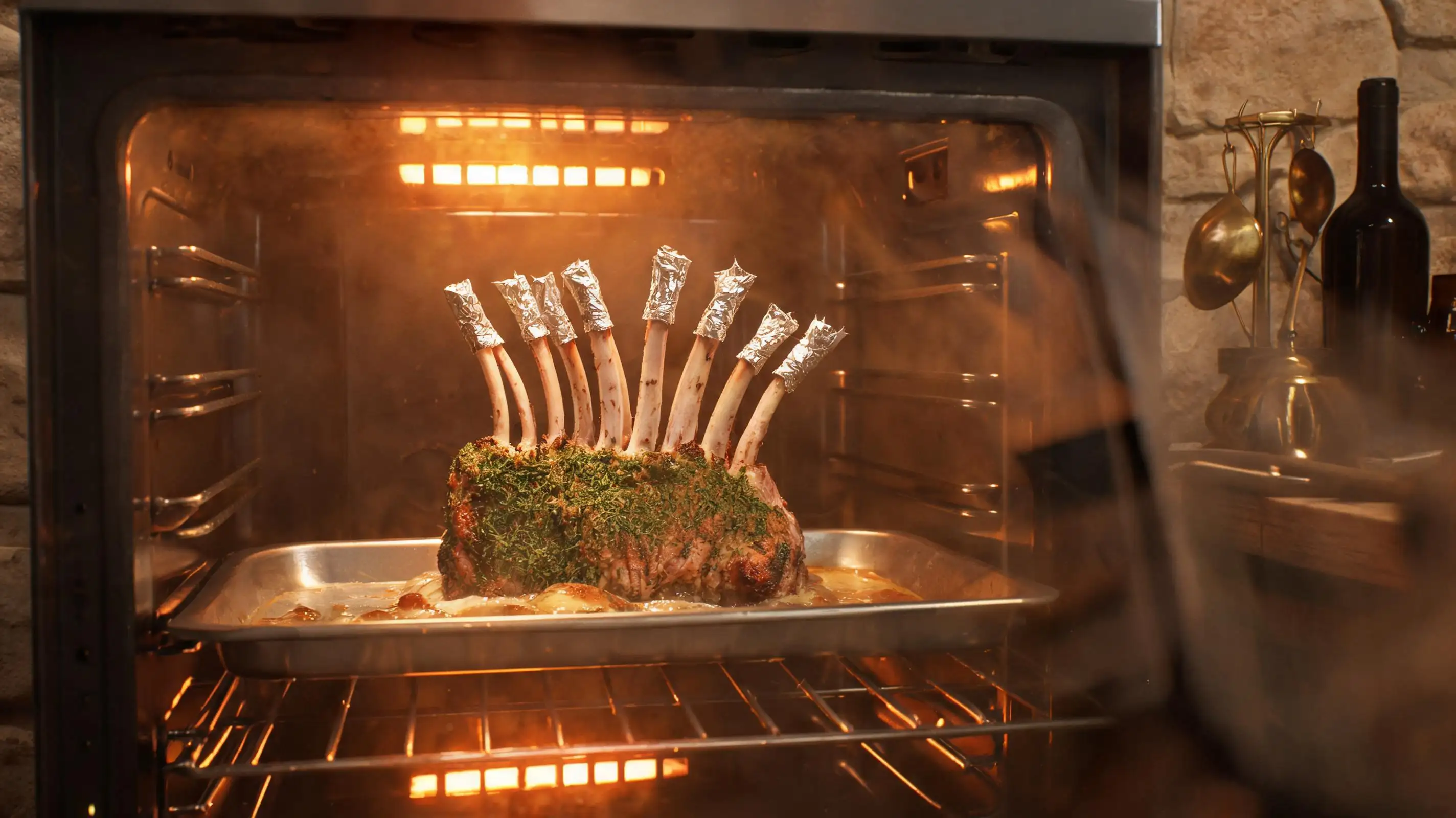
Wrap the bone tips in foil. Place the rack upright in a roasting tray and slide it into a preheated 220°C oven. **Roast for 18–22 minutes** — the herb crust will go from vivid green to deep golden-brown at the edges while the interior reaches a perfect 57°C.
> ⚠️ Check at 18 minutes. The crust burns fast once it turns.
---
## Step 8 · The Rest
### 10 minutes. Non-negotiable.
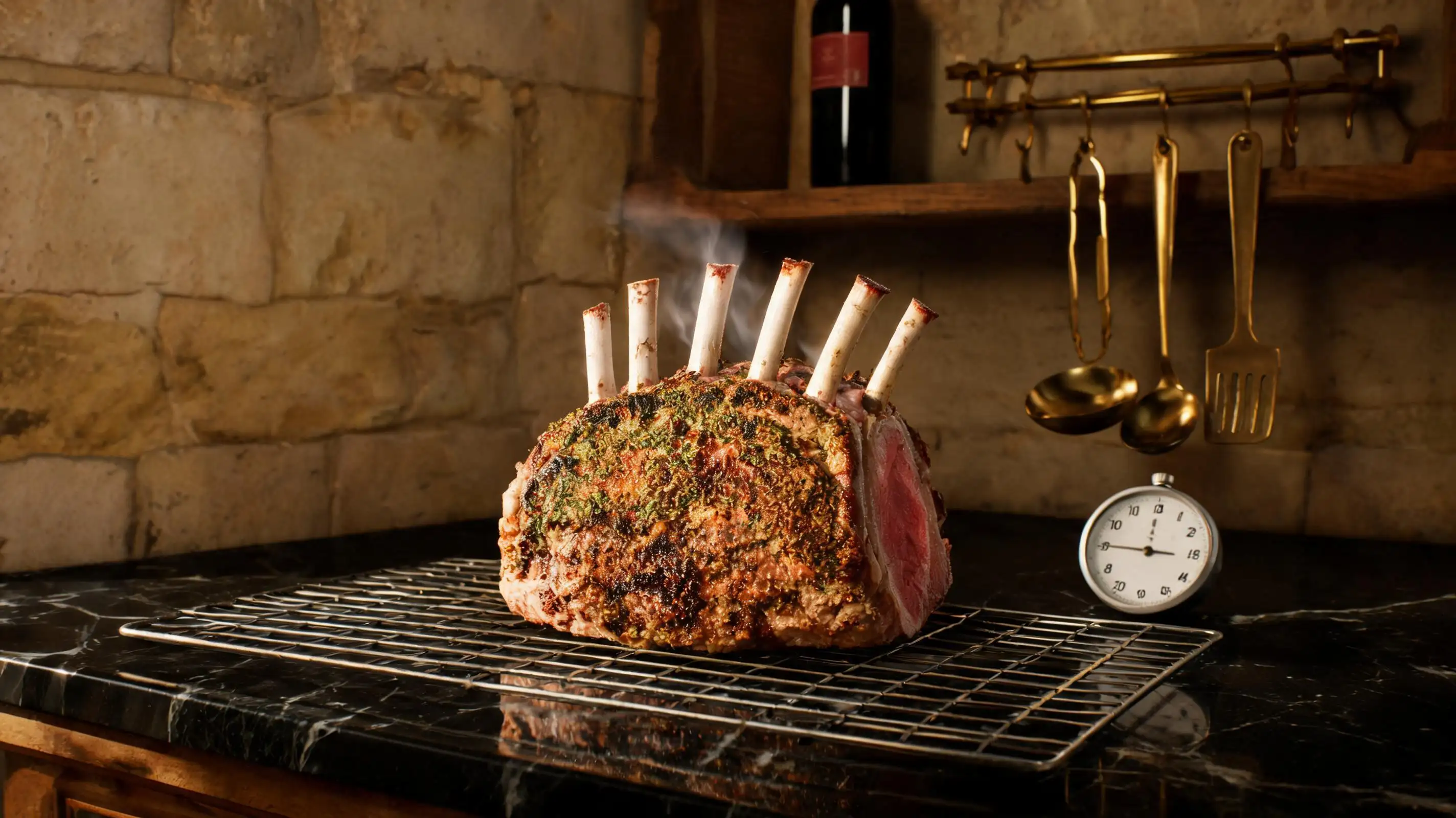
Pull the rack from the oven and set it on a wire rack. **Do not cut. Do not rush. Let the juices redistribute for a full 10 minutes.** A thin wisp of steam rises from the crust. The kitchen goes quiet. This is the patience that separates a good cook from a great one.
---
## Step 9 · The Cut
### One chop. Rose-pink. The reveal.
Slice between the bones — one clean downward stroke. The cut face opens: **deep mahogany crust → thin grey band → vivid rose-pink center.** The herb crust crowns the top in golden-green. The white bone handle stands upright. Lamb jus pools in a slow, amber circle around the base.
A sprig of rosemary. A few microgreens. A glass of Bordeaux to the left.
*This is what French cuisine means — beauty that took all day to build, consumed in silence.*
> The bones are not handles. They are a crown.
> Nine steps from raw rack to the most elegant plate in French cuisine
> *This is the dish that separates cooks from chefs*
---
## Step 1 · The Lineup
### Mise en place — everything in its place
A full frenched rack of lamb stands at the center. Around it: a mound of flat-leaf parsley, three garlic cloves, a ramekin of Dijon mustard with its brush, golden breadcrumbs waiting on the side. **Before the first cut, the entire outcome is already decided by what you have in front of you.**
---
## Step 2 · The French
### Expose the bone — the knife does the talking
Drive the boning knife down the rib bone in a single scraping stroke, pulling the thin membrane and sinew free. **Each bone must emerge clean and ivory-white — no residue, no compromise.** The before-and-after within one rack tells the story: raw and rough becomes precise and deliberate.
---
## Step 3 · The Sear
### Cast iron, full heat, no hesitation
Lower the rack into a screaming-hot cast iron pan. **Press the meat face hard against the iron and hold — 90 seconds per side, turning to seal every surface.** The crust that forms now is the foundation the herb crust will bond to. Blue flame beneath. White smoke above. The kitchen fills with the smell of caramelized lamb fat.
---
## Step 4 · The Herbs
### Build the persillade — the soul of this dish
On a dark wooden board, rock the chef's knife through a mountain of flat-leaf parsley until it becomes a vivid green carpet. Add minced garlic, fold in golden breadcrumbs. **The mixture should be bright, fragrant, barely held together** — not a paste, not a powder. This is the crust that will define the plate.
---
## Step 5 · The Mustard
### The binding layer — Dijon bridges meat and herb
Brush a generous coat of Dijon mustard over every surface of the seared rack while still warm. **The mustard is the glue — it grips the herb crust and adds a sharp, tangy depth that cuts through the richness of the lamb.** Work quickly. The window is narrow.
---
## Step 6 · The Crust
### Press it on — commit to the green
Cup both hands and press the persillade mixture firmly over the mustard-coated surface. **Pack it thick, press it even, let it adhere completely.** The white bones rise cleanly from a bed of electric green — this is the visual that makes guests go silent when the plate arrives.
*The animal is unrecognizable now. That is the point.*
---
## Step 7 · The Roast
### 220°C, bones wrapped, oven does the rest
Wrap the bone tips in foil. Place the rack upright in a roasting tray and slide it into a preheated 220°C oven. **Roast for 18–22 minutes** — the herb crust will go from vivid green to deep golden-brown at the edges while the interior reaches a perfect 57°C.
> ⚠️ Check at 18 minutes. The crust burns fast once it turns.
---
## Step 8 · The Rest
### 10 minutes. Non-negotiable.
Pull the rack from the oven and set it on a wire rack. **Do not cut. Do not rush. Let the juices redistribute for a full 10 minutes.** A thin wisp of steam rises from the crust. The kitchen goes quiet. This is the patience that separates a good cook from a great one.
---
## Step 9 · The Cut
### One chop. Rose-pink. The reveal.
Slice between the bones — one clean downward stroke. The cut face opens: **deep mahogany crust → thin grey band → vivid rose-pink center.** The herb crust crowns the top in golden-green. The white bone handle stands upright. Lamb jus pools in a slow, amber circle around the base.
A sprig of rosemary. A few microgreens. A glass of Bordeaux to the left.
*This is what French cuisine means — beauty that took all day to build, consumed in silence.*