·5/9/2026
from
🍅Tomato & 🍳 Egg Noodles
# Tomato & Egg Noodles — Comfort in a Bowl
> Some dishes don't need a story. They *are* the story — flour on the counter, eggs cracked into a bowl, a wok full of red and gold. This is the dish that means home.
## 📸 1 · The Lineup
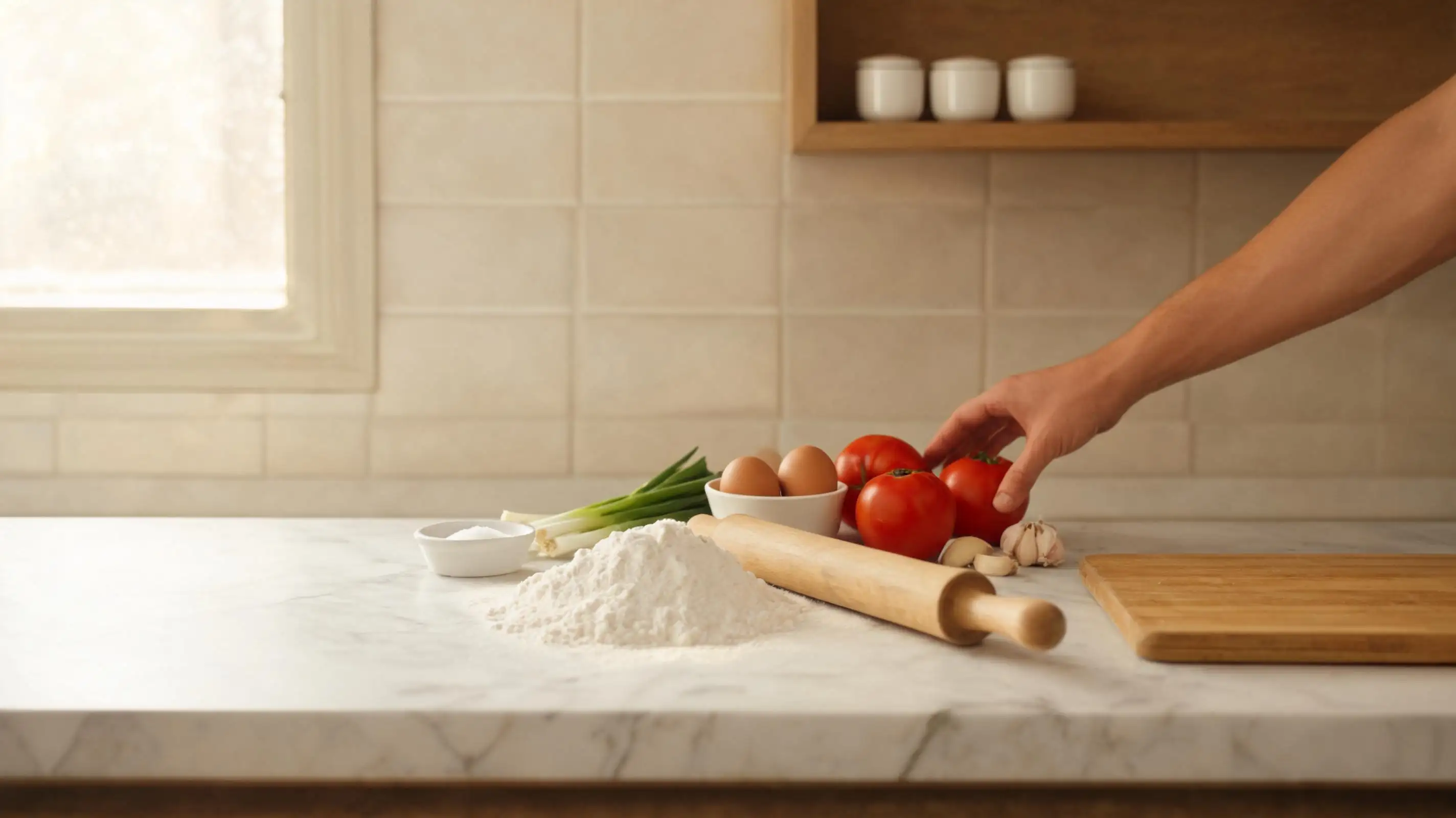
Flour, eggs, tomatoes. That's the whole list. **Start with high-gluten all-purpose flour** for noodles that hold their bite — soft-wheat flour turns to mush by minute three. Line everything on the counter before you begin. Cooking this dish is about rhythm, and rhythm starts with knowing where everything lives.
## 📸 2 · The Knead
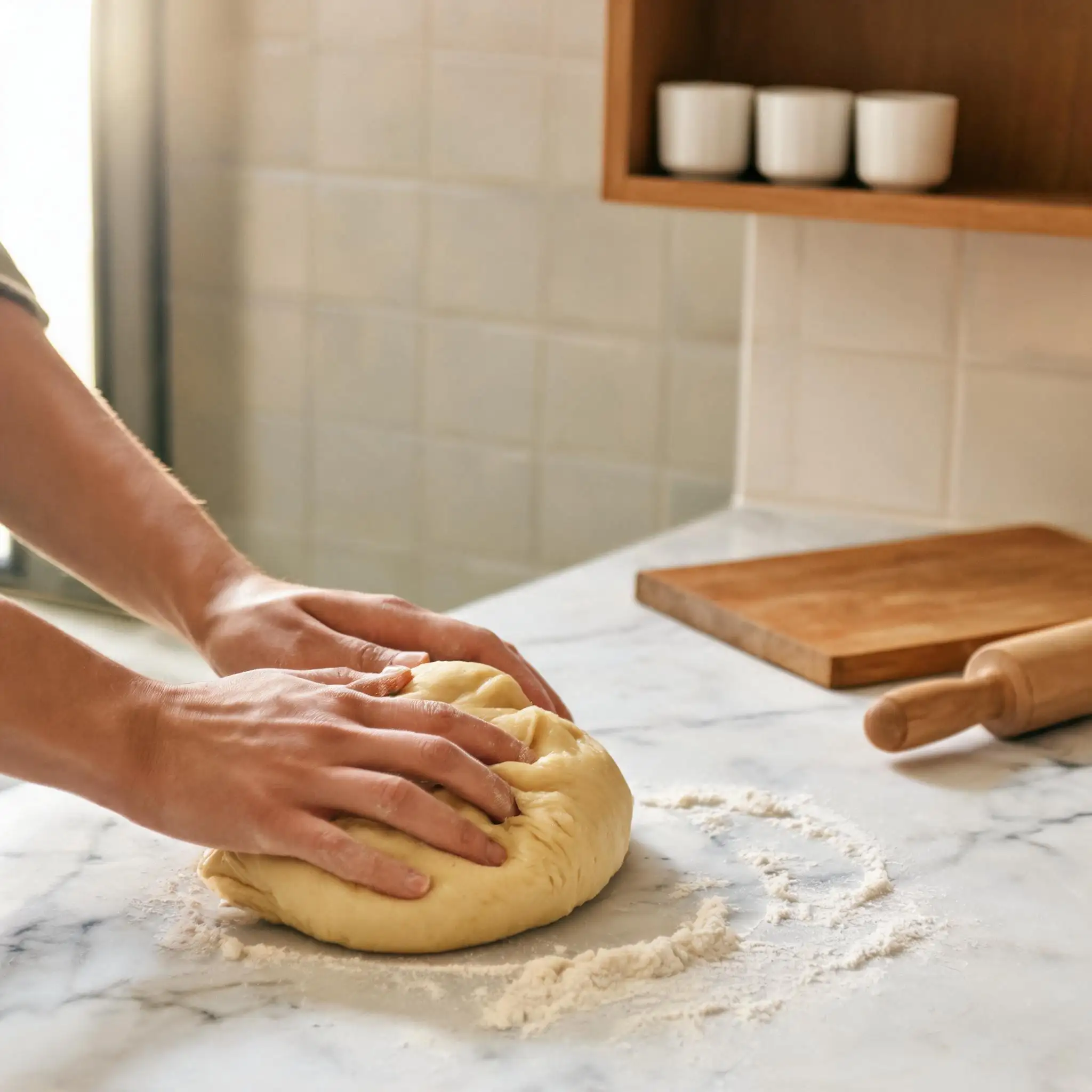
Pour the water slowly — **too much and the dough won't roll, too little and it'll crack.** Press your palms into the mass, fold, rotate, repeat. Ten minutes minimum. When the surface turns smooth and springs back under your thumb, you're ready. Let it rest, covered, for 20 minutes. Don't rush this.
## 📸 3 · The Roll
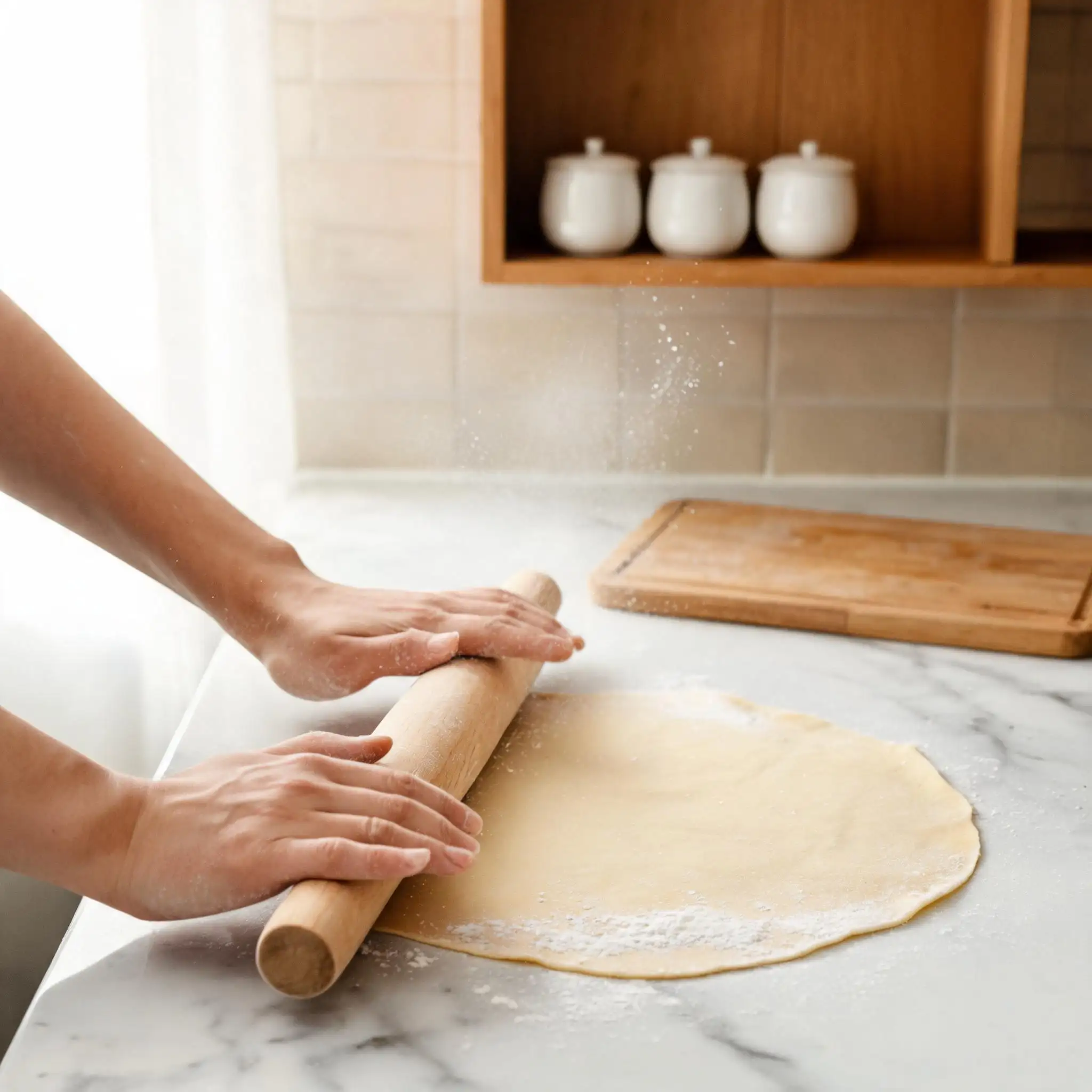
Dust the counter. Flatten the rested dough with your palm first, then reach for the rolling pin. **Roll from center outward, rotating the sheet a quarter-turn each pass.** You're aiming for 2mm — thin enough to cook through in boiling water, thick enough to carry the sauce. The flour dust on the surface is your insurance against sticking.
## 📸 4 · The Cut
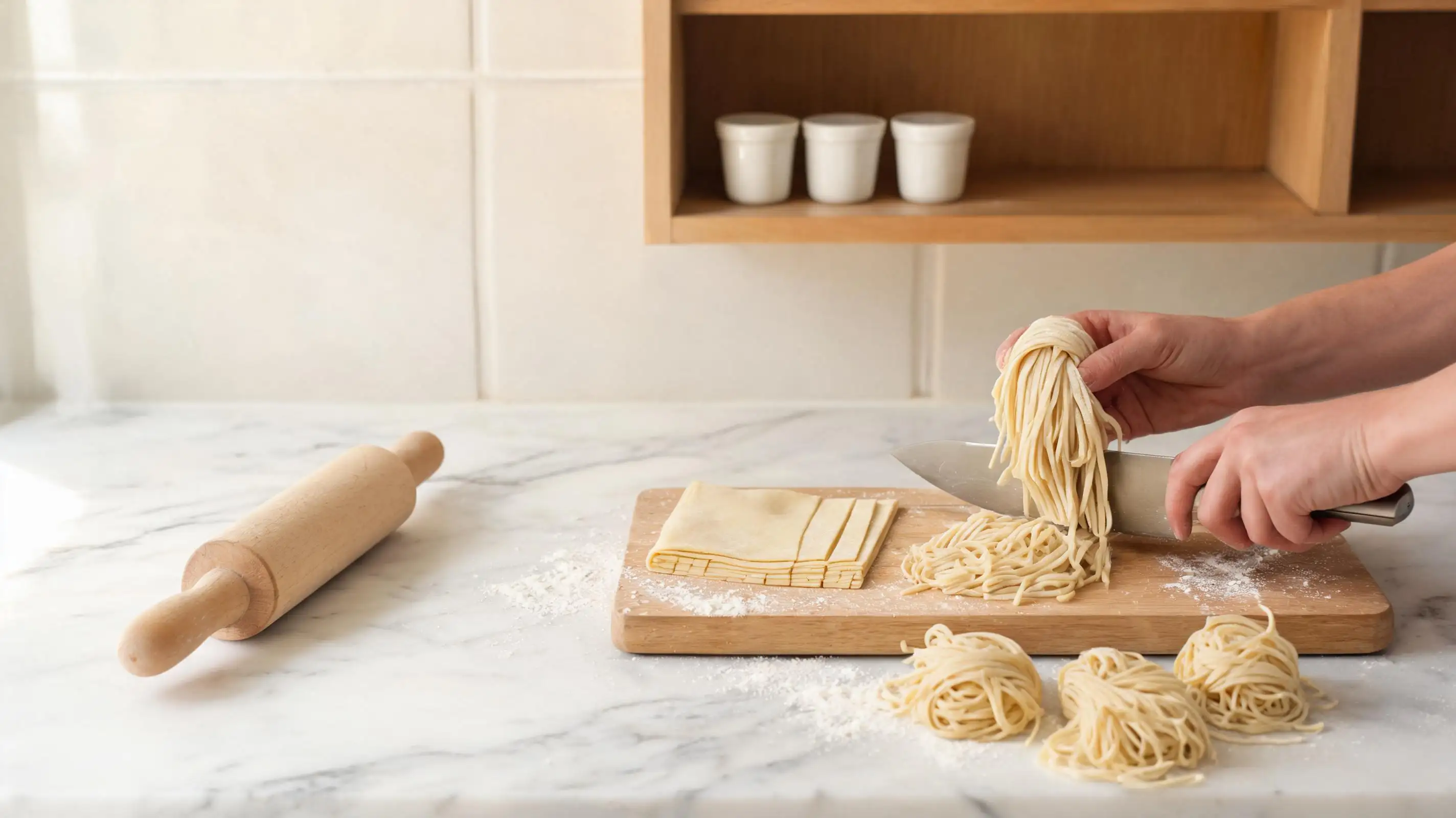
Fold the sheet in loose layers. **One clean pull of the knife per strip — no sawing.** Lift a bundle between your fingers and feel the weight of it. These are hand-cut noodles: irregular, honest, nothing like the machine-made kind. Shake them loose and set aside.
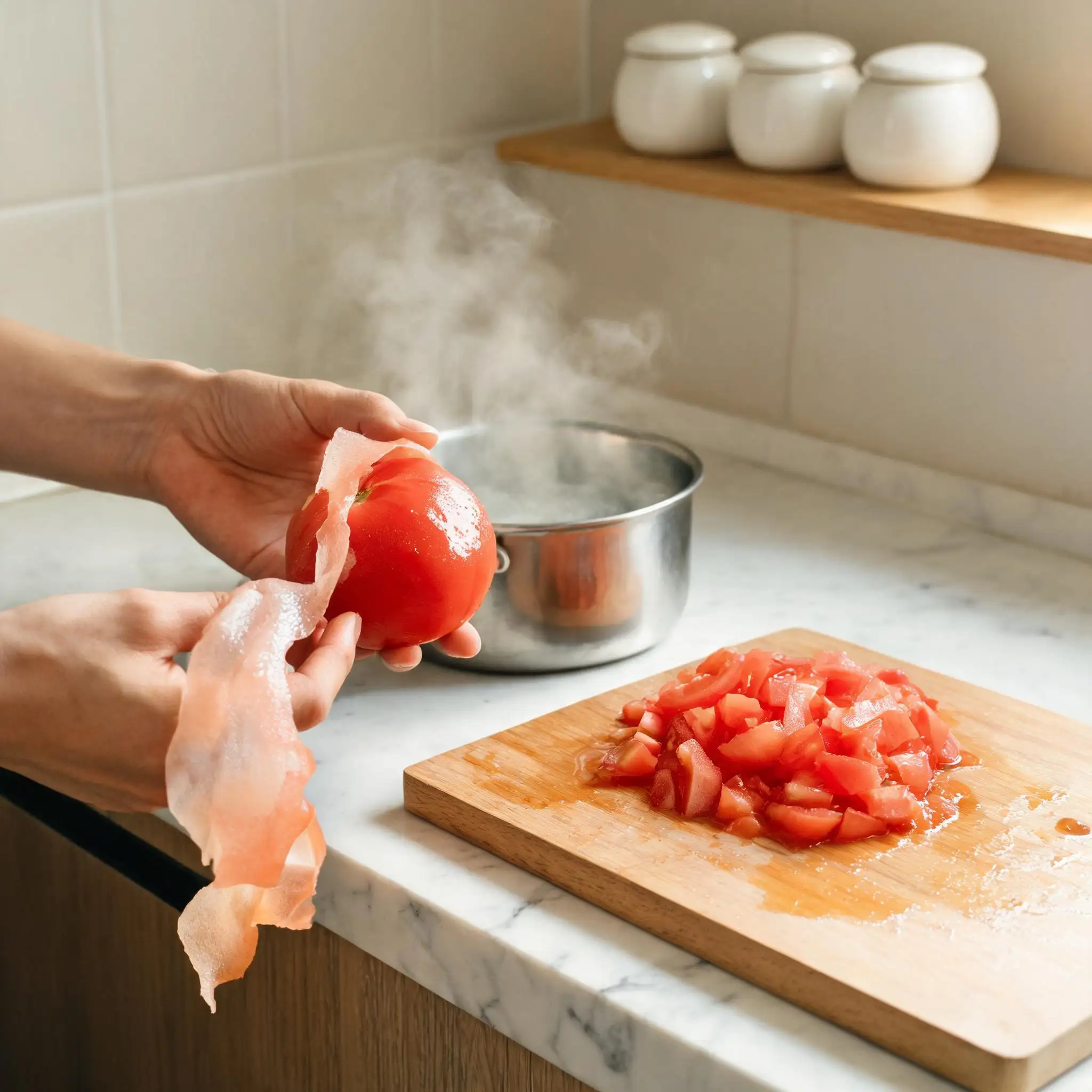
## 📸 5 · The Tomato
This step makes or breaks the sauce. **Score an X on the bottom of each tomato, blanch for 30 seconds, then peel while still hot.** Skip the blanch and you'll spend the next ten minutes wrestling with skin that won't come off. Cut into rough 2cm chunks — size matters. Too small and they dissolve completely, too large and the sauce stays watery.
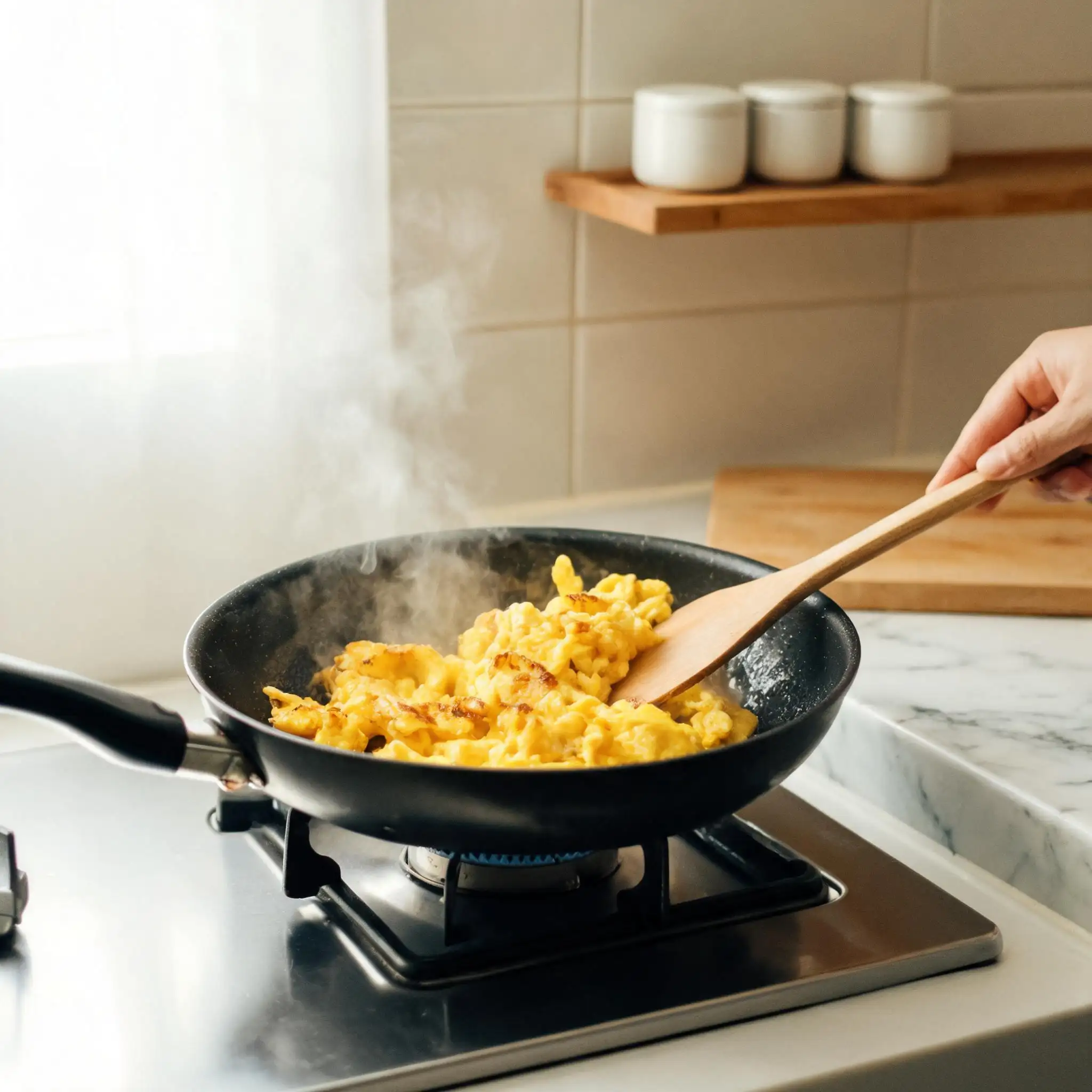
## 📸 6 · The Scramble
High heat, enough oil, and eggs barely stirred before they hit the pan. **Pull them out while still soft in the center.** They'll finish cooking later in the sauce. Overcooked eggs turn rubbery — the golden, pillowy kind only come from a hot wok and good timing.
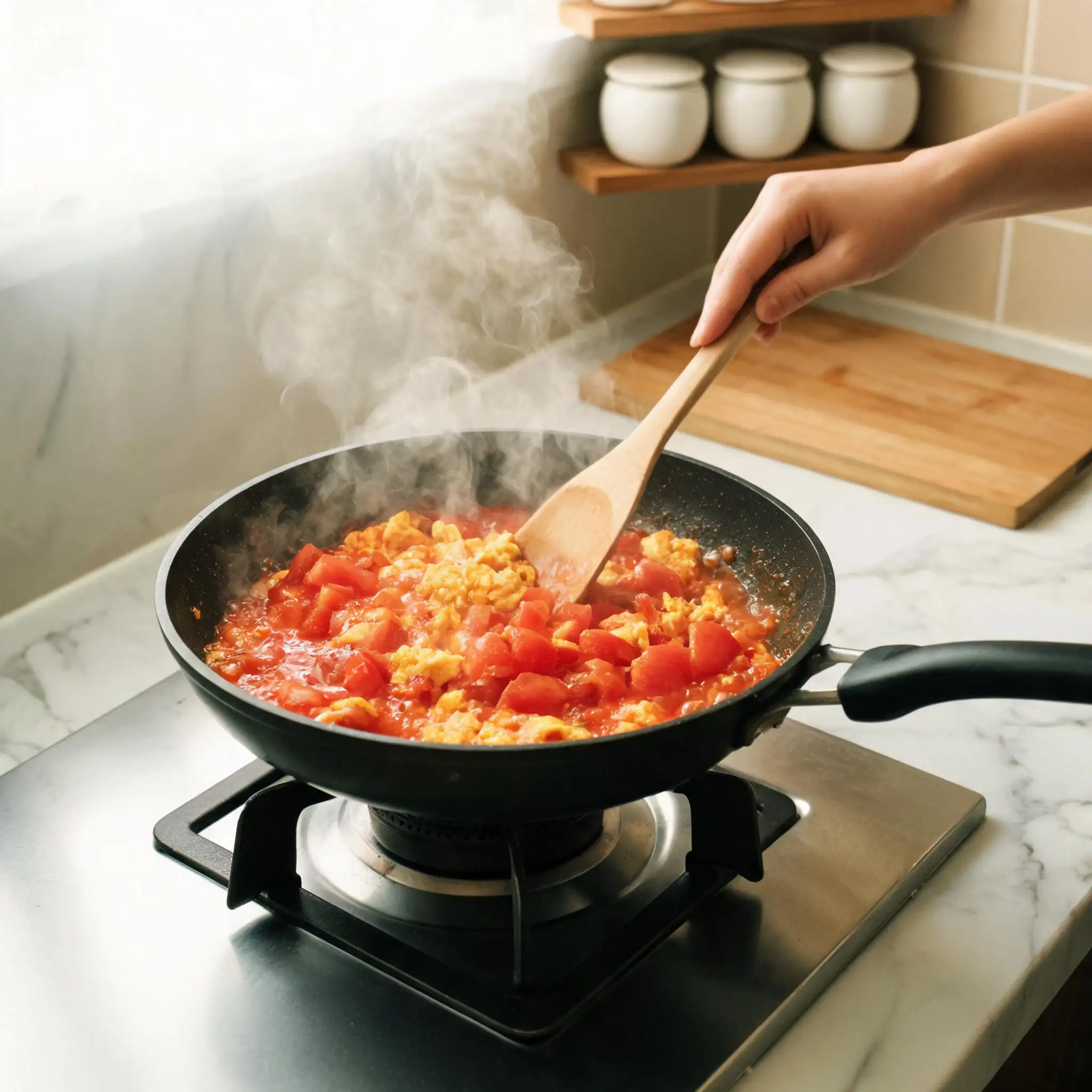
## 📸 7 · The Merge
Back into the wok: tomatoes first, pressing them down until the juice runs red and sweet. A pinch of sugar — **just enough to balance the acid, not to sweeten.** Add the eggs back in. The red and gold swirl together into something that smells like every good kitchen you've ever stood in.
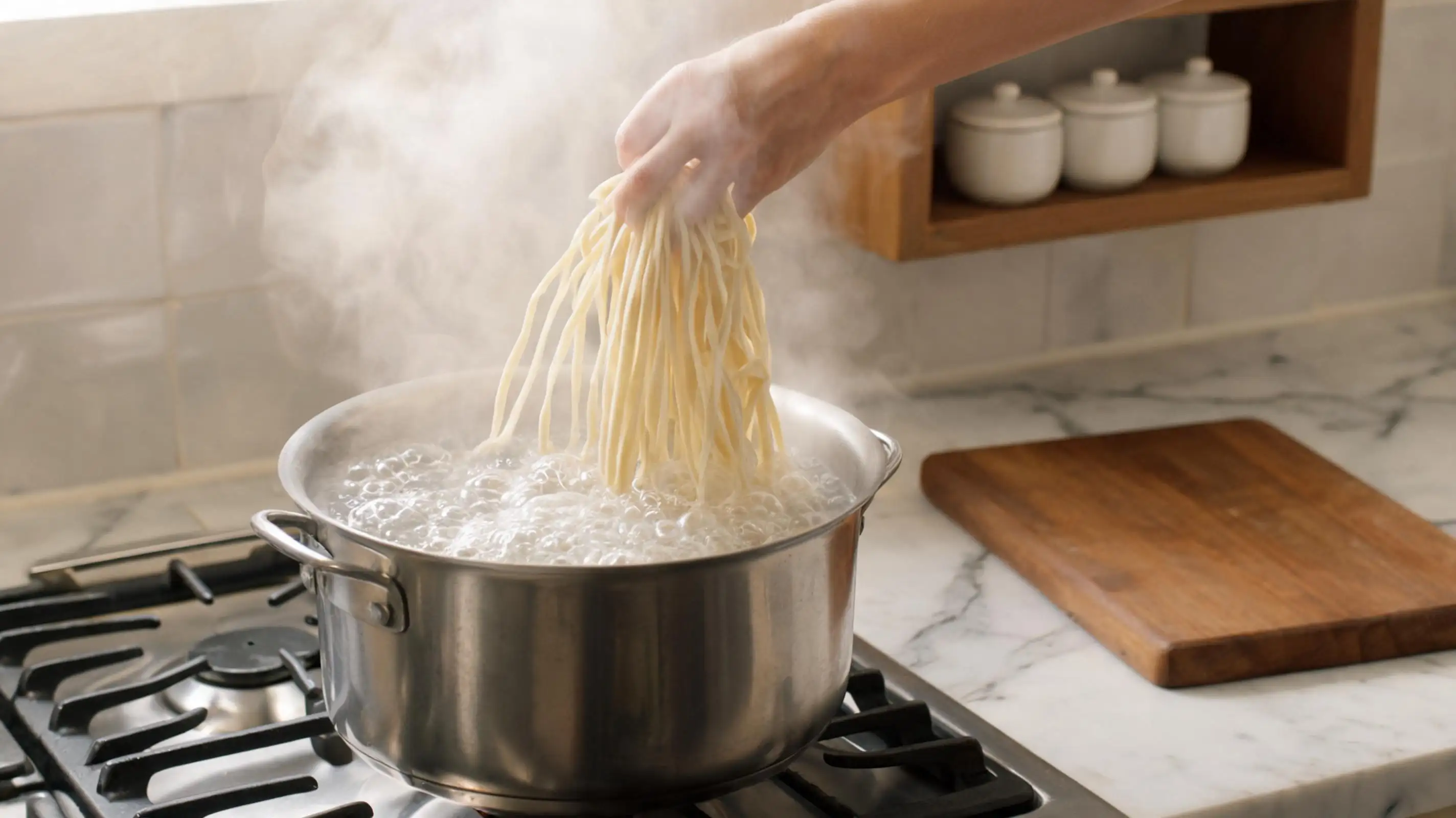
## 📸 8 · The Boil
Drop the noodles into hard-boiling water — they need space to move. **Stir once immediately to prevent clumping, then leave them alone.** Fresh hand-cut noodles cook fast: 2–3 minutes, test one, done. Lift them straight into the bowl without over-draining. The starch water clinging to the noodles helps the sauce bind.
## 📸 9 · The Bowl
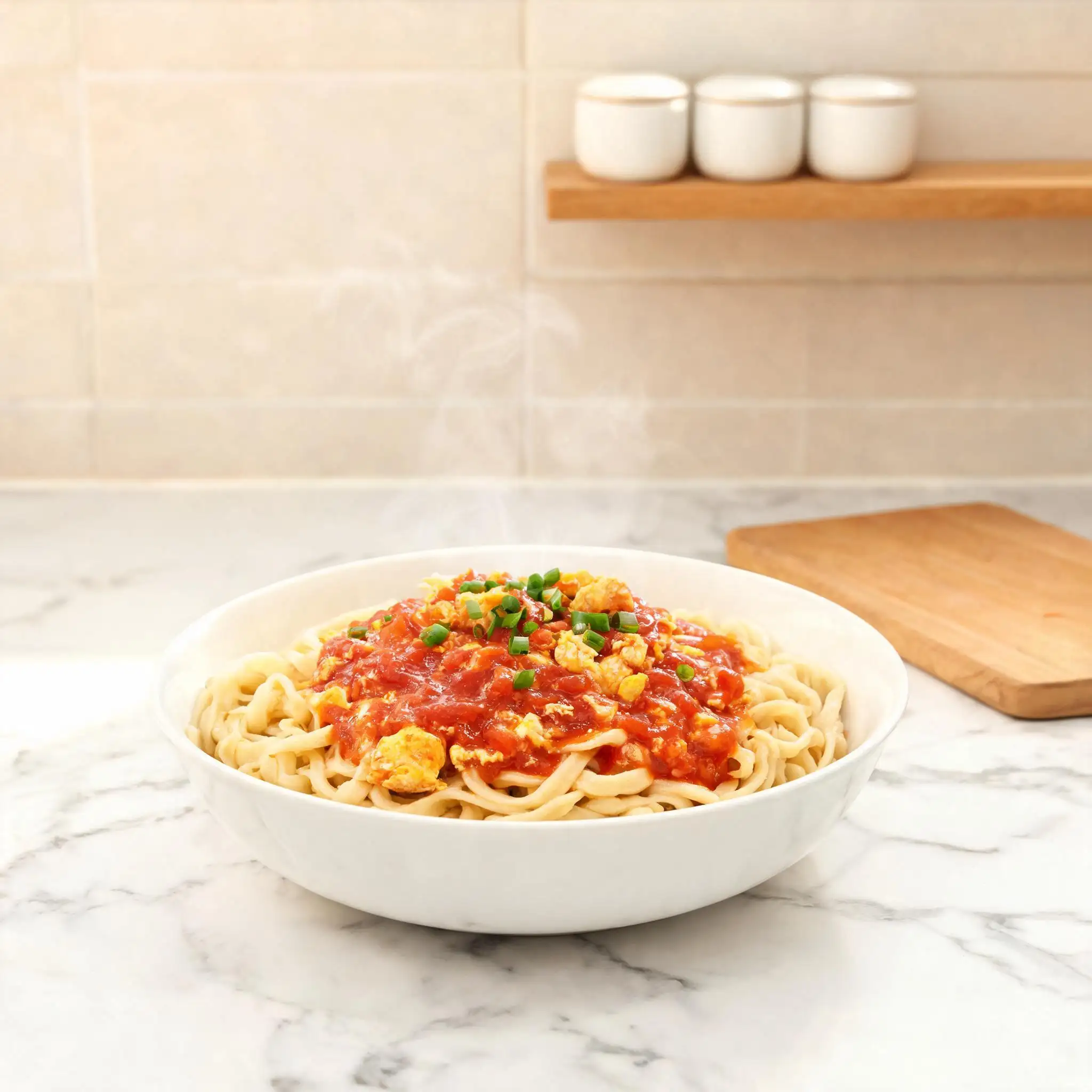
Ladle the sauce over the noodles while everything is still steaming. A scatter of green onion. Nothing else. **The noodles absorb the sauce as you eat — every bite a little different from the last.** This is the dish you come back to when you need something real.
> Some dishes don't need a story. They *are* the story — flour on the counter, eggs cracked into a bowl, a wok full of red and gold. This is the dish that means home.
## 📸 1 · The Lineup
Flour, eggs, tomatoes. That's the whole list. **Start with high-gluten all-purpose flour** for noodles that hold their bite — soft-wheat flour turns to mush by minute three. Line everything on the counter before you begin. Cooking this dish is about rhythm, and rhythm starts with knowing where everything lives.
## 📸 2 · The Knead
Pour the water slowly — **too much and the dough won't roll, too little and it'll crack.** Press your palms into the mass, fold, rotate, repeat. Ten minutes minimum. When the surface turns smooth and springs back under your thumb, you're ready. Let it rest, covered, for 20 minutes. Don't rush this.
## 📸 3 · The Roll
Dust the counter. Flatten the rested dough with your palm first, then reach for the rolling pin. **Roll from center outward, rotating the sheet a quarter-turn each pass.** You're aiming for 2mm — thin enough to cook through in boiling water, thick enough to carry the sauce. The flour dust on the surface is your insurance against sticking.
## 📸 4 · The Cut
Fold the sheet in loose layers. **One clean pull of the knife per strip — no sawing.** Lift a bundle between your fingers and feel the weight of it. These are hand-cut noodles: irregular, honest, nothing like the machine-made kind. Shake them loose and set aside.
## 📸 5 · The Tomato
This step makes or breaks the sauce. **Score an X on the bottom of each tomato, blanch for 30 seconds, then peel while still hot.** Skip the blanch and you'll spend the next ten minutes wrestling with skin that won't come off. Cut into rough 2cm chunks — size matters. Too small and they dissolve completely, too large and the sauce stays watery.
## 📸 6 · The Scramble
High heat, enough oil, and eggs barely stirred before they hit the pan. **Pull them out while still soft in the center.** They'll finish cooking later in the sauce. Overcooked eggs turn rubbery — the golden, pillowy kind only come from a hot wok and good timing.
## 📸 7 · The Merge
Back into the wok: tomatoes first, pressing them down until the juice runs red and sweet. A pinch of sugar — **just enough to balance the acid, not to sweeten.** Add the eggs back in. The red and gold swirl together into something that smells like every good kitchen you've ever stood in.
## 📸 8 · The Boil
Drop the noodles into hard-boiling water — they need space to move. **Stir once immediately to prevent clumping, then leave them alone.** Fresh hand-cut noodles cook fast: 2–3 minutes, test one, done. Lift them straight into the bowl without over-draining. The starch water clinging to the noodles helps the sauce bind.
## 📸 9 · The Bowl
Ladle the sauce over the noodles while everything is still steaming. A scatter of green onion. Nothing else. **The noodles absorb the sauce as you eat — every bite a little different from the last.** This is the dish you come back to when you need something real.