·5/8/2026
from
🫙 Sichuan Grandmothers Invented Gut Health — 2,000 Years Before Science Had a Name for It
# 🫙 Sichuan Grandmothers Invented Gut Health — 2,000 Years Before Science Had a Name for It
**Scientists call it probiotic fermentation. Sichuan grandmothers called it "keeping the jar alive." Same thing. Two thousand years apart. (9 Photos)**
> Scientists discovered gut health in the 1990s.
> Sichuan grandmothers have been cultivating it since the Han Dynasty.
>
> This isn't just a pickle recipe — it's a **living culture** that gets stronger with every batch.
>
> Here's how the jar stays alive. 🫙🌶️
---
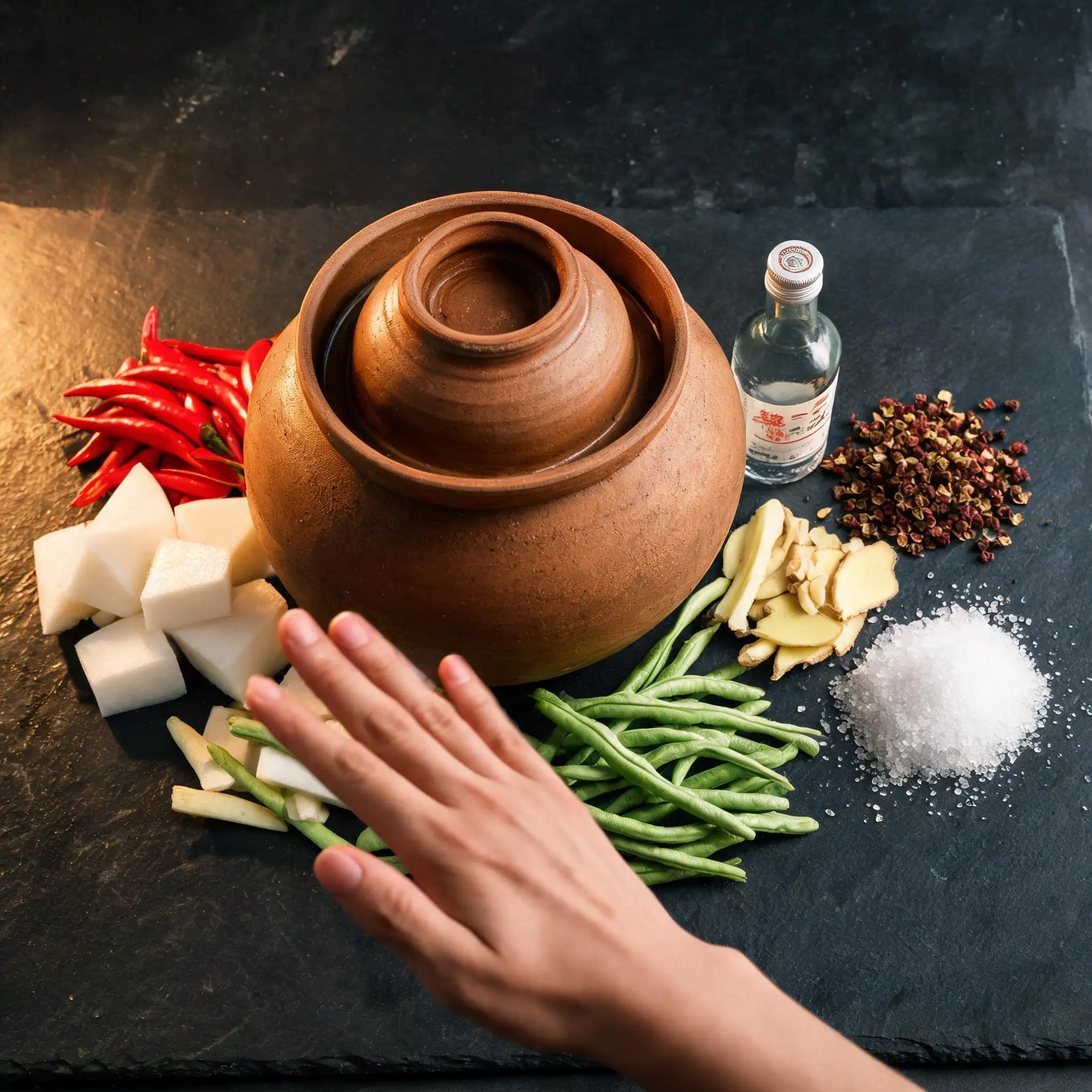
## 📸 1 · The Lineup
Red chilies, white radish, green cowpeas, young ginger. And always — the jar first.
This terracotta jar is not a container. It's a microbiome. Every batch you've made has left its bacteria in these walls. **The jar is the recipe.** The vegetables are just the newest tenants.
---
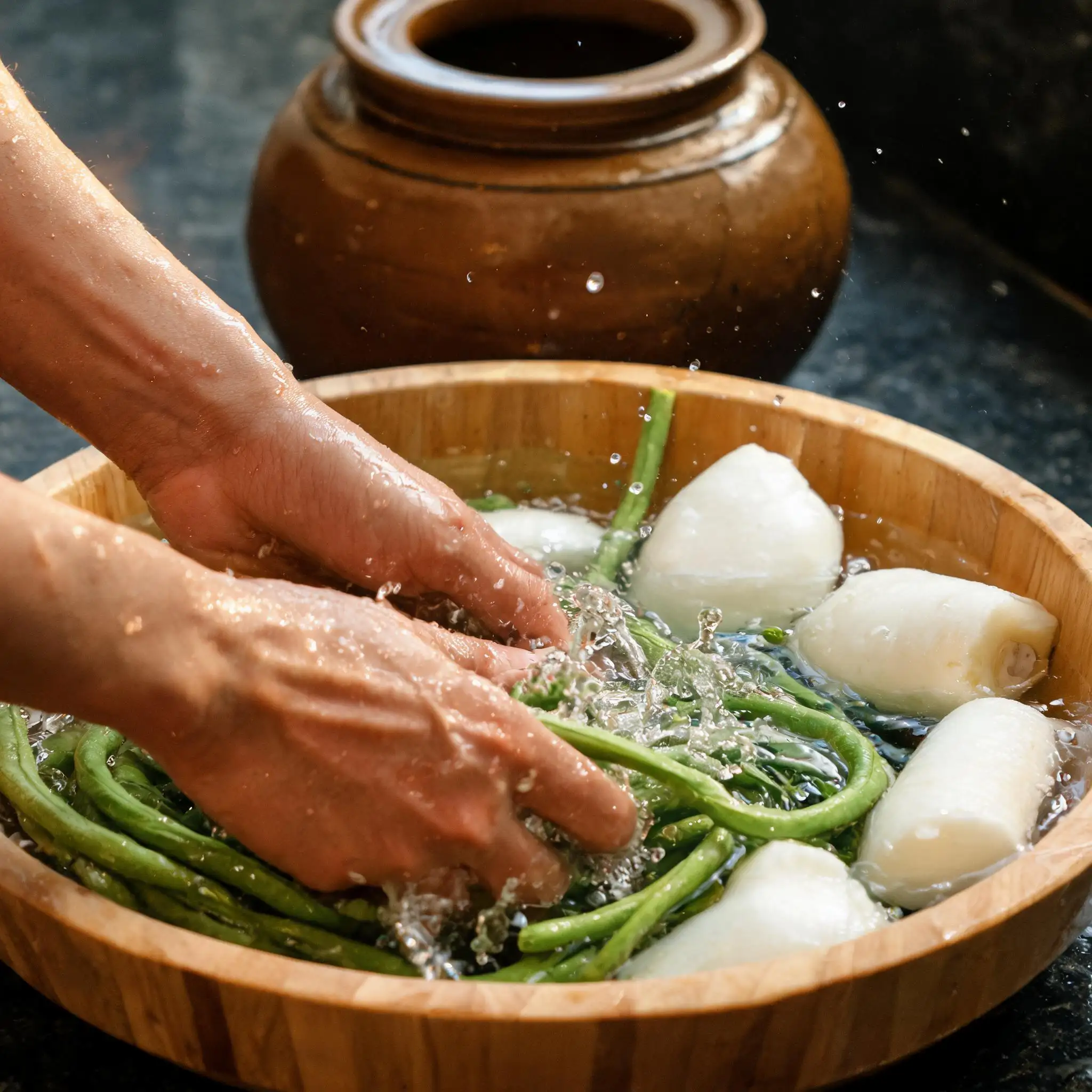
## 📸 2 · The Scrub
Two cold-water washes. Every vegetable. No exceptions.
One enemy: **cooking oil**. A single oily fingerprint kills the lactic acid bacteria on contact. Hands washed. Vegetables scrubbed. Jar wiped dry. Not paranoia — just the price of a perfect batch.
---
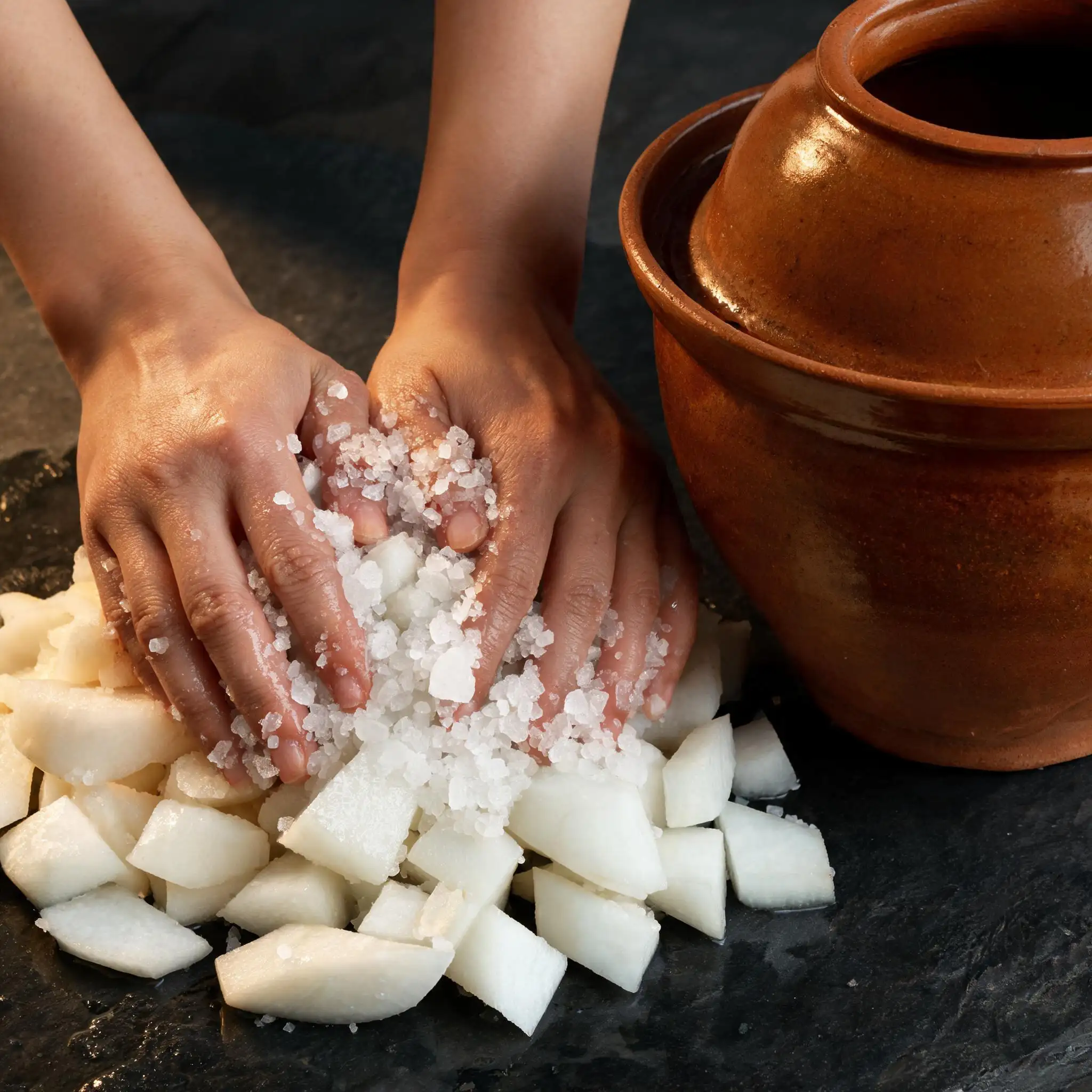
## 📸 3 · The Salt
Coarse rock salt — **never iodized**. Iodine kills bacteria. The bacteria are the entire point.
Rubbed hard into the radish, left to sweat 30 minutes. Salt pulls out excess water so the brine stays concentrated. What comes out: a radish that still cracks weeks into fermentation.
---
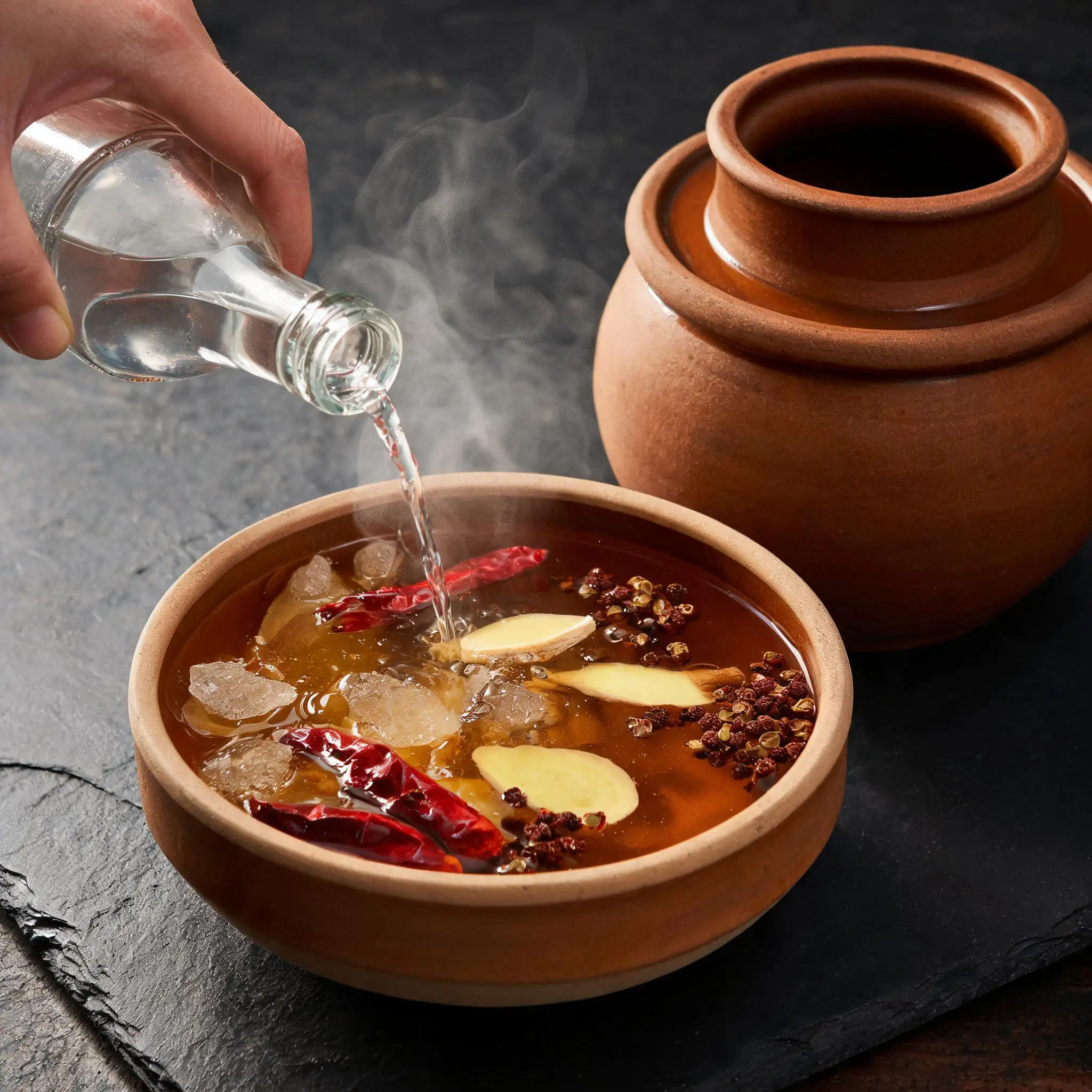
## 📸 4 · The Brine
The magic lives in the **old brine**. From batch two onward, a ladle of the last jar's brine carries billions of the exact bacteria that made it perfect. The culture learns. It improves.
**Then: two tablespoons of baijiu.** Sterilizes what the washing missed, signals the good bacteria to dominate. My grandmother called it "giving the jar courage." She was right.
---
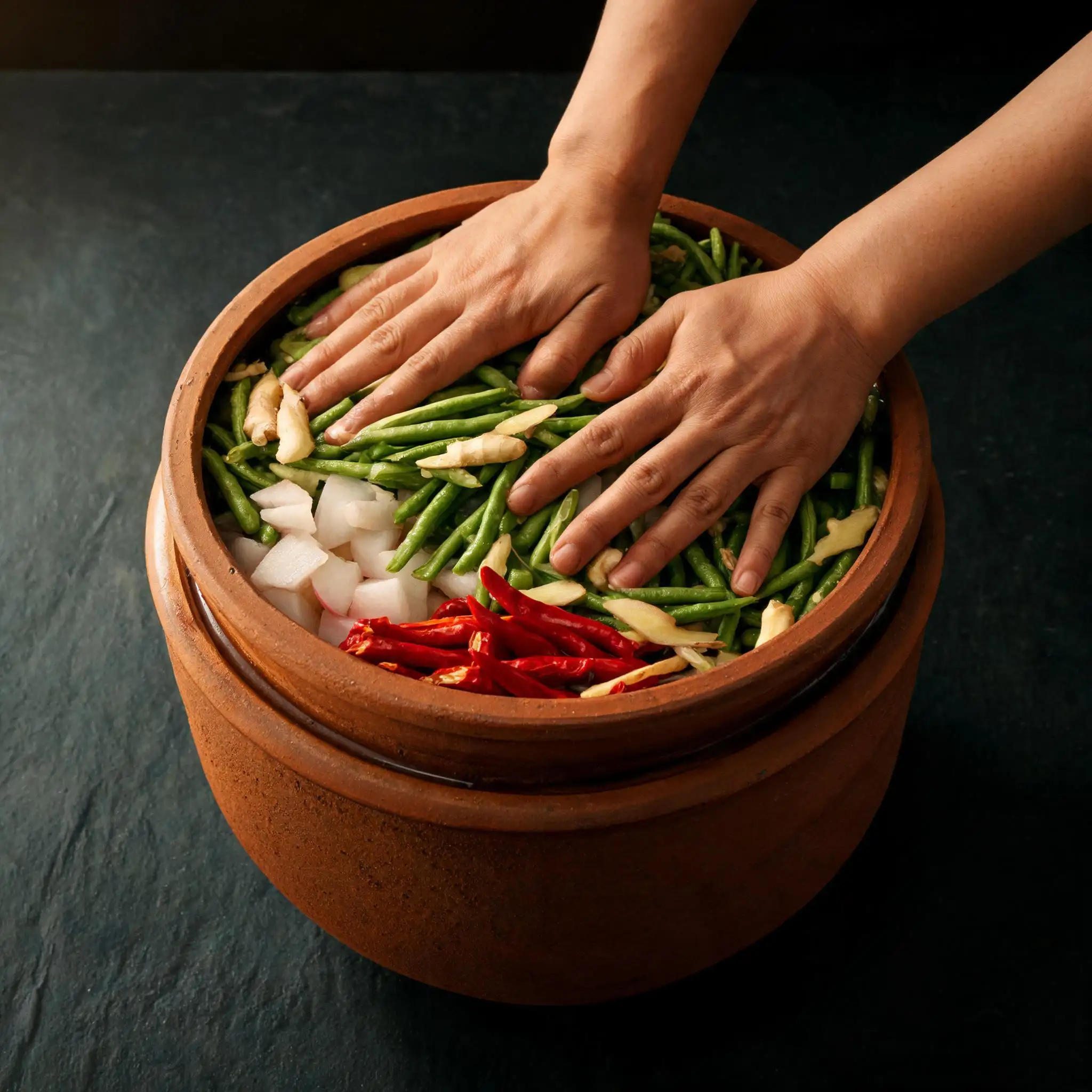
## 📸 5 · The Pack
No air gaps. No hesitation. Chilies first — their capsaicin suppresses the wrong bacteria. Radish next. Cowpeas woven through. Ginger in every gap.
**The rule:** 80% full. Leave 20% headroom for brine and fermentation gases. Press down firmly. The jar should feel inevitable.
---
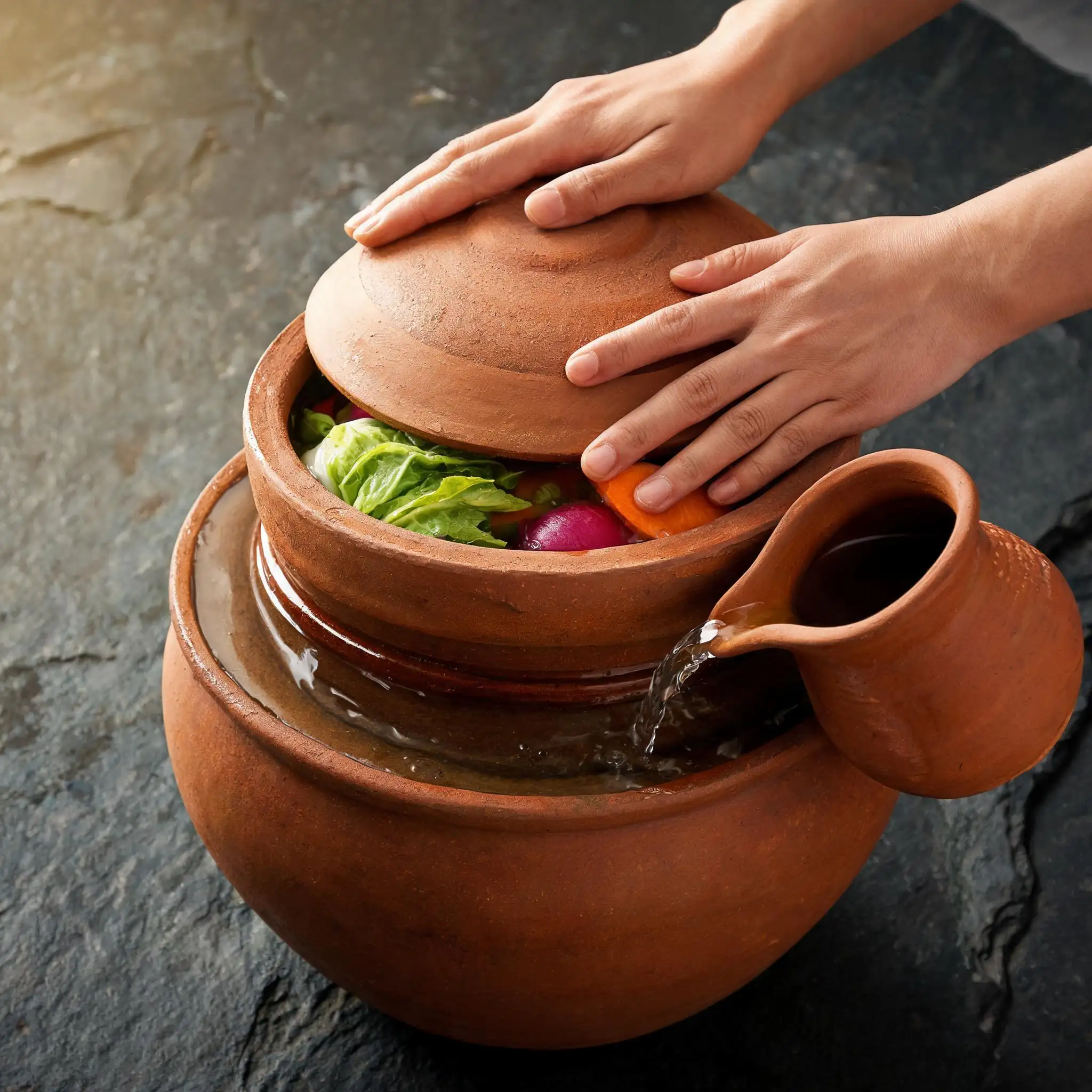
## 📸 6 · The Seal
Brine covers every vegetable. Lid pressed down. Water poured into the groove around the rim.
That groove is the **entire technology** — a one-way valve. Gases escape out. Oxygen cannot enter. Built from clay and water. Engineered 2,000 years ago. Never improved because it never needed to be.
---
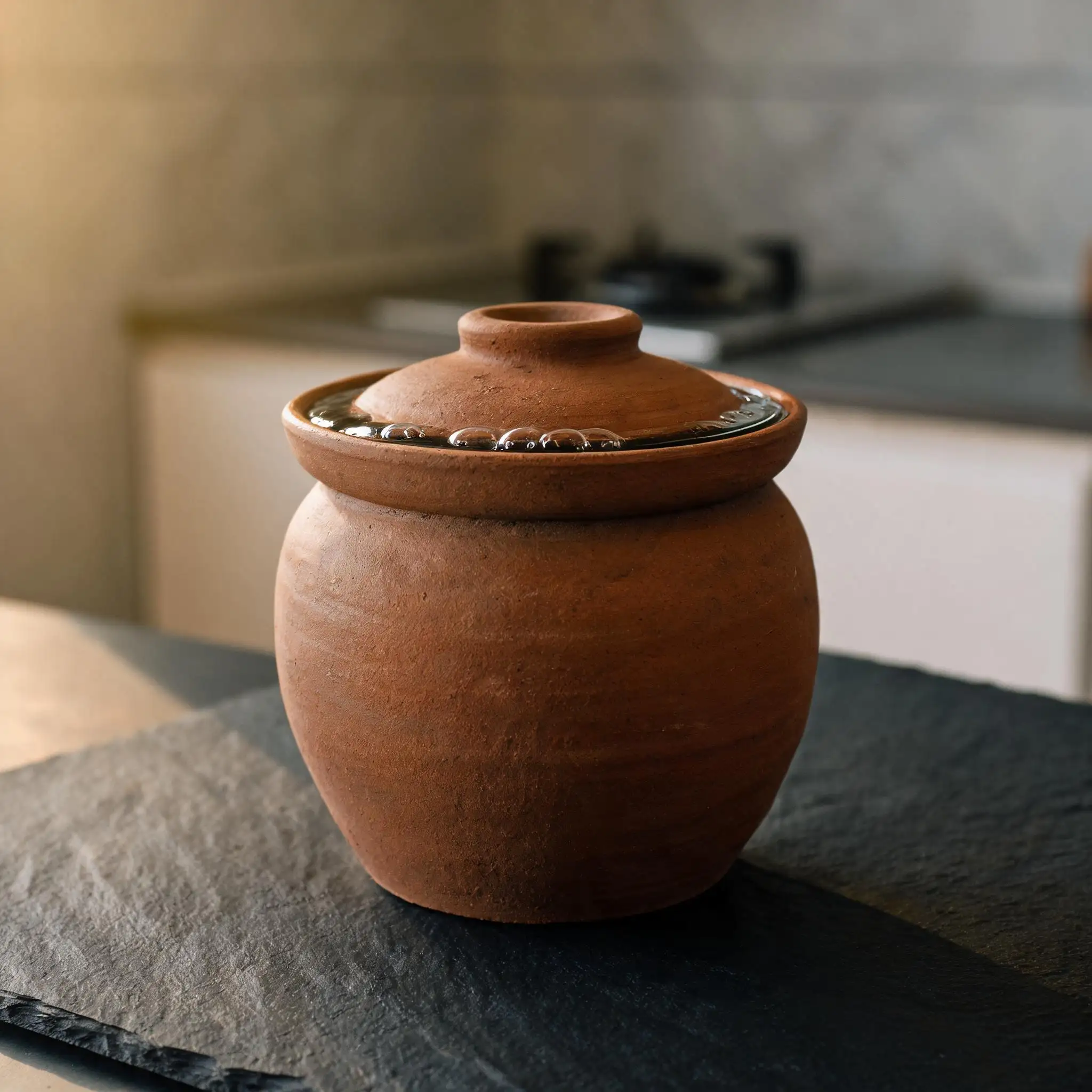
## 📸 7 · The Wait
Three days in summer. Five in winter. Watch the seal groove — when tiny bubbles rise through the water, fermentation is live. **That's your sign. Not a timer.**
Every time you lift the lid, oxygen floods in and the clock resets. The hardest ingredient in this recipe is restraint.
---
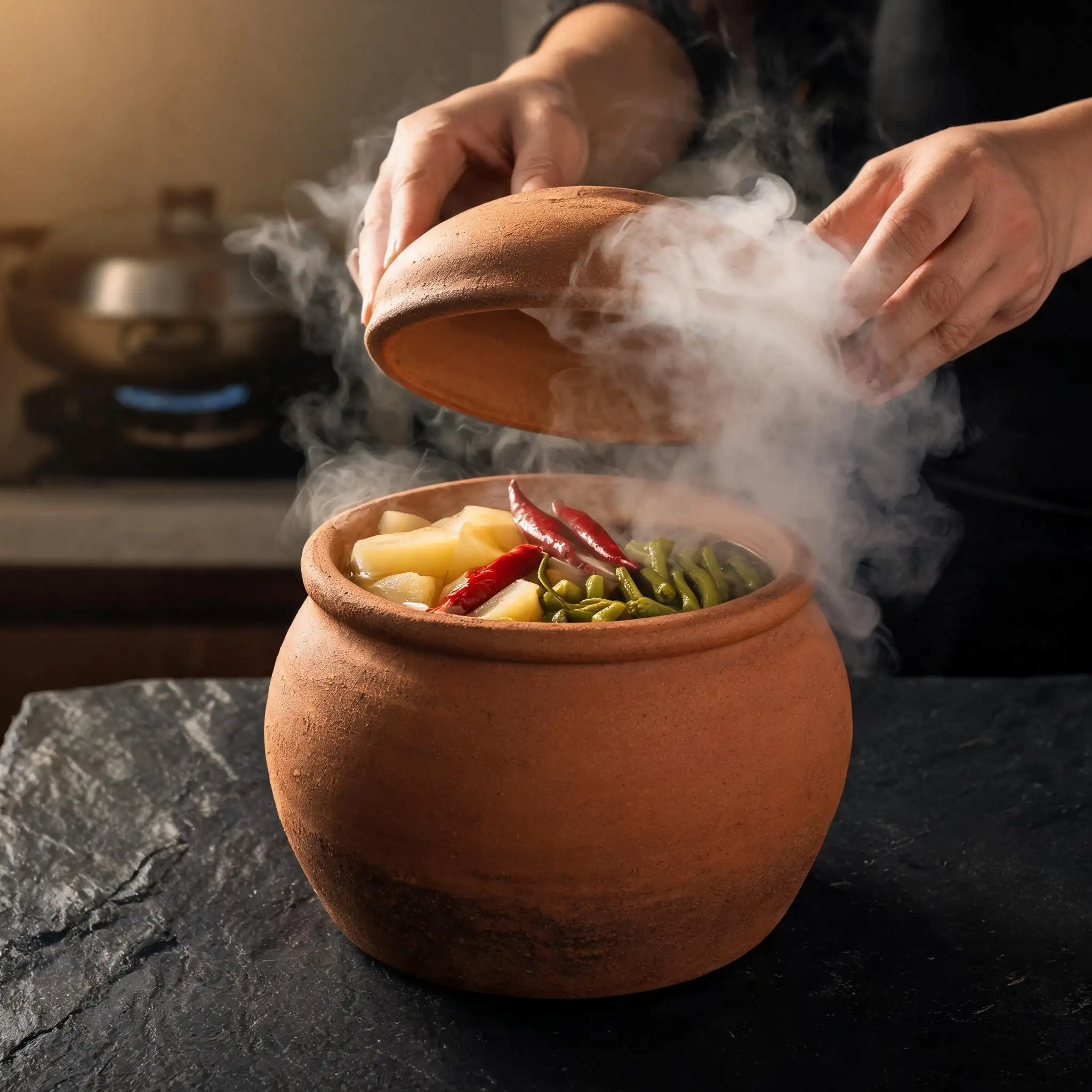
## 📸 8 · The Awakening
The lid lifts slowly. Always slowly.
Then it hits: bright, tangy, slightly floral sour air. **If it smells right, you did it right.** Clean-sour like vinegar crossed with something ancient and alive. If it smells of rot — trust your nose, start again. A good batch smells like a memory you haven't made yet.
---
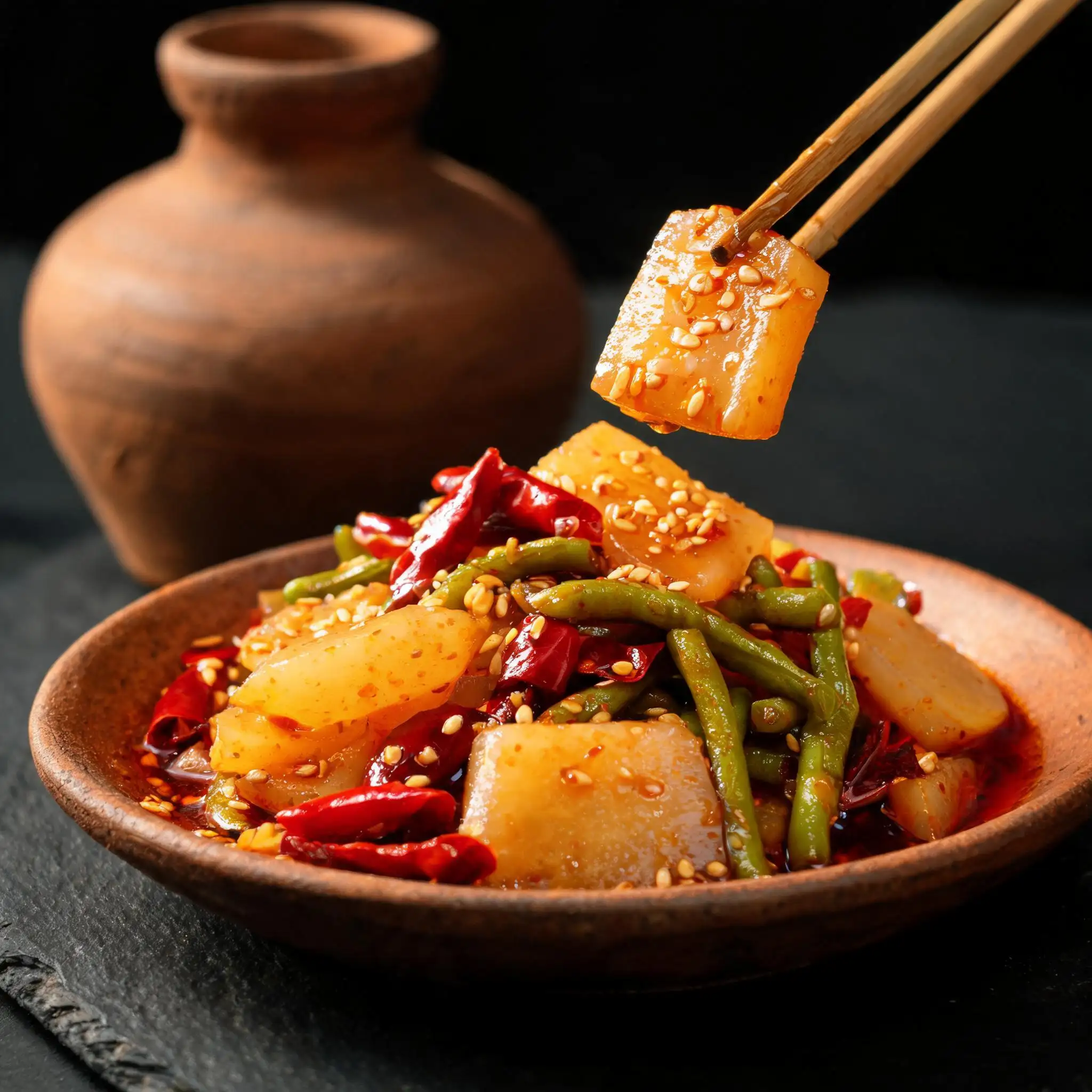
## 📸 9 · The First Taste
Bamboo chopsticks only — metal reacts with the brine.
Radish: pale gold, crackling-crisp. Chilies: fiery and fruity. Cowpeas: still green, still snapping. Drizzle of chili oil. Pinch of sesame.
**The brine you save today will be making someone else's paocai years from now.**
*That's not a recipe. That's a lineage.* 🫙🌶️
---
**3-day fast batch or 5-day slow ferment — which are you?**
Old brine or fresh start every batch? Drop your method below. I want to see how many of you are running a forever jar. 👇
**Scientists call it probiotic fermentation. Sichuan grandmothers called it "keeping the jar alive." Same thing. Two thousand years apart. (9 Photos)**
> Scientists discovered gut health in the 1990s.
> Sichuan grandmothers have been cultivating it since the Han Dynasty.
>
> This isn't just a pickle recipe — it's a **living culture** that gets stronger with every batch.
>
> Here's how the jar stays alive. 🫙🌶️
---
## 📸 1 · The Lineup
Red chilies, white radish, green cowpeas, young ginger. And always — the jar first.
This terracotta jar is not a container. It's a microbiome. Every batch you've made has left its bacteria in these walls. **The jar is the recipe.** The vegetables are just the newest tenants.
---
## 📸 2 · The Scrub
Two cold-water washes. Every vegetable. No exceptions.
One enemy: **cooking oil**. A single oily fingerprint kills the lactic acid bacteria on contact. Hands washed. Vegetables scrubbed. Jar wiped dry. Not paranoia — just the price of a perfect batch.
---
## 📸 3 · The Salt
Coarse rock salt — **never iodized**. Iodine kills bacteria. The bacteria are the entire point.
Rubbed hard into the radish, left to sweat 30 minutes. Salt pulls out excess water so the brine stays concentrated. What comes out: a radish that still cracks weeks into fermentation.
---
## 📸 4 · The Brine
The magic lives in the **old brine**. From batch two onward, a ladle of the last jar's brine carries billions of the exact bacteria that made it perfect. The culture learns. It improves.
**Then: two tablespoons of baijiu.** Sterilizes what the washing missed, signals the good bacteria to dominate. My grandmother called it "giving the jar courage." She was right.
---
## 📸 5 · The Pack
No air gaps. No hesitation. Chilies first — their capsaicin suppresses the wrong bacteria. Radish next. Cowpeas woven through. Ginger in every gap.
**The rule:** 80% full. Leave 20% headroom for brine and fermentation gases. Press down firmly. The jar should feel inevitable.
---
## 📸 6 · The Seal
Brine covers every vegetable. Lid pressed down. Water poured into the groove around the rim.
That groove is the **entire technology** — a one-way valve. Gases escape out. Oxygen cannot enter. Built from clay and water. Engineered 2,000 years ago. Never improved because it never needed to be.
---
## 📸 7 · The Wait
Three days in summer. Five in winter. Watch the seal groove — when tiny bubbles rise through the water, fermentation is live. **That's your sign. Not a timer.**
Every time you lift the lid, oxygen floods in and the clock resets. The hardest ingredient in this recipe is restraint.
---
## 📸 8 · The Awakening
The lid lifts slowly. Always slowly.
Then it hits: bright, tangy, slightly floral sour air. **If it smells right, you did it right.** Clean-sour like vinegar crossed with something ancient and alive. If it smells of rot — trust your nose, start again. A good batch smells like a memory you haven't made yet.
---
## 📸 9 · The First Taste
Bamboo chopsticks only — metal reacts with the brine.
Radish: pale gold, crackling-crisp. Chilies: fiery and fruity. Cowpeas: still green, still snapping. Drizzle of chili oil. Pinch of sesame.
**The brine you save today will be making someone else's paocai years from now.**
*That's not a recipe. That's a lineage.* 🫙🌶️
---
**3-day fast batch or 5-day slow ferment — which are you?**
Old brine or fresh start every batch? Drop your method below. I want to see how many of you are running a forever jar. 👇
416