·5/8/2026
from
🍲 Geda Tang — Chinese Flour Drop Soup
No restaurant bothers with it. No cookbook dedicates a chapter to it. It belongs entirely to grandmothers, cold mornings, and the kind of hunger only a warm bowl can fix.
This is Geda Tang — flour drop soup. Here is every step. 🍲
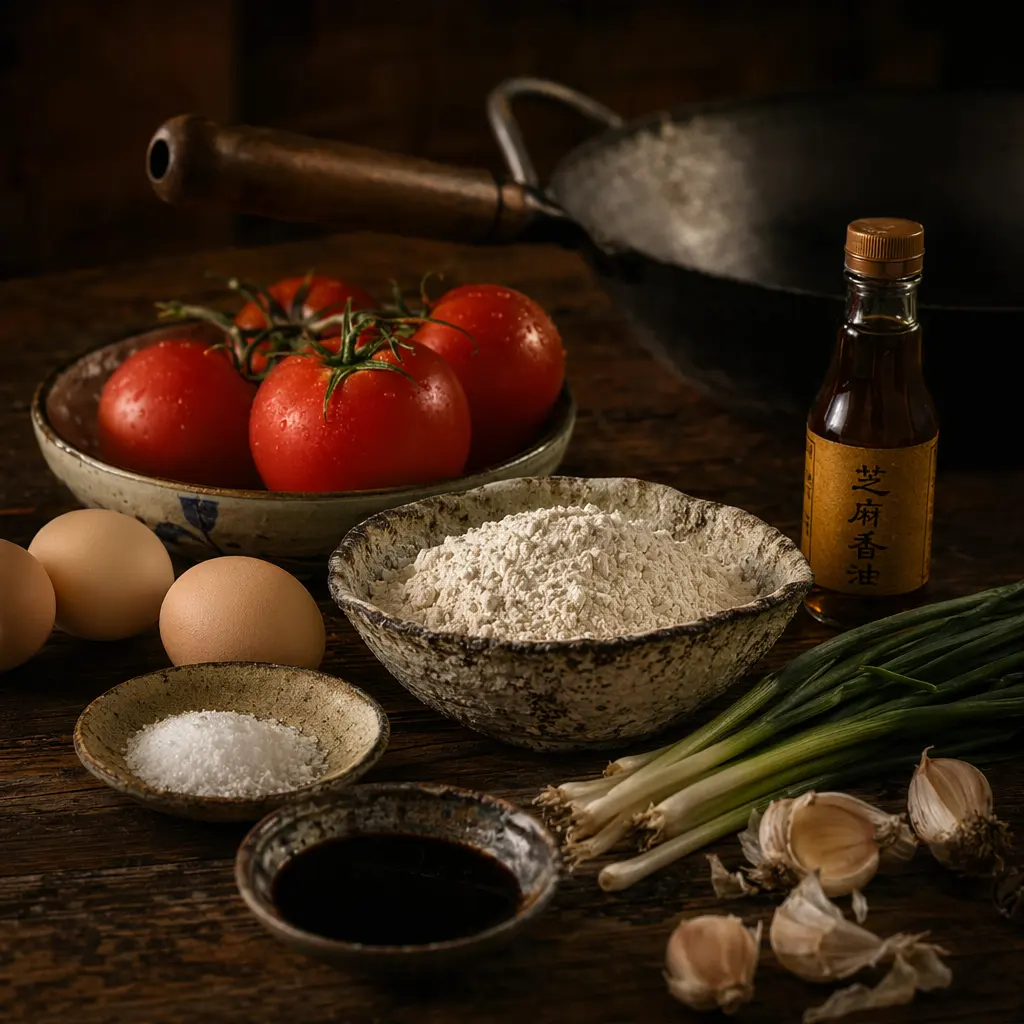
📸 Photo 1 — The Lineup Flour. Two tomatoes. Two eggs. Scallions, garlic, salt, soy sauce, sesame oil. That is genuinely everything. One rule: use ripe, slightly soft tomatoes — the riper, the more natural sweetness and acidity, and that's the entire flavor base of this soup. And before anything else — peel the tomatoes. Score a cross on the bottom, blanch in boiling water for 30 seconds, then peel. Skipping this step leaves papery skin floating in your soup, and it will ruin the texture. This is the step most people skip. Don't.
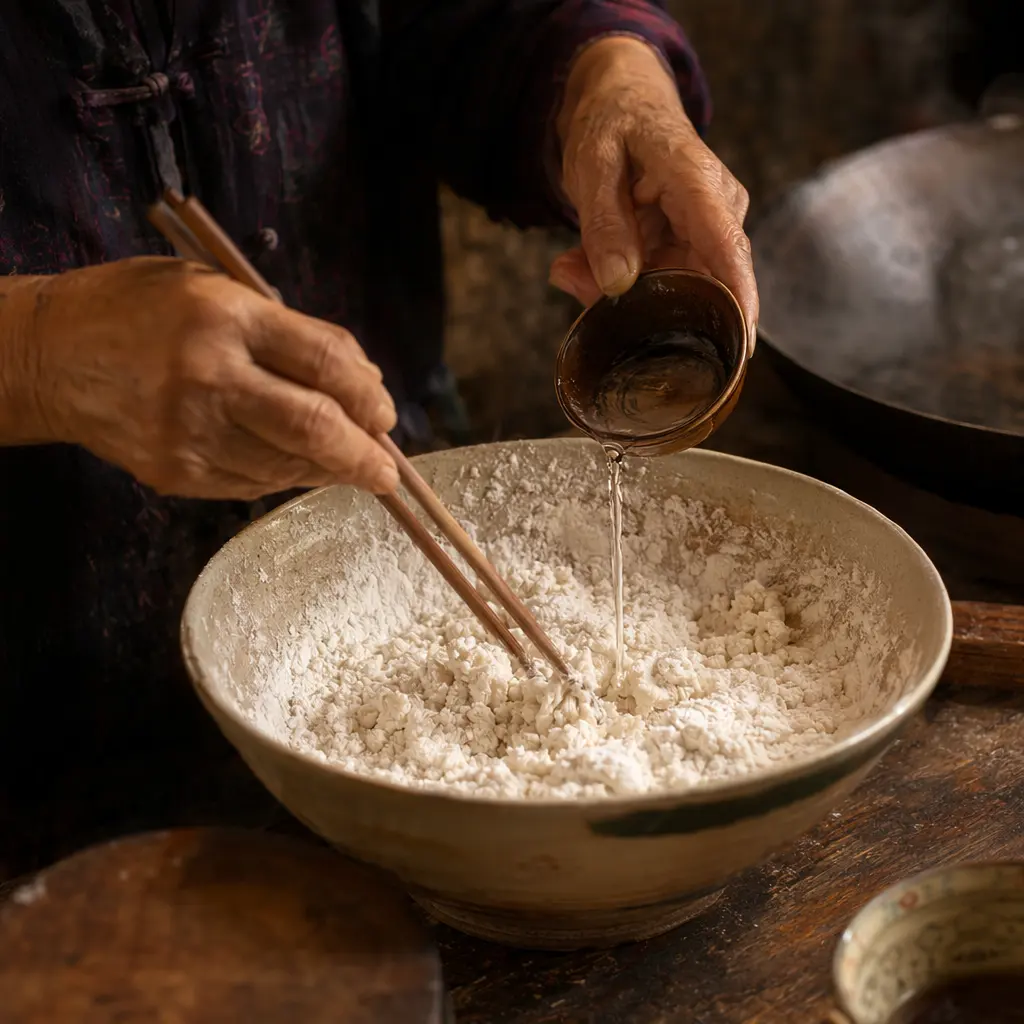
📸 Photo 2 — The Mix Flour in a bowl. Drizzle cold water slowly while stirring with chopsticks — not pouring, drizzling. The goal is tiny, irregular lumps the size of small peas. Not a dough ball. Not a batter. This is the geda. Too much water at once and you get paste. Too little and you get powder. Trust the process.
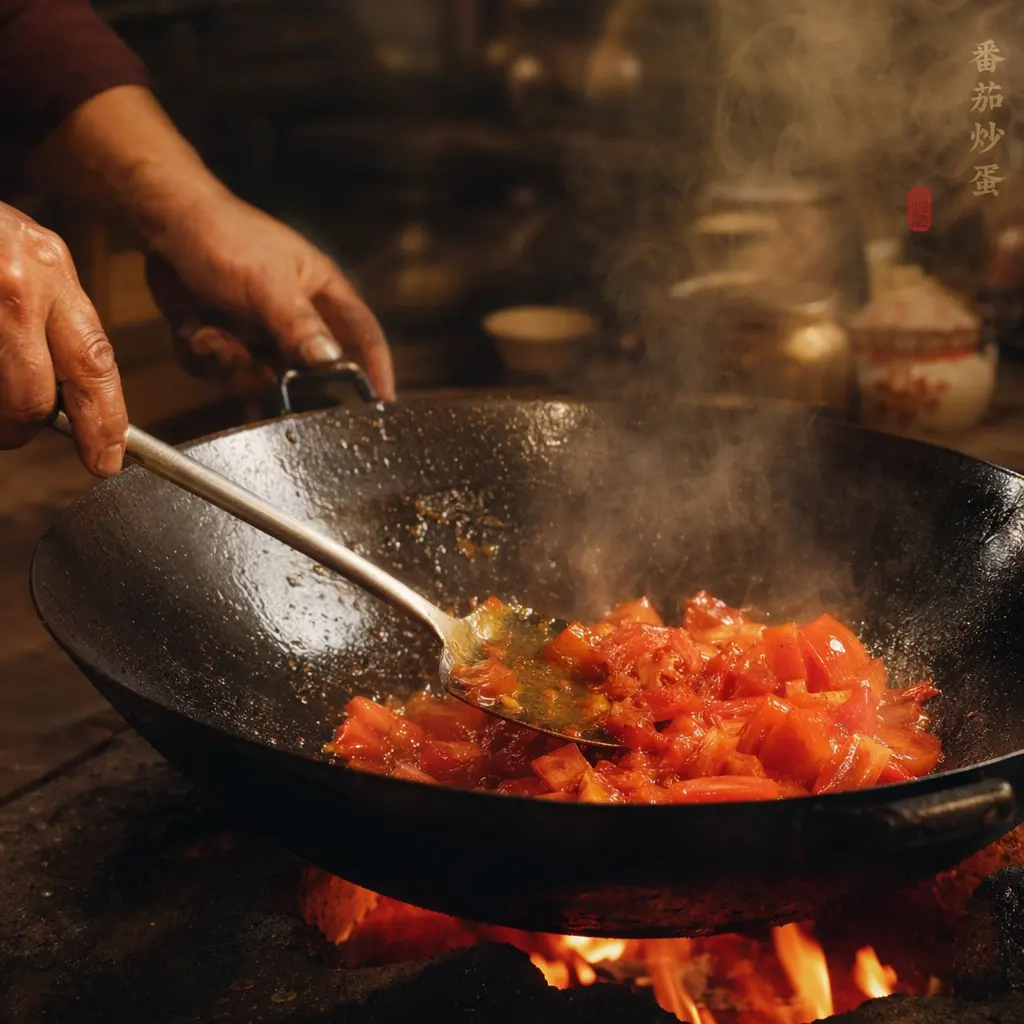
📸 Photo 3 — The Sizzle Hot oil in an iron wok. Add the peeled, chopped tomatoes — no skin, ever — and press down with the spatula. Watch them break open — pure juice and pulp melt into the oil within two minutes, silky and smooth with nothing to interrupt it. Season with a pinch of salt here; it pulls moisture out faster. Peeled tomatoes dissolve into the broth completely. Unpeeled tomatoes leave tough, curled-up skin strips in every spoonful. The difference is not subtle.
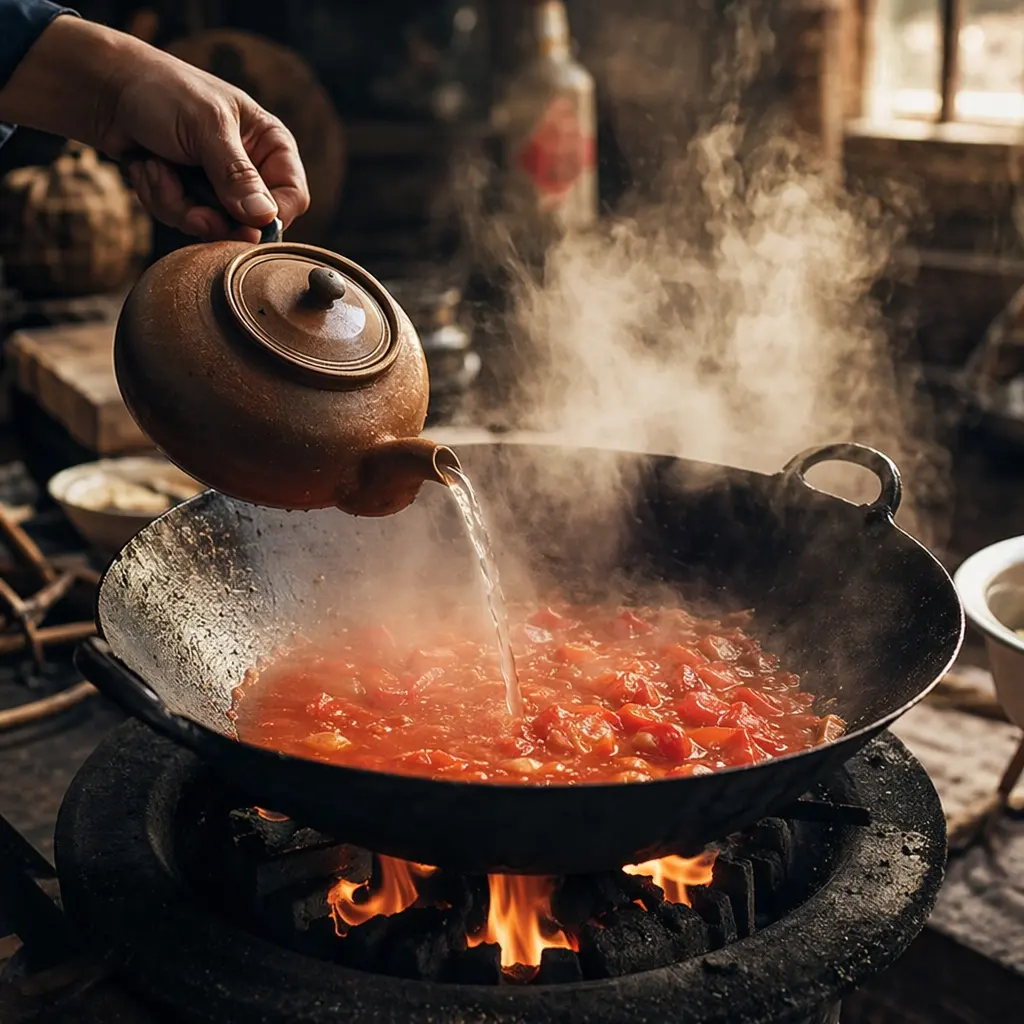
📸 Photo 4 — The Flood Pour in hot water — roughly 600ml. Hot water only. Never cold — cold water shocks the tomatoes and flattens the flavor. Bring to a full rolling boil. The soup should already be fragrant and deep amber-red. Taste it. Adjust salt now before the geda goes in.
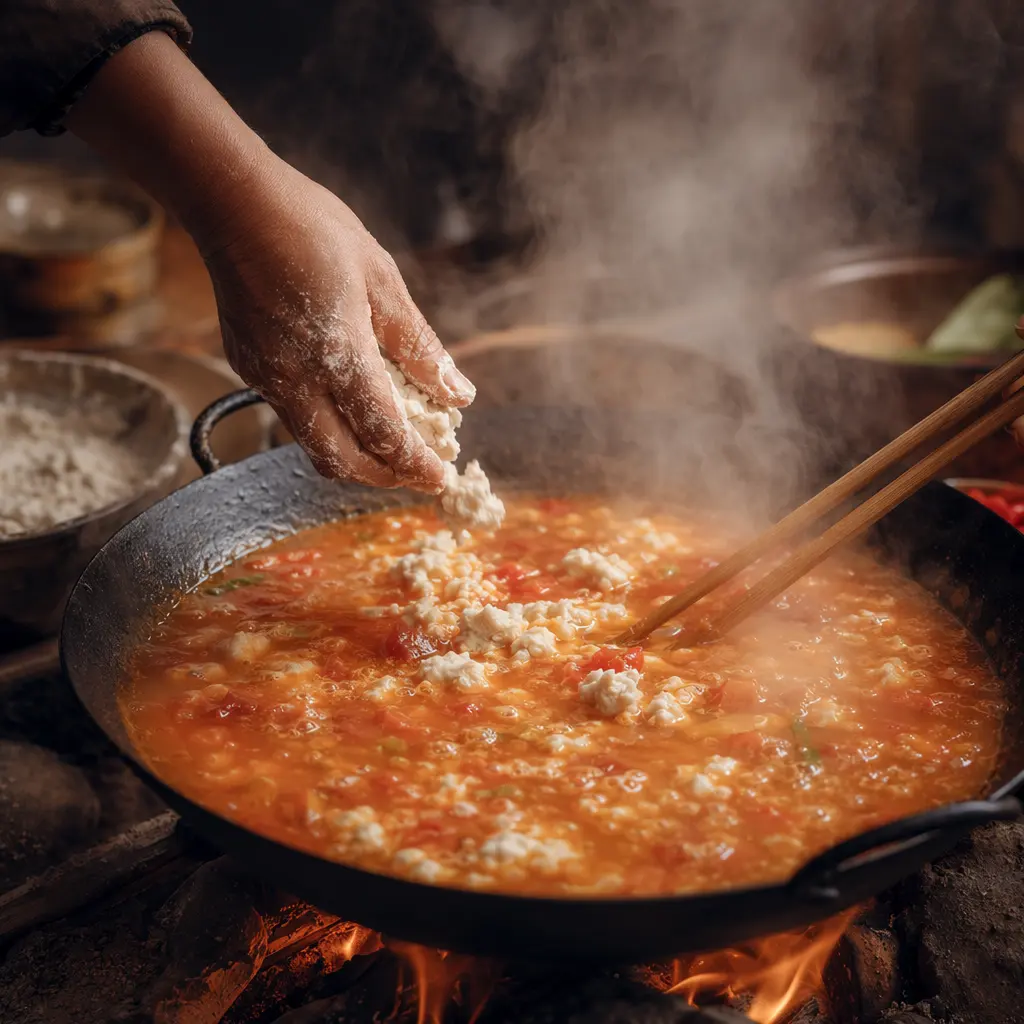
📸 Photo 5 — The Drop Add the geda lumps into the boiling soup slowly — a little at a time, stirring between each addition. Do not dump them all at once — they'll clump and cook unevenly. Stir constantly for the first 30 seconds after each addition.
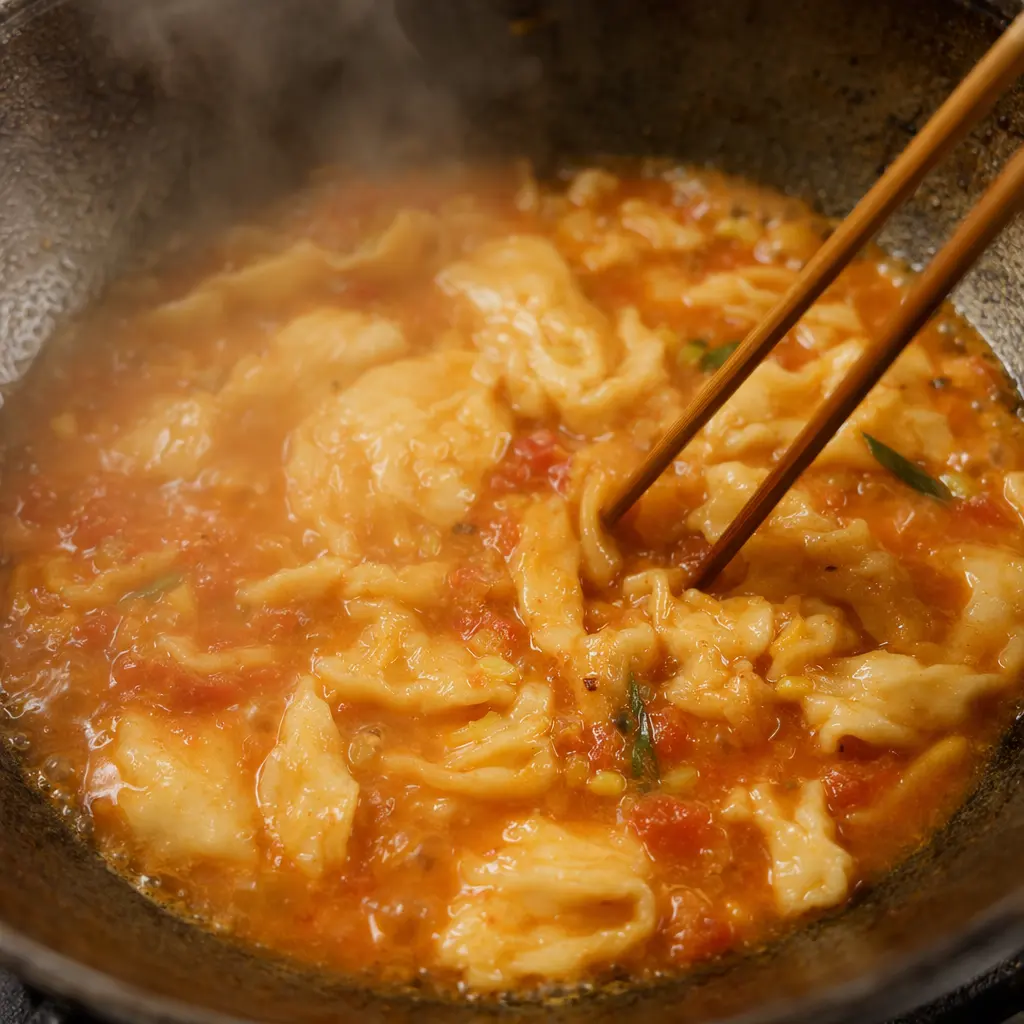
📸 Photo 6 — The Swell Medium heat. Stir every 30 seconds. Watch the geda transform — chalky white → soft ivory → fully translucent. That's when they're done. Taste one: tender, slightly chewy, no raw flour taste. About 4-5 minutes. Don't rush with high heat; hard boiling breaks the geda apart.
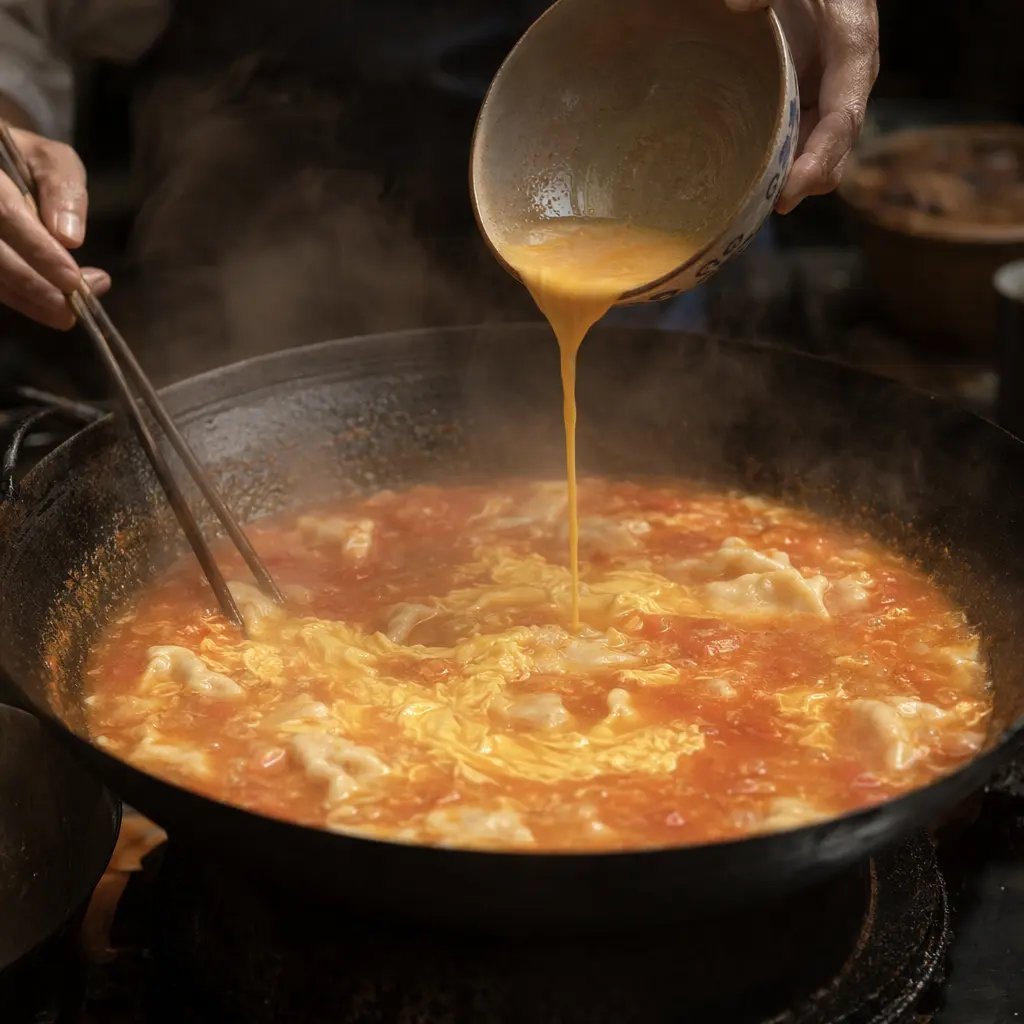
📸 Photo 7 — The Gold Beat two eggs until smooth. Pour them in a thin, slow, circular stream into the soup while stirring continuously in one direction. The egg blooms into golden ribbons on contact. Stop stirring the moment it sets — about 10 seconds. Pour too fast and you get scrambled egg. Pour slowly, stir gently, and you get silk.
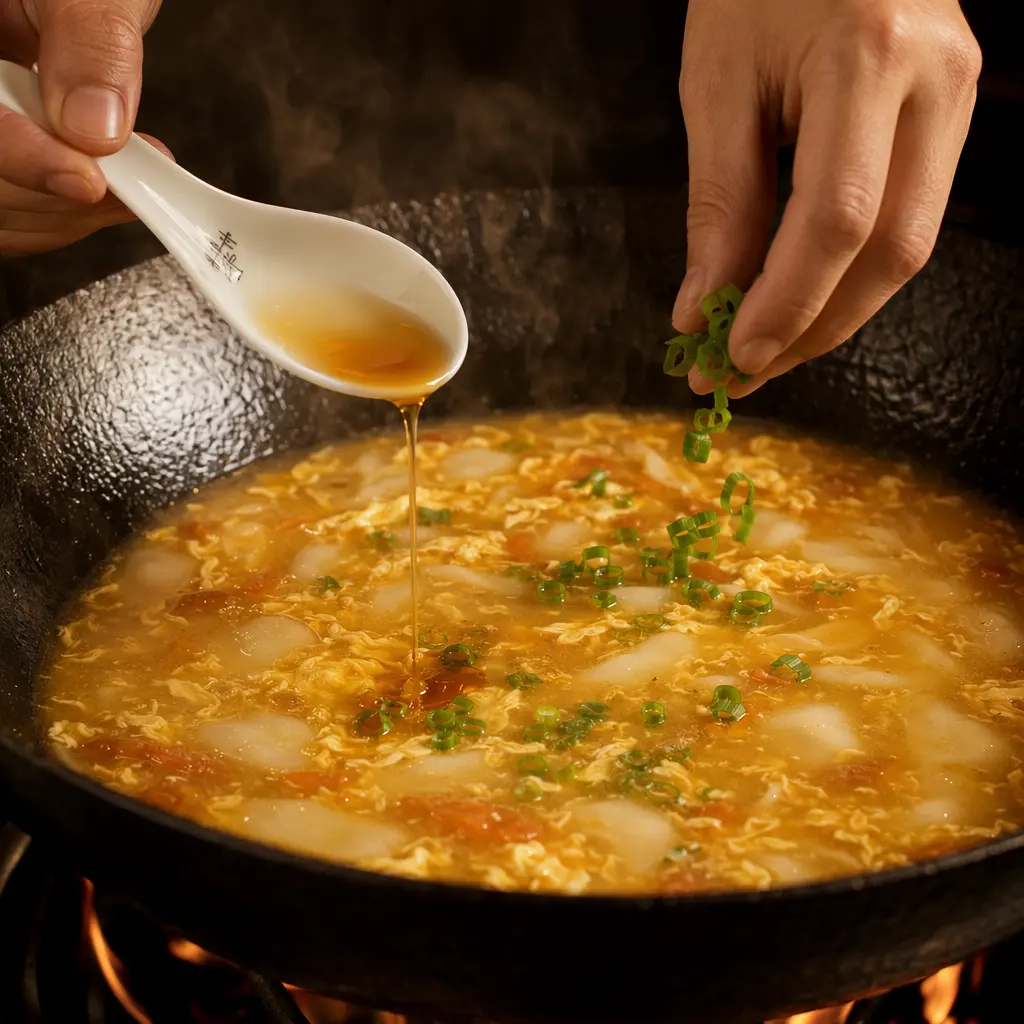
📸 Photo 8 — The Finish Heat off. Drizzle sesame oil — not a pour, just drops. The fragrance hits immediately. Scatter fresh scallion rings. A splash of soy sauce if needed. The entire seasoning step takes 20 seconds.
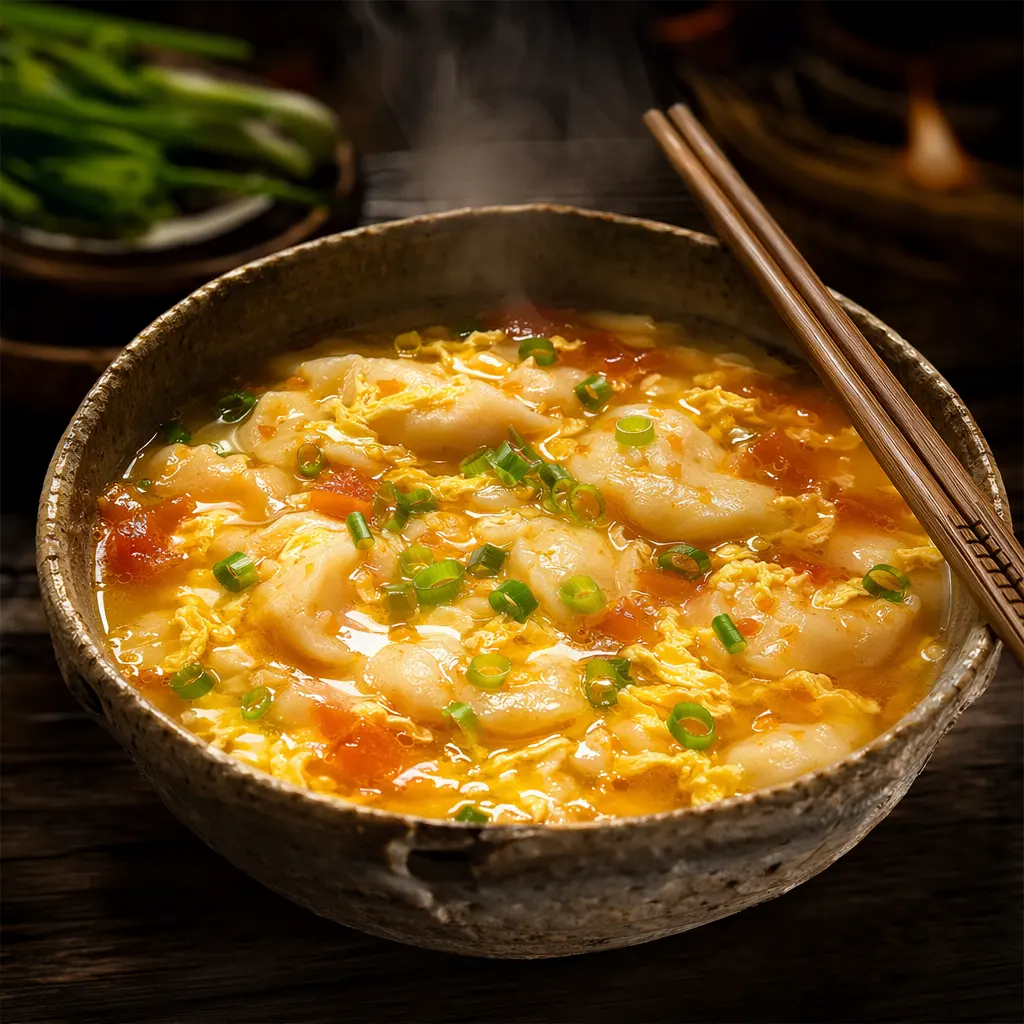
📸 Photo 9 — The Bowl Ladle into a rough ceramic bowl — soft swollen geda in golden tomato broth, threaded with egg ribbons, flecked with green scallion. Eat it while it steams. This dish does not wait.
10 minutes, start to finish. A bowl that costs almost nothing. This is Geda Tang. The dish grandmothers make without a recipe. 🍲❤️
Tomato-egg base or clear broth? Chewy geda or thin drops? And — did you learn this from a grandparent, or teach yourself? Tell me below 👇
This is Geda Tang — flour drop soup. Here is every step. 🍲
📸 Photo 1 — The Lineup Flour. Two tomatoes. Two eggs. Scallions, garlic, salt, soy sauce, sesame oil. That is genuinely everything. One rule: use ripe, slightly soft tomatoes — the riper, the more natural sweetness and acidity, and that's the entire flavor base of this soup. And before anything else — peel the tomatoes. Score a cross on the bottom, blanch in boiling water for 30 seconds, then peel. Skipping this step leaves papery skin floating in your soup, and it will ruin the texture. This is the step most people skip. Don't.
📸 Photo 2 — The Mix Flour in a bowl. Drizzle cold water slowly while stirring with chopsticks — not pouring, drizzling. The goal is tiny, irregular lumps the size of small peas. Not a dough ball. Not a batter. This is the geda. Too much water at once and you get paste. Too little and you get powder. Trust the process.
📸 Photo 3 — The Sizzle Hot oil in an iron wok. Add the peeled, chopped tomatoes — no skin, ever — and press down with the spatula. Watch them break open — pure juice and pulp melt into the oil within two minutes, silky and smooth with nothing to interrupt it. Season with a pinch of salt here; it pulls moisture out faster. Peeled tomatoes dissolve into the broth completely. Unpeeled tomatoes leave tough, curled-up skin strips in every spoonful. The difference is not subtle.
📸 Photo 4 — The Flood Pour in hot water — roughly 600ml. Hot water only. Never cold — cold water shocks the tomatoes and flattens the flavor. Bring to a full rolling boil. The soup should already be fragrant and deep amber-red. Taste it. Adjust salt now before the geda goes in.
📸 Photo 5 — The Drop Add the geda lumps into the boiling soup slowly — a little at a time, stirring between each addition. Do not dump them all at once — they'll clump and cook unevenly. Stir constantly for the first 30 seconds after each addition.
📸 Photo 6 — The Swell Medium heat. Stir every 30 seconds. Watch the geda transform — chalky white → soft ivory → fully translucent. That's when they're done. Taste one: tender, slightly chewy, no raw flour taste. About 4-5 minutes. Don't rush with high heat; hard boiling breaks the geda apart.
📸 Photo 7 — The Gold Beat two eggs until smooth. Pour them in a thin, slow, circular stream into the soup while stirring continuously in one direction. The egg blooms into golden ribbons on contact. Stop stirring the moment it sets — about 10 seconds. Pour too fast and you get scrambled egg. Pour slowly, stir gently, and you get silk.
📸 Photo 8 — The Finish Heat off. Drizzle sesame oil — not a pour, just drops. The fragrance hits immediately. Scatter fresh scallion rings. A splash of soy sauce if needed. The entire seasoning step takes 20 seconds.
📸 Photo 9 — The Bowl Ladle into a rough ceramic bowl — soft swollen geda in golden tomato broth, threaded with egg ribbons, flecked with green scallion. Eat it while it steams. This dish does not wait.
10 minutes, start to finish. A bowl that costs almost nothing. This is Geda Tang. The dish grandmothers make without a recipe. 🍲❤️
Tomato-egg base or clear broth? Chewy geda or thin drops? And — did you learn this from a grandparent, or teach yourself? Tell me below 👇