·5/7/2026
from
🥩 Perfect Ribeye Steak — Step-by-Step Process Post
How to Cook a Perfect Ribeye Steak at Home — Every Single Step (9 Photos)
Most people overcomplicate steak. They fuss with marinades, fancy gadgets, special techniques.
The truth? A great steak needs almost nothing. Just the right cuts, the right heat, and the courage to trust the process.
Here's exactly how I cooked this ribeye — from raw to restaurant quality, step by step. 🥩
📸 Photo 1
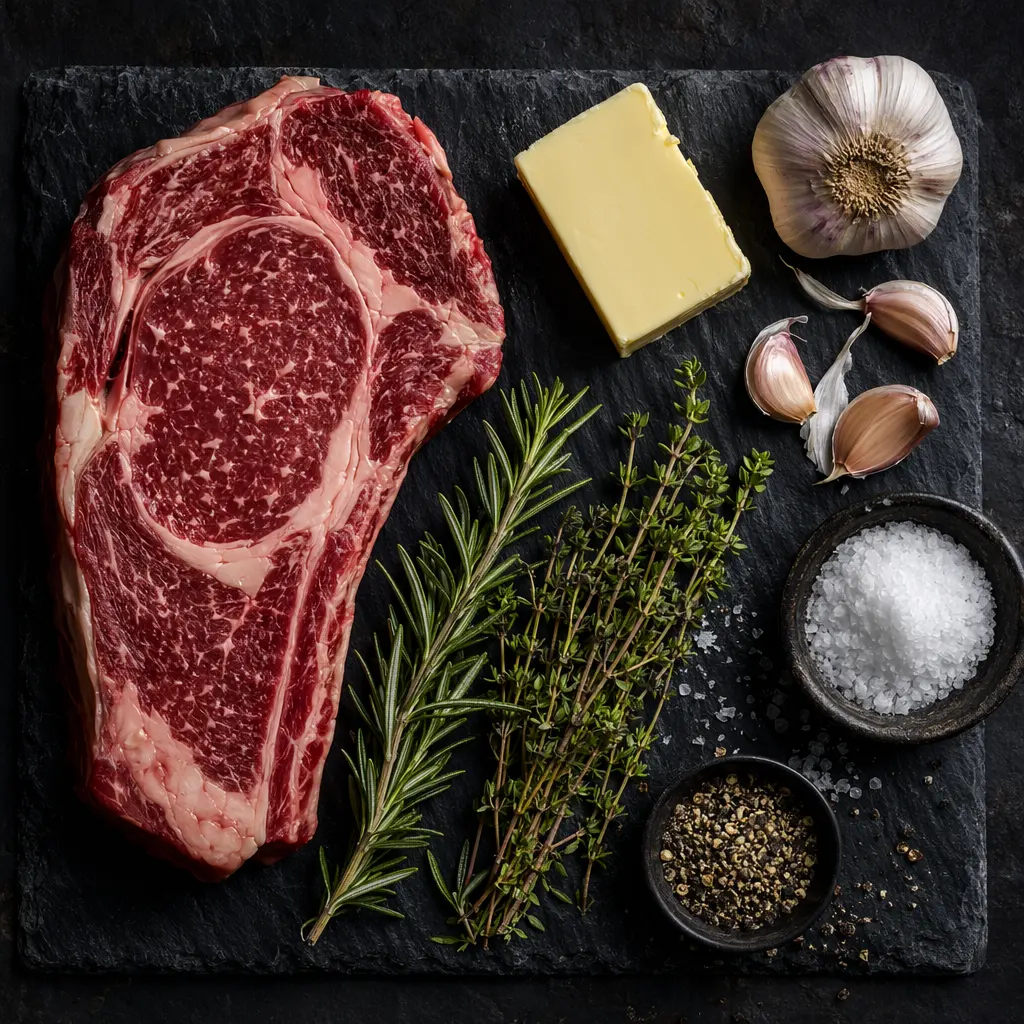
Ribeye steak. Butter. Garlic. Rosemary. Kosher salt. Cracked black pepper. That is the entire ingredient list. One rule on the steak: go thick. At least 3–4cm (1.5 inches). Thin steaks overcook before they develop a crust. Thick steaks give you time. One rule on the butter: unsalted, European-style, high fat content. It will foam beautifully and add depth you can't get from oil alone.
📸 Photo 2
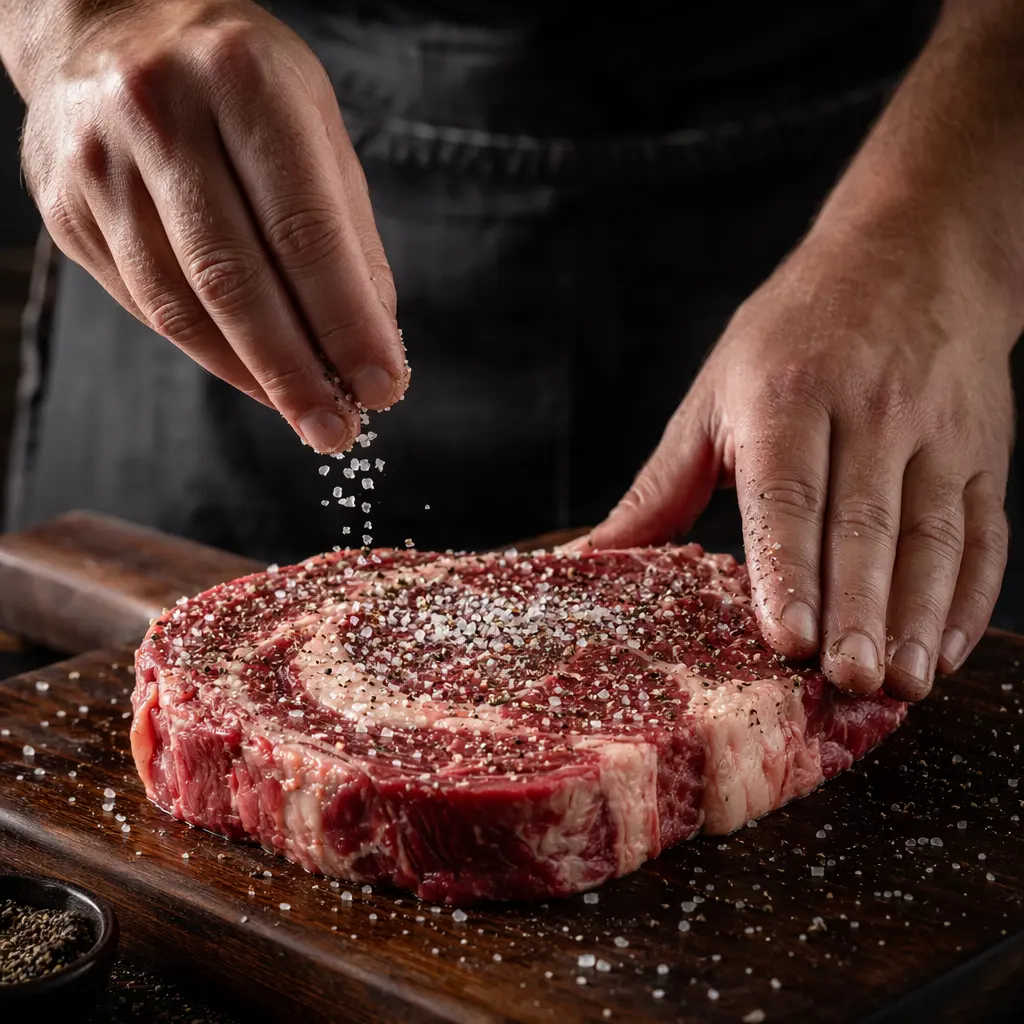
Take your steak out of the fridge 30–45 minutes before cooking. Cold meat in a hot pan = uneven cook. Season with more salt than feels comfortable. Steaks are thick — the salt needs to penetrate. Use kosher salt or coarse sea salt. Fine table salt dissolves too quickly and doesn't form that beautiful crust. Both sides. The edges too. Don't be shy. (If you have time: salt it and leave it uncovered in the fridge overnight. The dry brine effect is extraordinary.)
📸 Photo 3
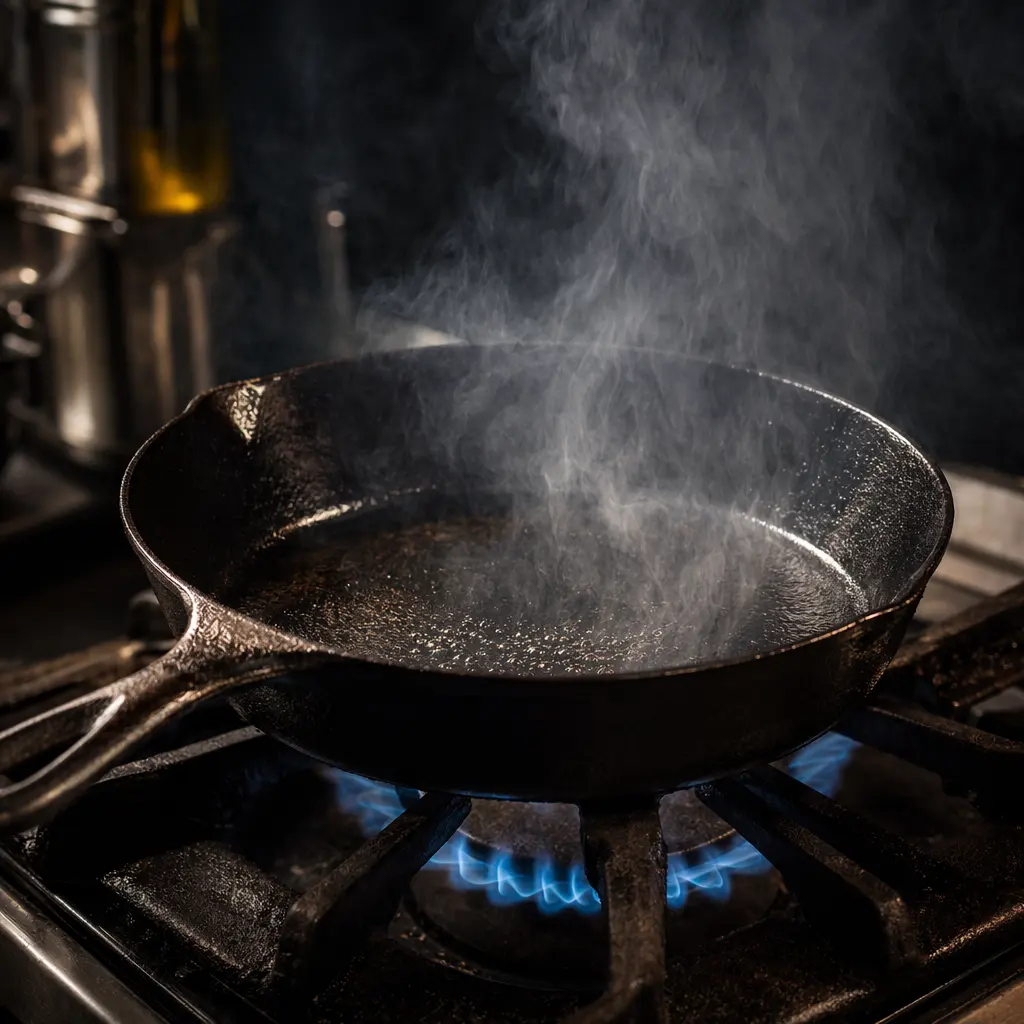
Your pan must be screaming hot before the steak goes in. Cast iron on maximum heat for 3–4 minutes. Add a thin layer of high smoke-point oil — avocado or refined vegetable. You'll see it shimmer, then smoke. That's your cue. Why so hot? You're not cooking the steak with heat — you're creating a crust. A crust that seals in flavor, adds texture, and makes this a real steak instead of a grey, sad piece of beef.
📸 Photo 4
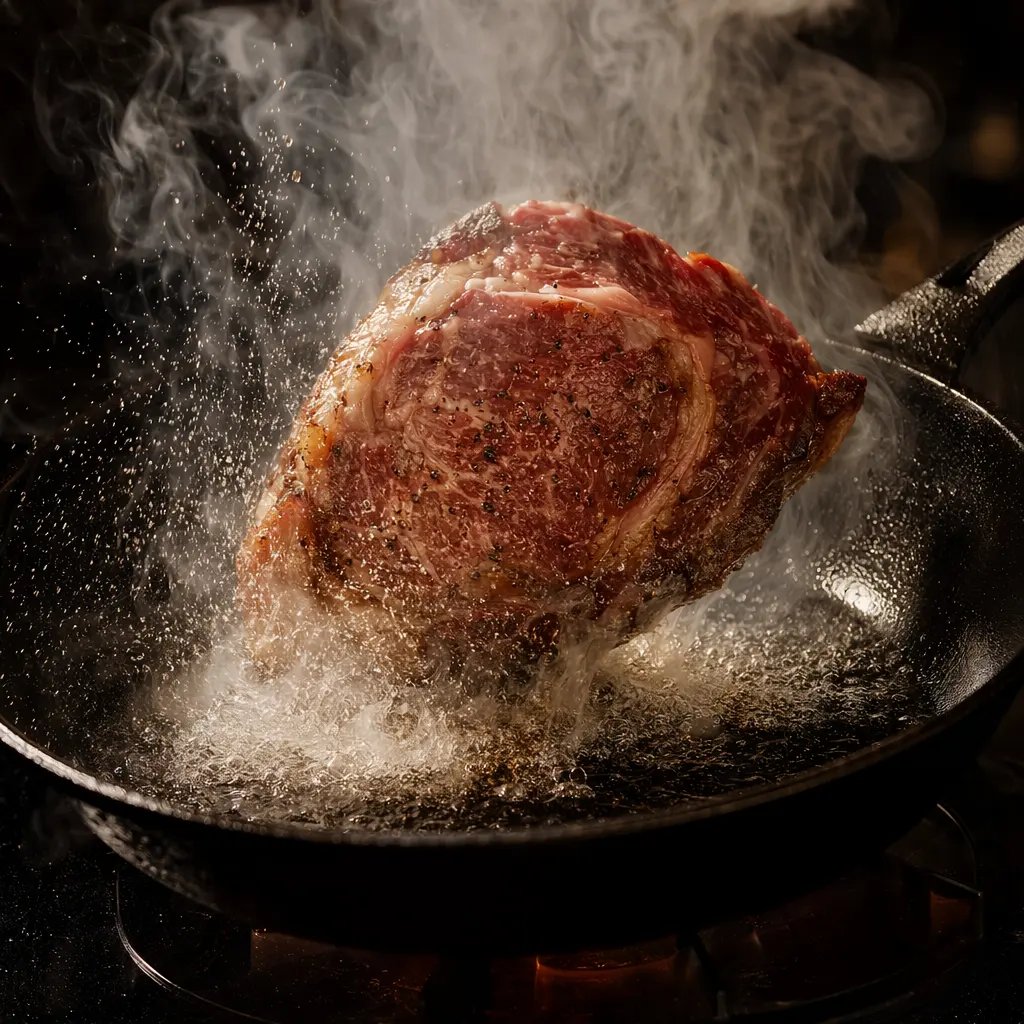
Lay the steak away from you into the pan. Don't splash yourself with hot oil. The sound should be violent. If it just quietly hisses, your pan wasn't hot enough. Now: do not touch it. No pressing, no moving, no peeking underneath for at least 2 minutes. Let the Maillard reaction work. Let the crust form. Patience is the technique here. After 2–3 minutes, it should release from the pan naturally. If it sticks, it's not ready to flip.
📸 Photo 5
Flip the steak. Now add the butter. Drop in 2 tablespoons of butter, 2 smashed garlic cloves, and your rosemary sprigs. The butter will foam and turn golden. Tilt the pan and use a large spoon to continuously scoop the hot, herb-infused butter over the steak. Baste constantly. Don't stop. 60–90 seconds of this treatment gives you a flavor depth that no restaurant can replicate for you at home. You'll smell it. Trust the smell.
📸 Photo 6
Stop guessing. Use a thermometer. For a ribeye, target these internal temperatures:
🩷 Rare: 49–52°C (120–125°F)
❤️ Medium-Rare: 54–57°C (130–135°F) ← the sweet spot
🧡 Medium: 60–63°C (140–145°F)
🤎 Well-Done: 71°C+ (160°F+) — we won't judge, but we will mourn
Insert the thermometer sideways into the thickest part. Pull it off heat 2–3°C before your target — it will carry-over cook during the rest.
📸 Photo 7
Take the steak off heat and place it on a cutting board. Do not cut it yet. Do not even think about it. Rest it for 5 full minutes. Set a timer if you have to. Here's the science: the heat has pushed all the moisture to the center of the steak. Resting lets those juices redistribute evenly throughout the meat. Cut too early, and all those juices pour out onto the board, and your steak is dry. Five minutes of patience = a dramatically juicier steak. Every time.
📸 Photo 8
Now you cut. Always against the grain — look at the muscle fibers and cut perpendicular to them. This shortens the fibers and makes every bite tender. Use a sharp knife. Let the weight of the blade do the work — don't saw back and forth. The cross-section should reveal a perfect gradient: deep brown crust → rosy-pink medium-rare center. If you see grey throughout, your pan wasn't hot enough, or you left it on too long. If you see red and cold in the very center, give it 2 more minutes in the pan next time.
📸 Photo 9
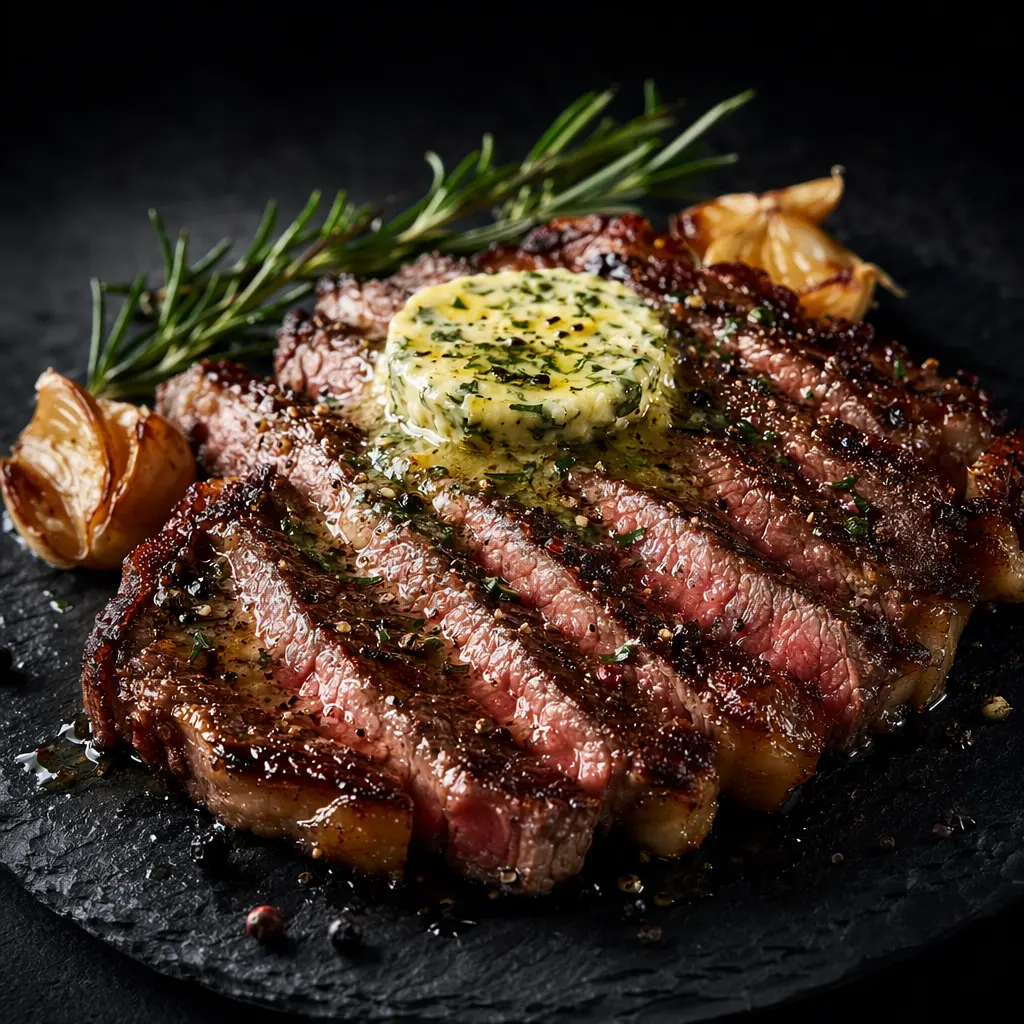
Fan the slices across a dark plate. Add a knob of compound herb butter on top — it will melt slowly and create a natural sauce. Crack more black pepper. A few flakes of finishing salt. A sprig of fresh rosemary for the look.
That's it. No sauce needed. No fuss.
From cold pan to this plate: about 15 minutes. From first bite to silence: about 3 seconds.
Once you cook steak like this, you'll understand why chefs guard these techniques. Now you have them too. 🥩🔥
What's your go-to steak doneness? Drop it below — Rare 🩷 / Medium-Rare ❤️ / Medium 🧡 / Well-Done 🤎
And tell me — cast iron or grill? The eternal debate starts now. 👇
Most people overcomplicate steak. They fuss with marinades, fancy gadgets, special techniques.
The truth? A great steak needs almost nothing. Just the right cuts, the right heat, and the courage to trust the process.
Here's exactly how I cooked this ribeye — from raw to restaurant quality, step by step. 🥩
📸 Photo 1
Ribeye steak. Butter. Garlic. Rosemary. Kosher salt. Cracked black pepper. That is the entire ingredient list. One rule on the steak: go thick. At least 3–4cm (1.5 inches). Thin steaks overcook before they develop a crust. Thick steaks give you time. One rule on the butter: unsalted, European-style, high fat content. It will foam beautifully and add depth you can't get from oil alone.
📸 Photo 2
Take your steak out of the fridge 30–45 minutes before cooking. Cold meat in a hot pan = uneven cook. Season with more salt than feels comfortable. Steaks are thick — the salt needs to penetrate. Use kosher salt or coarse sea salt. Fine table salt dissolves too quickly and doesn't form that beautiful crust. Both sides. The edges too. Don't be shy. (If you have time: salt it and leave it uncovered in the fridge overnight. The dry brine effect is extraordinary.)
📸 Photo 3
Your pan must be screaming hot before the steak goes in. Cast iron on maximum heat for 3–4 minutes. Add a thin layer of high smoke-point oil — avocado or refined vegetable. You'll see it shimmer, then smoke. That's your cue. Why so hot? You're not cooking the steak with heat — you're creating a crust. A crust that seals in flavor, adds texture, and makes this a real steak instead of a grey, sad piece of beef.
📸 Photo 4
Lay the steak away from you into the pan. Don't splash yourself with hot oil. The sound should be violent. If it just quietly hisses, your pan wasn't hot enough. Now: do not touch it. No pressing, no moving, no peeking underneath for at least 2 minutes. Let the Maillard reaction work. Let the crust form. Patience is the technique here. After 2–3 minutes, it should release from the pan naturally. If it sticks, it's not ready to flip.
📸 Photo 5
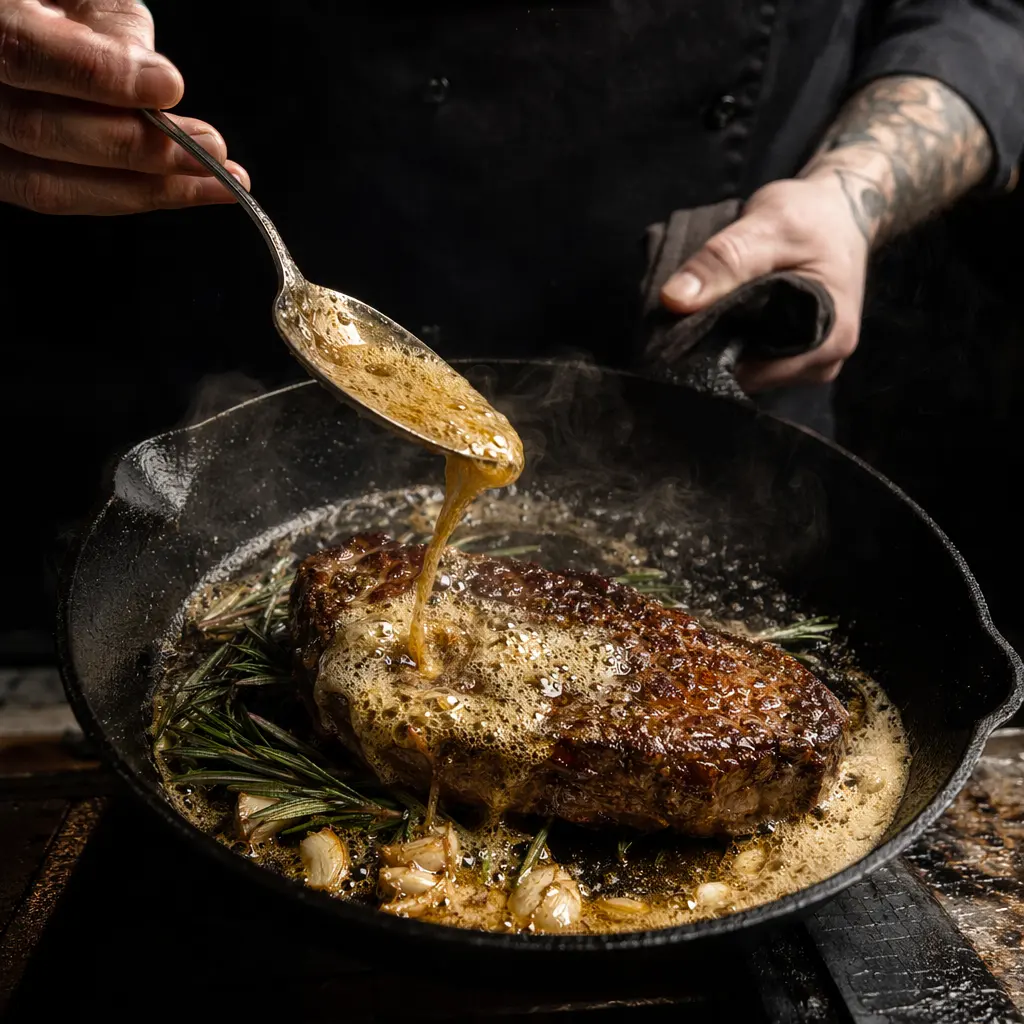
Flip the steak. Now add the butter. Drop in 2 tablespoons of butter, 2 smashed garlic cloves, and your rosemary sprigs. The butter will foam and turn golden. Tilt the pan and use a large spoon to continuously scoop the hot, herb-infused butter over the steak. Baste constantly. Don't stop. 60–90 seconds of this treatment gives you a flavor depth that no restaurant can replicate for you at home. You'll smell it. Trust the smell.
📸 Photo 6
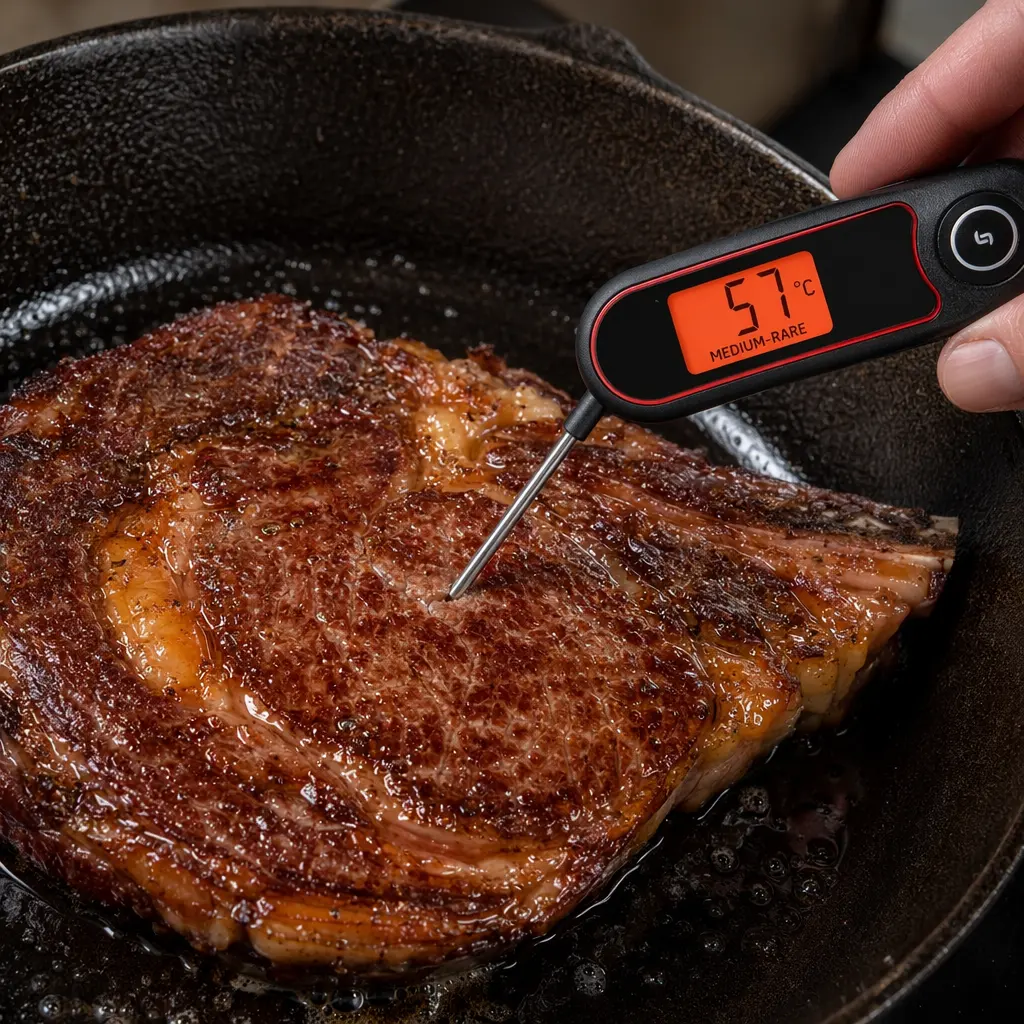
Stop guessing. Use a thermometer. For a ribeye, target these internal temperatures:
🩷 Rare: 49–52°C (120–125°F)
❤️ Medium-Rare: 54–57°C (130–135°F) ← the sweet spot
🧡 Medium: 60–63°C (140–145°F)
🤎 Well-Done: 71°C+ (160°F+) — we won't judge, but we will mourn
Insert the thermometer sideways into the thickest part. Pull it off heat 2–3°C before your target — it will carry-over cook during the rest.
📸 Photo 7
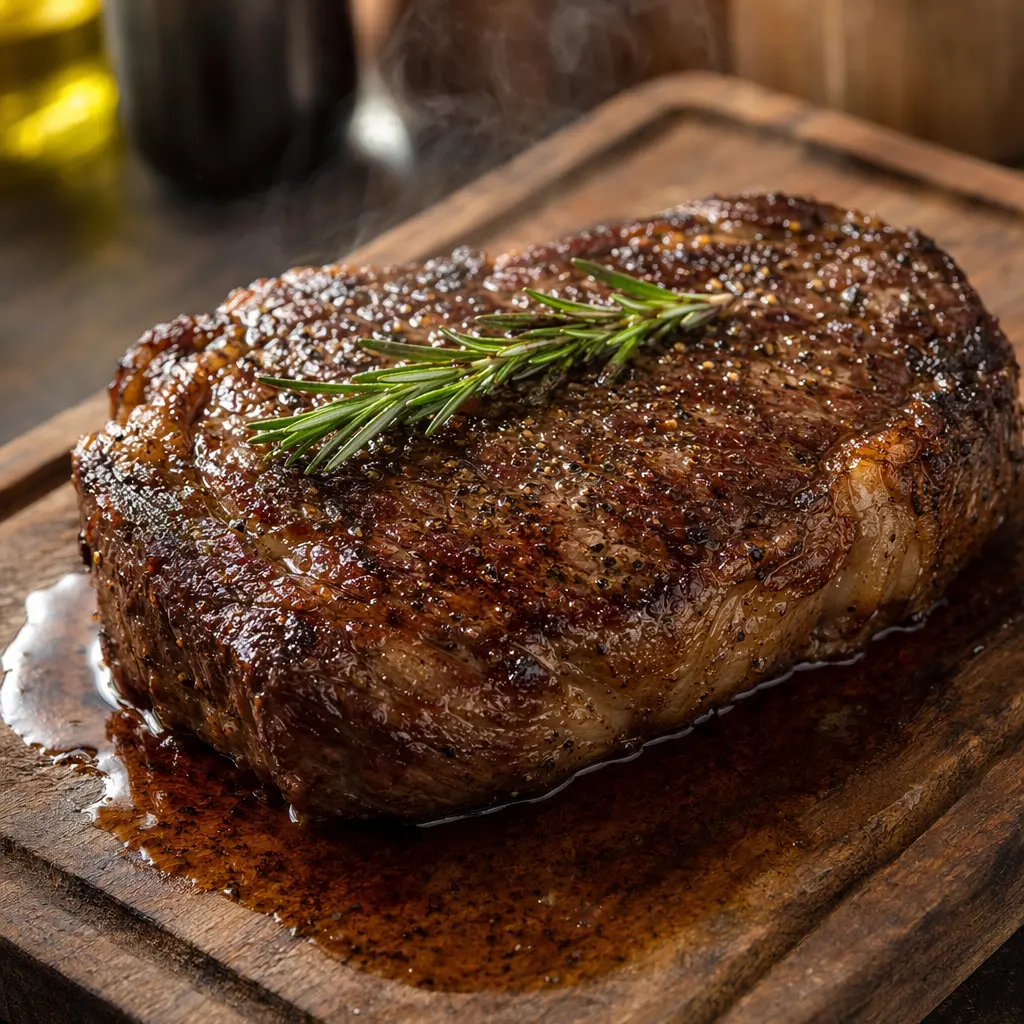
Take the steak off heat and place it on a cutting board. Do not cut it yet. Do not even think about it. Rest it for 5 full minutes. Set a timer if you have to. Here's the science: the heat has pushed all the moisture to the center of the steak. Resting lets those juices redistribute evenly throughout the meat. Cut too early, and all those juices pour out onto the board, and your steak is dry. Five minutes of patience = a dramatically juicier steak. Every time.
📸 Photo 8
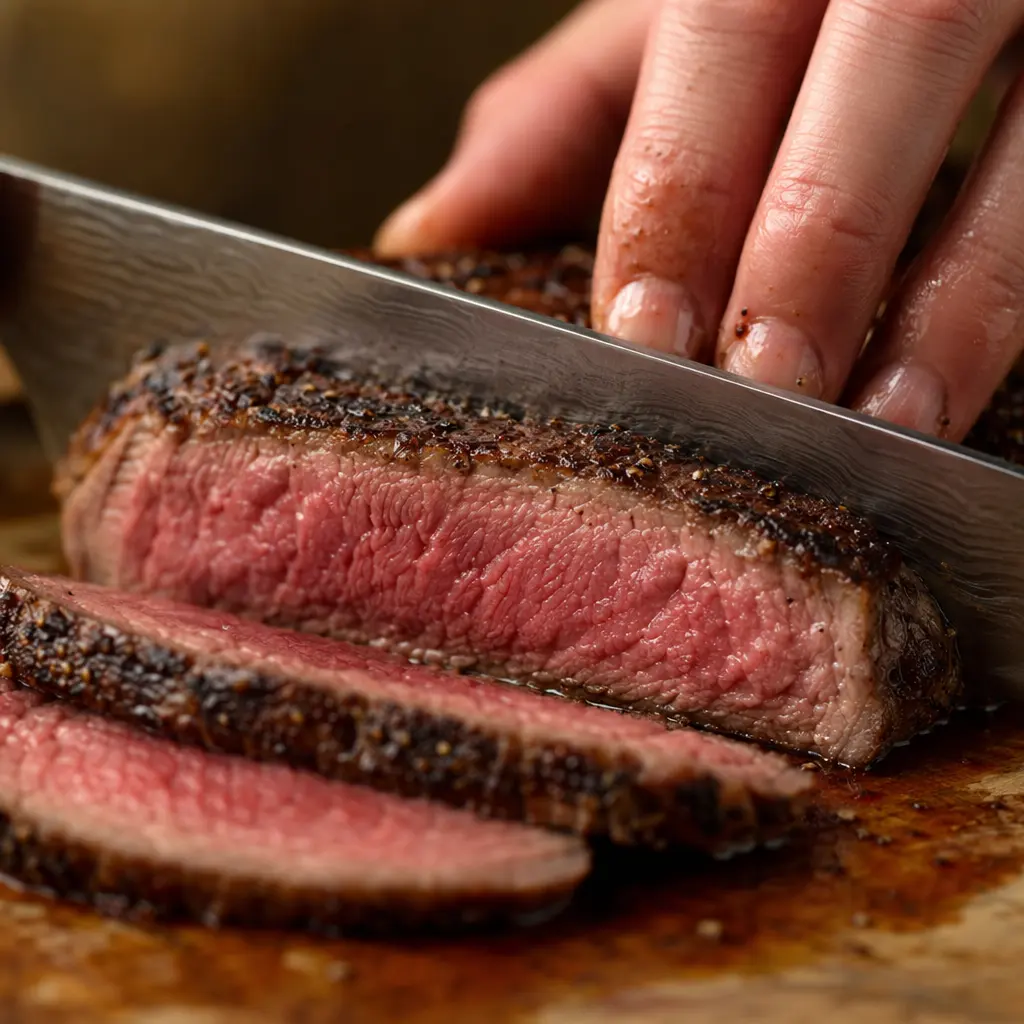
Now you cut. Always against the grain — look at the muscle fibers and cut perpendicular to them. This shortens the fibers and makes every bite tender. Use a sharp knife. Let the weight of the blade do the work — don't saw back and forth. The cross-section should reveal a perfect gradient: deep brown crust → rosy-pink medium-rare center. If you see grey throughout, your pan wasn't hot enough, or you left it on too long. If you see red and cold in the very center, give it 2 more minutes in the pan next time.
📸 Photo 9
Fan the slices across a dark plate. Add a knob of compound herb butter on top — it will melt slowly and create a natural sauce. Crack more black pepper. A few flakes of finishing salt. A sprig of fresh rosemary for the look.
That's it. No sauce needed. No fuss.
From cold pan to this plate: about 15 minutes. From first bite to silence: about 3 seconds.
Once you cook steak like this, you'll understand why chefs guard these techniques. Now you have them too. 🥩🔥
What's your go-to steak doneness? Drop it below — Rare 🩷 / Medium-Rare ❤️ / Medium 🧡 / Well-Done 🤎
And tell me — cast iron or grill? The eternal debate starts now. 👇
210